

Calgary already boasts a wealth of gardens, parks, and green spaces, but the city is continually evolving, confidently moving toward a greener and more sustainable future. These vital green zones not only provide excellent spots for recreation and beautify the streets but also play a crucial role in combating climate change and purifying the air. In this feature on calgary-name, we’ll dive into Calgary’s greening efforts and introduce the people and organizations driving these vital “green” projects.
Local Context: A Unique Ecological Landscape
Situated along rivers and rolling hills, Calgary spans three distinct eco-regions. This geographical advantage blesses the city with a wide variety of ecological zones, ranging from aspen parklands to diverse freshwater systems. Furthermore, the city is home to numerous aquatic features, including rivers, lakes, and vital wetlands.
However, Calgary’s natural environment faces key threats, particularly deforestation and the destruction of vegetation driven by agricultural expansion and the oil industry. Recognizing this, the city has developed a specific policy framework designed to ensure the proper conservation of its rich biodiversity.
City Programs Driving Change
For over two decades, the city has been heavily involved in natural resource management initiatives. These efforts range from promoting best practices to comprehensive public education campaigns. A prime example is the City’s Open Spaces Plan, which has been instrumental in preserving biodiversity. Thanks to this plan, the city successfully maintains a diverse array of open space types, from large municipal parks and neighborhood squares to an extensive network of cycling routes.
Another significant undertaking is the Urban Tree Canopy Program. Currently, Calgary’s tree canopy coverage sits at approximately 8%, which includes trees planted on both public and private land. The city is actively working toward a goal of doubling this coverage to 16% by the year 2060. To help achieve this ambitious target, the Government of Canada has committed $61 million in funding for the project.
An equally important initiative is the “Tree Equity Campaign,” spearheaded by the independent organization “Calgary Climate Hub.” This project is specifically designed to address the problem of uneven tree growth across Calgary. Data shows that low-income areas and communities that have historically experienced racial discrimination disproportionately suffer from lower levels of tree canopy coverage.
Calgary’s Premier Parks and Greenways
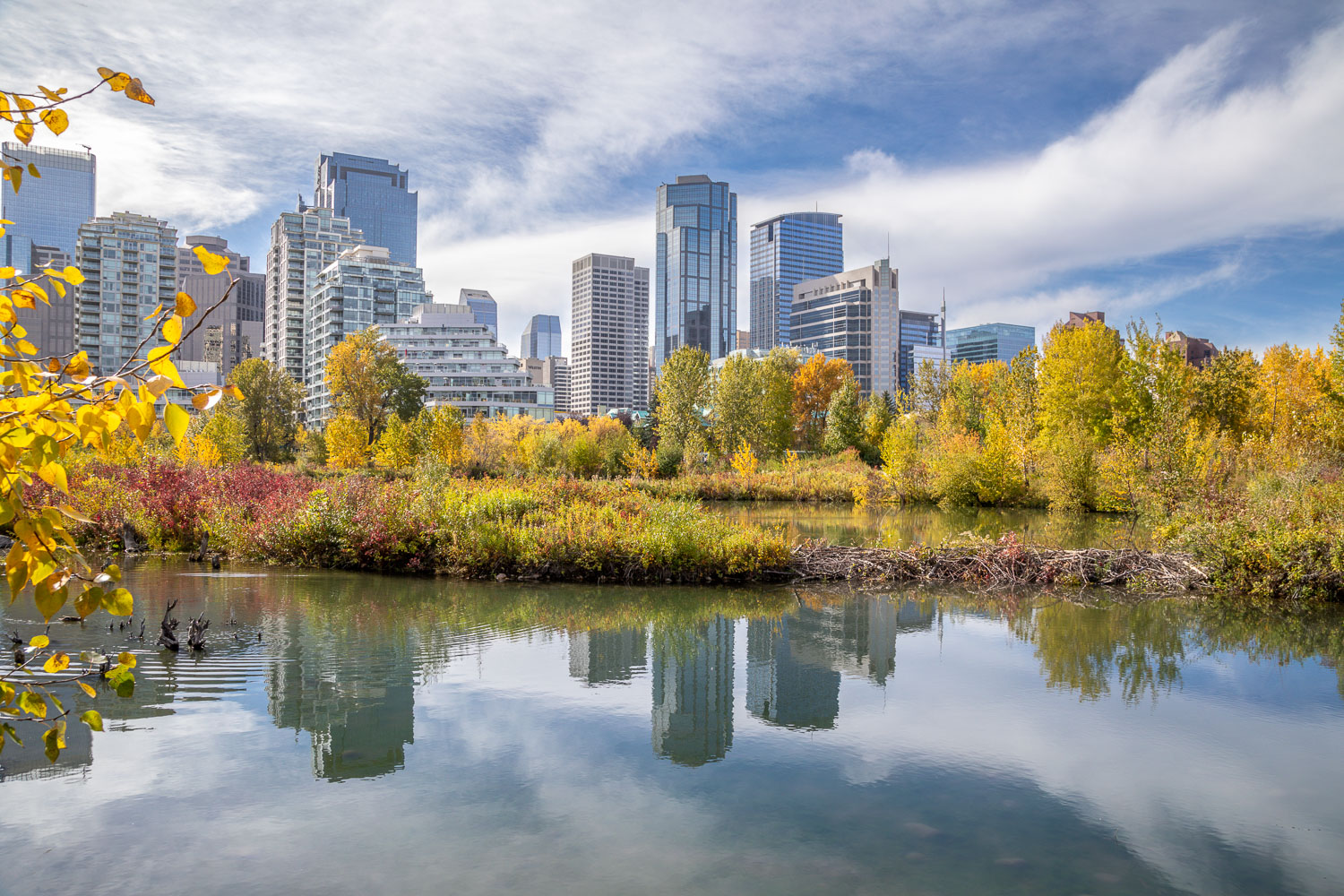
Despite the equity challenges, most city districts feature large green spaces, parks, and squares. Collectively, these parks currently occupy about 10,000 hectares of the city’s total area. For instance, one of Calgary’s most iconic parks is Prince’s Island Park, perfectly situated downtown on the banks of the Bow River.
Another favourite spot for residents is Fish Creek Provincial Park. It holds the distinction of being one of the largest urban parks in all of Canada. Visitors to the park can encounter deer, coyotes, a wide variety of bird species, and even stumble upon historical old farmhouses.
The city is also developing a system of “green corridors”—a vast network of pedestrian and cycling paths. These paths connect the municipal parks, creating a unified and cohesive ecosystem of urban green spaces.
How Green Roofs are Building a Sustainable Calgary
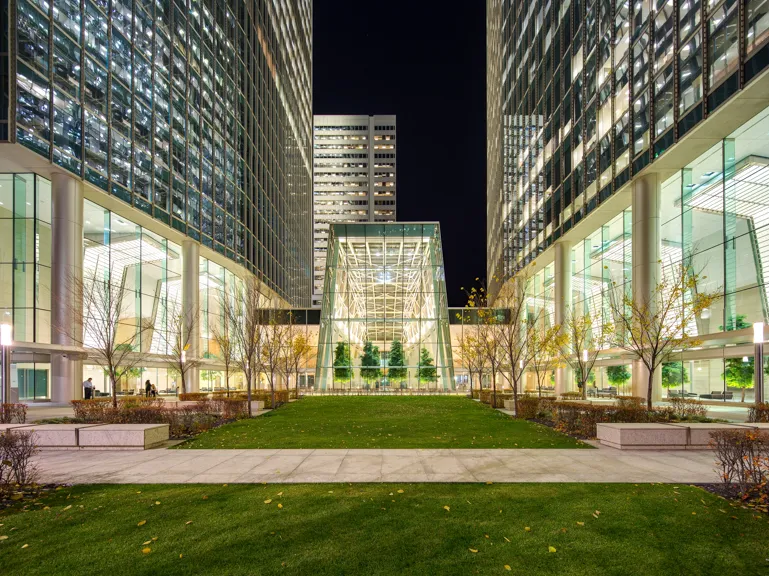
One of the leading ecological trends in Calgary is the adoption of green roofs. These “living” roofs are more than just visually impressive; they offer an excellent, sustainable solution to many of the city’s environmental issues. Composed of planted layers, green roofs are proven to improve air quality and provide habitat for certain small animals.
In addition, they offer a compelling economic advantage. Although the initial construction costs are often higher than for traditional roofing, green roofs solve the critical issue of on-site stormwater management. This feature significantly lowers the risk of urban flooding and simultaneously boosts the energy efficiency of the buildings they cover.
A 9,700 square foot green roof graces the top of the Centennial Place building, while the city’s largest green roof, spanning 25,000 square feet, is located on the Eighth Avenue Place business centre. These green spaces provide a beautiful and peaceful retreat for office workers.