

Calgary knows everything there is to know about snow. Sitting over a thousand meters above sea level in the shadow of the Canadian Rockies, this city lives under a simple reality: “winter can strike even in August.”
Alberta’s signature meteorological wildcard is the Chinook—a warm, dry wind capable of driving temperatures up from -20 °C to +15 °C in just a few hours. The result? Tons of snow instantly melt into water, only to flash-freeze into an enormous ice rink the following night once the wind dies down.
Municipal snow management once followed a crude playbook: roll out every dump truck in sight and bury the streets knee-deep in road salt. But the resulting saltwater slush quickly rotted car undercarriages, corroded bridge infrastructure, and devastated fish populations in the Bow River. Calgary had to innovate, ultimately engineering one of the world’s most sophisticated, high-tech, and environmentally responsible snow-fighting systems. Here is how the city learned to master the elements, as explored by calgary-name.com.
Digital Permafrost: How the RWIS Road Sensor Network Works
Today, a standard snowplow in Calgary is far more than just a heavy truck with a steel blade. It operates as a full-fledged mobile analytics hub integrated directly into the citywide Road Weather Information System (RWIS).
Hundreds of intelligent sensors are embedded directly into the pavement across Calgary’s steepest hills, bridges, and critical interchanges. While conventional weather stations measure ambient air temperature high above ground, RWIS sensors monitor thermal and physical conditions right at tire level.
- Precise Pavement Temperature
Road surface temperature often diverges from ambient air temperature by 5 to 7 degrees Celsius. Asphalt retains solar heat during the day and holds deep frost overnight, making standard weather thermometers an unreliable and dangerous guide. - De-icer Concentration and Freezing Point
Sensors measure the exact chemical composition of the liquid film on the pavement. The system detects brine concentration in real time, alerting dispatchers whether previous treatments are still holding or if they have washed away and need replenishing. - Ice Structure Analysis
Using optical and inductive sensors paired with AI algorithms, the system instantly distinguishes ordinary wet puddles and loose slush from treacherous black ice—a razor-thin, transparent sheet virtually invisible to drivers.
This stream of data, paired with infrared thermal imaging and satellite radar, feeds directly into a central dispatch hub. As a result, Calgary’s road maintenance teams no longer wait for gridlock to strike before acting—snowstorms are no longer an unexpected emergency.
Predictive algorithms forecast icing events one to two hours before they occur, mapping out optimized routes and deploying crews to pre-treat road surfaces with liquid anti-icers. The city stays moving even when temperatures plummet toward minus thirty.

An Eco-Friendly Menu for Highways: From Sugar Beets to Brine
Calgary’s quietest winter revolution didn’t happen in boardroom meetings—it unfolded inside the tanks of its snowplows, fundamentally changing what the city sprays on its roads. Traditional rock salt, dumped by the ton for decades, hits a hard physical limit: once temperatures drop below -10 °C, it completely loses effectiveness. It turns into useless white grit that does little more than rust vehicle chassis and poison roadside vegetation.
To overcome this, the city introduced Smart Anti-Icing—an intelligent blend of liquid salt brines and organic agricultural byproducts that transformed snow clearing into an exacting chemical process.
| Material / De-icer | Mechanism of Action | Key Benefits & Environmental Impact |
| Pre-wetting | Dry rock salt is coated with liquid brine right before it leaves the spreader chute. | Granules stick to cold pavement instead of bouncing off into ditches under car tires, cutting total salt use by up to 30%. |
| Beet Juice (Beet 55) | A proprietary blend of salt brine, desugared beet molasses, and sugar syrups. | Remains effective down to an astonishing -30 °C, binds salt tightly to asphalt, and is completely non-toxic to local flora and fauna. |
| Calcium & Magnesium Chloride | Liquid solutions sprayed onto dry pavement ahead of approaching winter storms. | Forms an invisible barrier that prevents snow and ice from bonding to the asphalt, making plowing dramatically easier. |
| Crushed Aggregate (Grit) | Mechanically enhances traction on hard-packed snow and thick ice sheets. | Eliminates the need for aggressive chemicals in sensitive areas; swept up by street sweepers in spring and recycled. |
This pragmatic, environmentally conscious strategy proves that Canadian winters can be tackled safely without turning urban streets into toxic salt flats. While other cities still rely on brute force and mountains of chloride, Calgary proves that managing sub-zero roads requires engineered precision rather than brute volume.
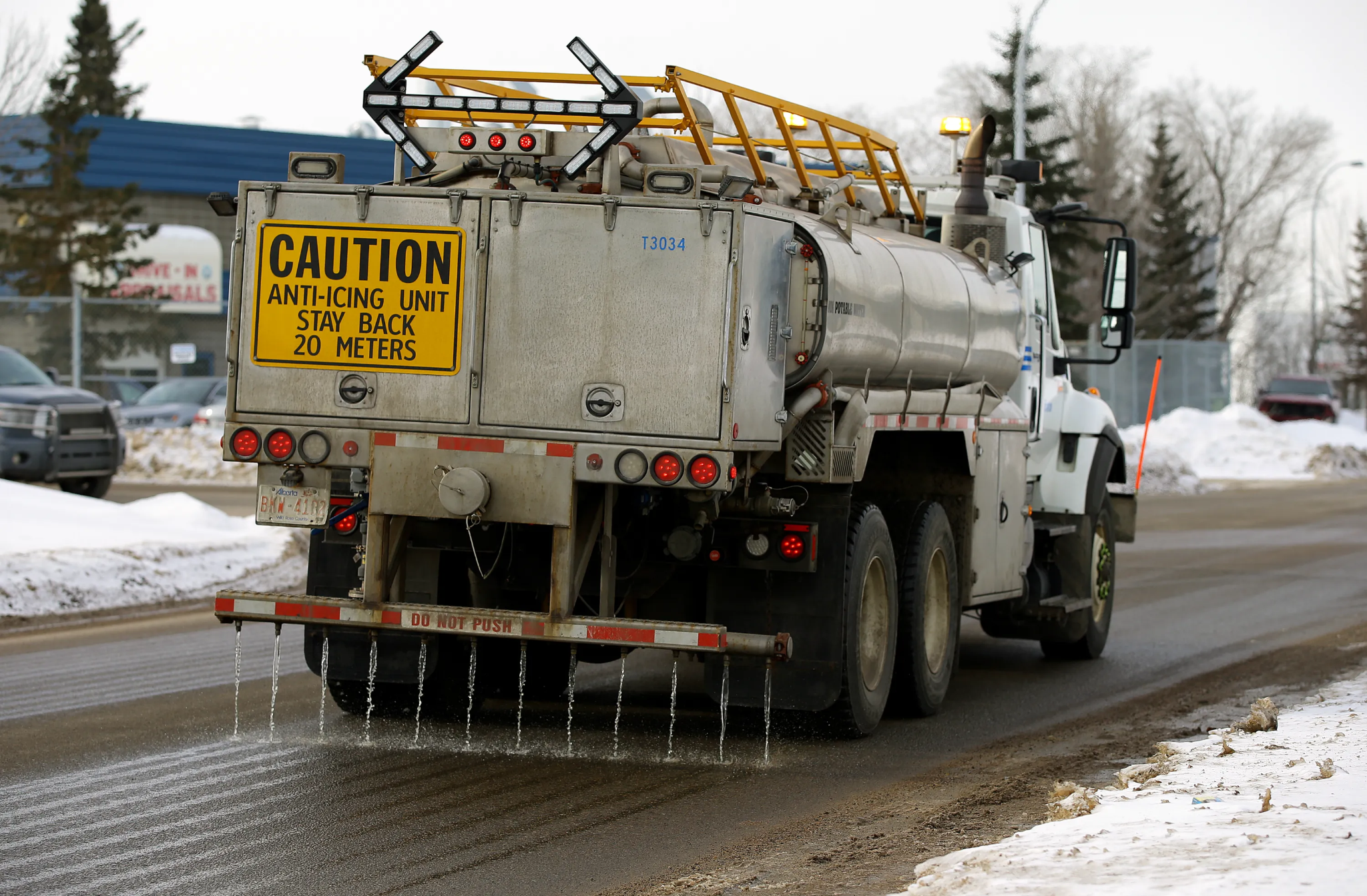
Protecting the Bow River: Why Beets Beat Road Salt
Deploying beet molasses and concentrated brines is no mere municipal PR stunt or greenwashing exercise. It is a hard-nosed, calculated initiative designed to safeguard the region’s fragile freshwater ecosystem.
Every spring, when tons of accumulated winter snowpack melt rapidly, runoff carries road chemicals straight into storm drains—and from there directly into the Bow River. High chloride concentrations are toxic and lethal to native wild trout populations, fry, and the delicate microbial web sustaining the river’s food chain.
By incorporating sugar beet additives, the city saves thousands of tons of pure road salt each season. That drastically slashes chemical runoff into local waterways while keeping winter arteries clear and safe.

Winter Curiosities: When the Roads Smell Like Fresh Coffee
Naturally, switching to organic de-icers came with its share of quirky urban anecdotes and adjustments for locals. Disruption always carries unexpected side effects—especially when you replace industrial chemicals with gallons of agricultural syrup.
When the city first sprayed beet juice across major thoroughfares, 311 hotlines were flooded with calls. Perplexed drivers and pedestrians called City Hall wondering why the streets suddenly smelled like “freshly brewed coffee, caramel, or soy sauce.”
This culinary aroma quickly sparked a few humorous moments across town:
- Four-Legged Gourmands on the Loose. Dogs out on evening strolls seemed convinced that beet-treated sidewalks were giant candy buffets, forcing pet owners to stay extra vigilant.
- A “Caramel” Car Finish. Drivers had to get used to harmless brown speckles on their vehicles instead of the corrosive white crust left behind by traditional road salt.
In the grand scheme of things, this sticky “beet treatment” proved to be an ideal compromise. Unlike harsh chloride salt, the sweet organic film doesn’t corrode undercarriages or brake lines, and it washes off effortlessly at any standard car wash without harming the environment.

The Economics of “Smart” Snow Clearance
By pairing smart pavement sensors and GPS fleet tracking with precision eco-de-icers, Calgary achieved its primary goal: breaking the historic link between heavy snowfall and skyrocketing municipal expenses.
The city no longer blows millions in taxpayer dollars blindly dumping salt in severe cold or deploying convoys of plows “just in case.” Road maintenance in Calgary has become an exact science, where every liter of brine and every kilogram of grit delivers maximum return on investment.
Alberta’s experience clearly shows that managing winter roads doesn’t have to mean an ongoing civic disaster. Combining advanced IT infrastructure, machine learning, and genuine environmental pragmatism turns a harsh winter climate into a tightly controlled operation—where public safety and ecosystem preservation work hand in hand.
