

Park · Calgary · ⭐ 9.5/10 · 1857 reviews · updated: 2026-08-04 15:53:41
Address: 905 30 Ave NW, Calgary, AB T2K 0A2, Canada
Confederation Park — a centennial coulee of golf, geese and Christmas lights
Confederation Park is a crescent of more than 160 hectares curving through northwest Calgary, and it exists because a group of neighbours refused to let a ravine become anything else. What was once called the North Hill Coulee is now a long green corridor of sculpted hillsides, wetland, fairways and ski track, threaded between Mount Pleasant, Capitol Hill, Collingwood, Highland Park, Rosemont and Cambrian Heights. In summer it is geese and golf balls; in December it turns into the brightest place in the city.
Highlights
- A centennial park — created in 1967 to mark the centennial of Canadian Confederation and opened that August, the product of a neighbourhood campaign begun two years earlier.
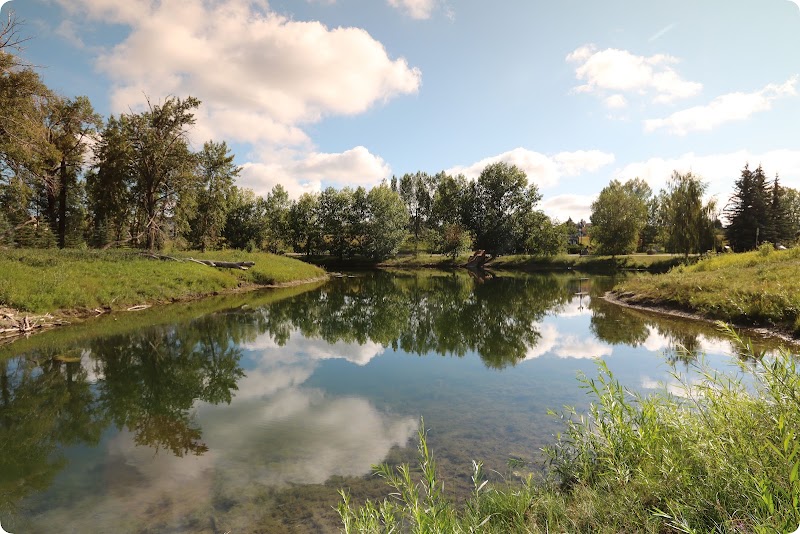
- The wetland — roughly eight hectares of marsh, among the largest in Calgary and an important stop for migrating waterfowl, with ducks, Canada Geese, gulls, muskrats and dragonflies.
- Confederation Park Golf Course — a nine-hole, par-36 City course of about 3,200 yards that opened in 1975, with two par fives, two long par threes and a double-decker driving range.
- Lions Festival of Lights — running every December since 1986: roughly 650,000 bulbs on 25,000 strings and nearly four kilometres of power cord, strung along the golf course fairways by volunteers who begin work in October.
- Foothills Nordic ski trails — around six kilometres of groomed classic and skate track laid over the golf course and the park’s west end each winter, floodlit into the evening.
- The natural playground — built around a Voyageur canoe sculpture, with climbing nets, a 4.5-metre slide and a water pump.
What you’ll find
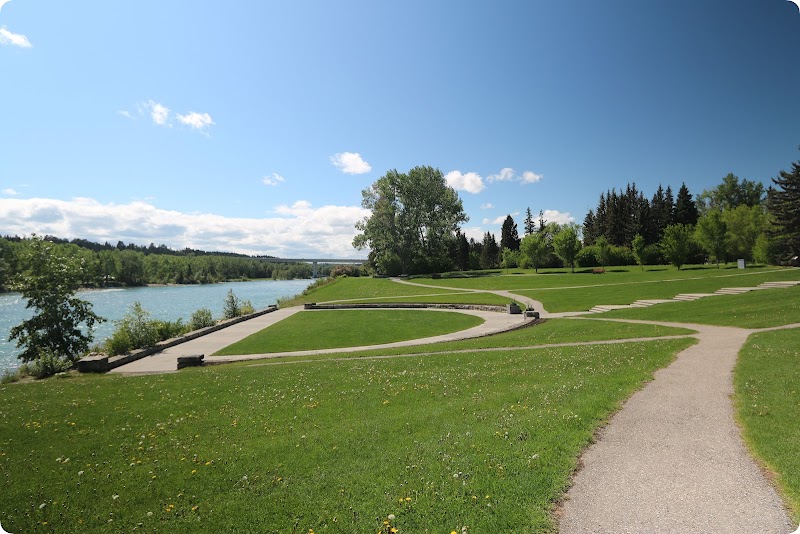
The park’s defining feature is invisible until you know to look for it: the once-jagged, steep coulee walls were reshaped into gently contoured hillsides, a deliberate piece of landscape design in the eighteenth-century English Picturesque tradition.
- Native grassland preserved in the west section — among the first such deliberate preservations inside a developed Calgary park.
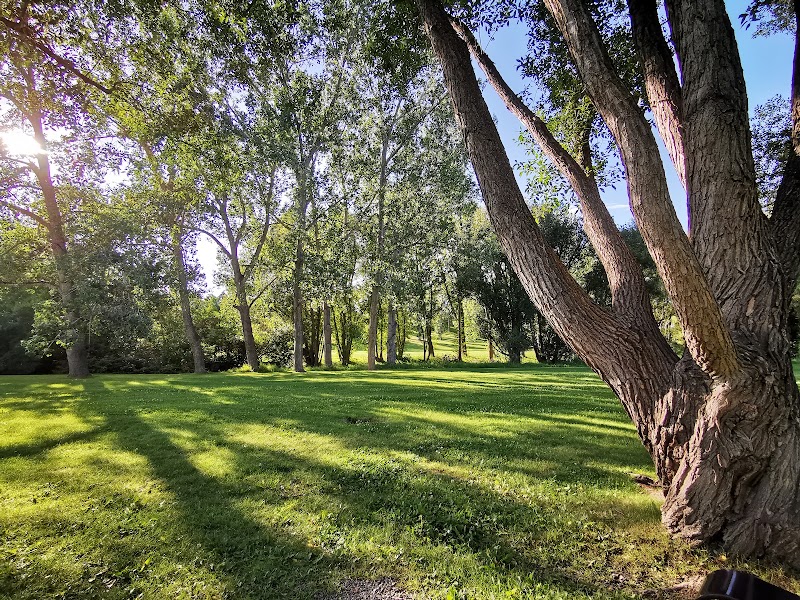
- A creek and wetland system lined with balsam poplar and water birch, plus planted Douglas fir, dogwood and willow.
- Formal flower and rock gardens set against the naturalized slopes.
- Tennis courts, baseball diamonds, picnic areas and long, gentle toboggan hills.
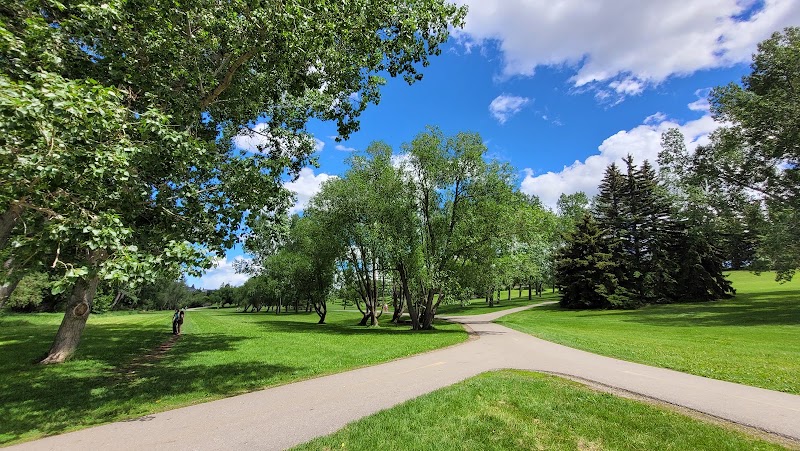
- Pathways running the full crescent, well used by walkers, runners and cyclists.
- Year-round washrooms, generally open from around 7 a.m. to 8:30 p.m., weather permitting.
Things to do — and who it’s for
- Golfers short on time — nine holes at par 36 with two par fives and two genuinely long par threes, the eighth stretching to 245 yards from the men’s tee.
- Beginners and juniors — lessons from age six upward, a two-tier driving range with dozens of stalls, and putting and chipping greens.
- Cross-country skiers — classic and skate trails groomed by the Foothills Nordic Ski Club, the largest club of its kind in Alberta, and lit for evening laps.
- Families in December — the Lions display is free to walk or drive through, and it runs into the small hours.
- Birders and photographers — the wetland pulls in waterfowl on migration and holds muskrats, butterflies and dragonflies all summer.
- Young children — the natural playground trades plastic for canoe, nets, slide and a working water pump.
Getting there & practical
The park lies in northwest Calgary, wrapped around by half a dozen established neighbourhoods, with Queens Park Cemetery on its flank. The Red Line CTrain is the easiest approach — Lions Park station sits at the park’s eastern side — and several bus routes reach the surrounding communities; there is free parking at the golf course and at pathway access points. Entering the park is free and it is open daily from 5 a.m. to 11 p.m. Golf is a separate paid City facility with its own booking system, and tee times are released four days in advance in the morning; the Lions Festival of Lights, by contrast, is free and runs nightly from December into early January, generally from 7 p.m. until midnight. Allow an hour for a pathway loop, two or three for a round of golf, and a good half hour for the lights, longer if you walk rather than drive. In winter, ski trails share space with the golf course, so stay off the groomed track on foot.
When to visit
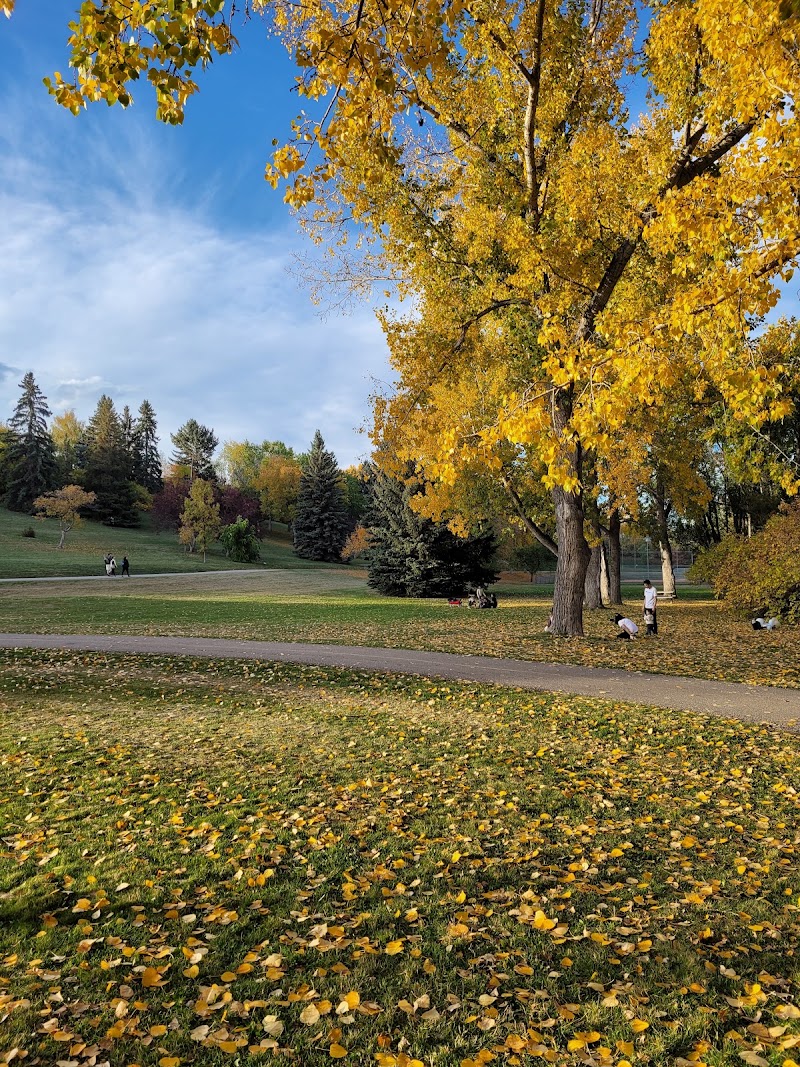
Spring is the wetland’s moment, with meltwater filling the marsh and returning ducks and geese noisy from dawn; the ground is soft and the golf season has not yet begun. Summer brings the fairways into use, the gardens into bloom and the shaded pathway into constant traffic, and the long northern evenings keep the park busy well past supper. Autumn is the quietest and arguably the prettiest stretch — poplar and birch turning along the creek, dragonflies still working the water, and the coulee’s contours showing clearly once the leaves thin. Winter is when the park changes character completely: skiers take over the fairways under lights, toboggan hills fill up on weekends, and from December the golf course disappears under several hundred thousand bulbs.
Good to know
The park began as a neighbourhood campaign. In 1965 residents of Capitol Hill, Mount Pleasant, Rosemont and Cambrian Heights formed the Centennial Ravine Park Society to press for the coulee to be made a public park rather than developed, and Calgary City Council duly passed Bylaw No. 7086; the park opened on 7 August 1967, in Canada’s centennial year. Its design carried the vision of Harry Boothman, one of the City’s most influential parks superintendents — the same man commemorated by the pedestrian bridge at Edworthy Park — who argued for parkland built around unstructured recreation and environmental preservation rather than the ornamental or strictly sporting parks then standard. The result is regarded as an outstanding piece of landscape design: the rough coulee walls were moulded into flowing hillsides, while a stretch of native grassland in the west was deliberately left intact, among the first such gestures in a developed Calgary park. The golf course followed in 1975. The Lions Festival of Lights began in 1986, started by the Lions Club as a thank-you to Calgarians for their support, and has grown into the city’s best-known free holiday display, assembled each autumn by volunteers along the fairways of the third through sixth holes. In winter the Foothills Nordic Ski Club, one of the largest cross-country and biathlon clubs in Canada, grooms and maintains the trails here under an agreement with the City.
Visitor tips
- For the Lions display, going on foot is the better experience — the drive-through queue builds on weekends and around the holidays, while walkers get the lights at close range.
- Book golf early: tee times open four days ahead in the morning and the course is popular precisely because nine holes fit into an evening.
- Bring binoculars in April and May. The wetland is one of the larger marshes left inside the city and the migration traffic is worth stopping for.
Questions & answers
Why is it called Confederation Park? It was created in 1967 to mark the centennial of Canadian Confederation, after a local society campaigned from 1965 to have the old North Hill Coulee protected as parkland.
Is there an admission charge? No. The park, its pathways, playground, courts and toboggan hills are free, and so is the Lions Festival of Lights. Golf is a separate paid City facility.
How big is the golf course? Nine holes, par 36, roughly 3,200 yards, opened in 1975, with two par fives and two long par threes plus a two-tier driving range and practice greens.
When are the Christmas lights on? The display runs nightly from December into early January, generally from 7 p.m. to midnight, and has done so every year since 1986.
Can you ski here? Yes. The Foothills Nordic Ski Club grooms about six kilometres of classic and skate trails over the golf course and the west end of the park, lit into the evening, snow permitting.
What wildlife will I see? The eight-hectare wetland draws ducks, Canada Geese and gulls, especially on migration, and holds muskrats, butterflies and dragonflies through the warm months.
Photos
Show 1 more photos
Visitor reviews
Reviews last updated: 2026-08-04 15:53:41
Data is refreshed monthly. Sources: calgary-name.com and editorial picks based on reviews.
A nice city park with paved multi-use paths. Lots of benches and spots for barbecues and picnics. The park is well planted with trees, which provides shade from the sun in summer. There's also a pond with ducks and a vie…
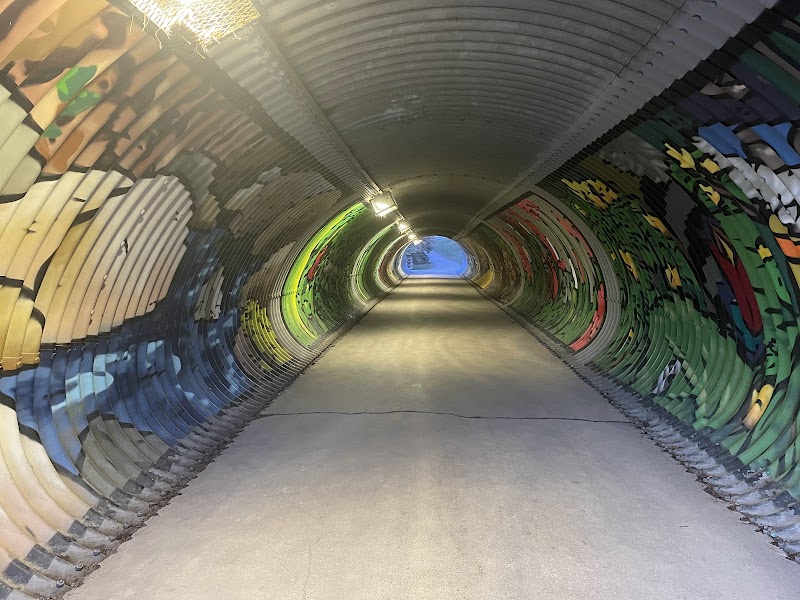
This is one of the nicest city parks I've ever seen. Incredible paved trails, beautiful bridges and waterways. Baseball fields, playgrounds, barbecue areas, the tunnel was interesting, and the grass is perfectly maintain…
This is such a wonderful park. So many places where you can stop, sit or have a picnic. There were lots of families, but it's so huge that everyone had plenty of room. All the paths were paved, so they're great for bikes…
This park is one of my favourite places for walks in the whole city.
There are lots of old trees here that offer shade in summer, if you want to stop and sit on a bench or have a picnic.
Usually a nice mix of people ga…
Quite not bad, but it's not really worth going here just to have been here.