

Booming Ice Chasm is an ice cave located in the Crowsnest Pass area of Alberta’s Rocky Mountains, approximately 150 kilometers southwest of Calgary. This cave acts as a “cold trap,” where cold air enters through a narrow passage and never escapes, creating a 179-meter layer of pure ice. Learn more below. More on calgary-name.com
Discovery and Exploration
Booming Ice Chasm is a limestone cave formed over millions of years due to the rise and fall of groundwater levels. Members of the Alberta Speleological Society suspected the cave’s existence in 2005. Three years later, while attempting to access another cave, speleologists discovered Booming Ice Chasm and mapped it.
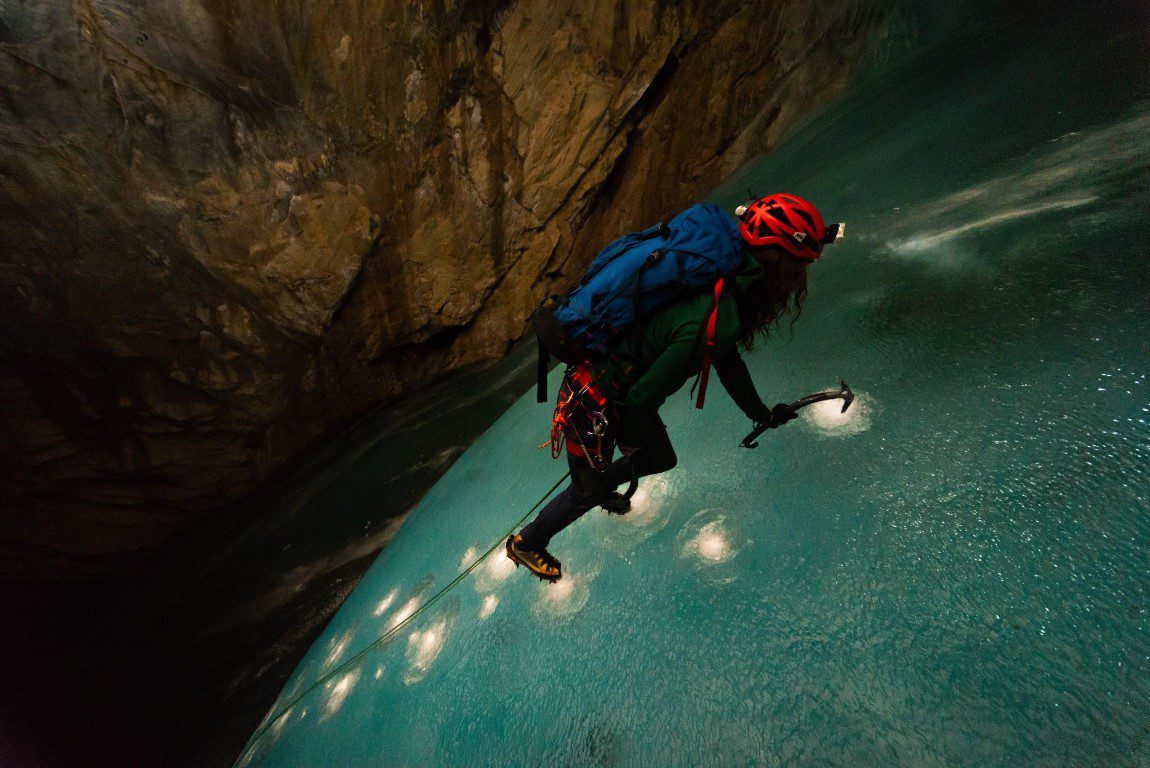
Further exploration took place in summer 2012, when the lowest point of the cave was reached. In 2013, speleologist Nicolas Vieira and his team studied a frozen waterfall located 100 meters from the cave entrance. In 2015, Kathleen Graham explored other sections of the cave. Exploration has continued in subsequent years.
Geological Features
The mouth of Booming Ice Chasm is only a few meters wide, with snow, frost, and loose scree covering its walls. The cave primarily consists of sedimentary rocks such as limestone and shale, along with stalagmites, stalactites, ice crystals, rocks, and boulders.
Near the entrance, a dense, steeply descending ice layer extends approximately 140 meters downward. Known as an icefall or cascading ice mass, it is stationary, unlike Slovakia’s Silica Ice Cave, where the ice layer moves along an inclined rock base. A similar descending ice mass exists in the Arnold Ice Cave in the United States.
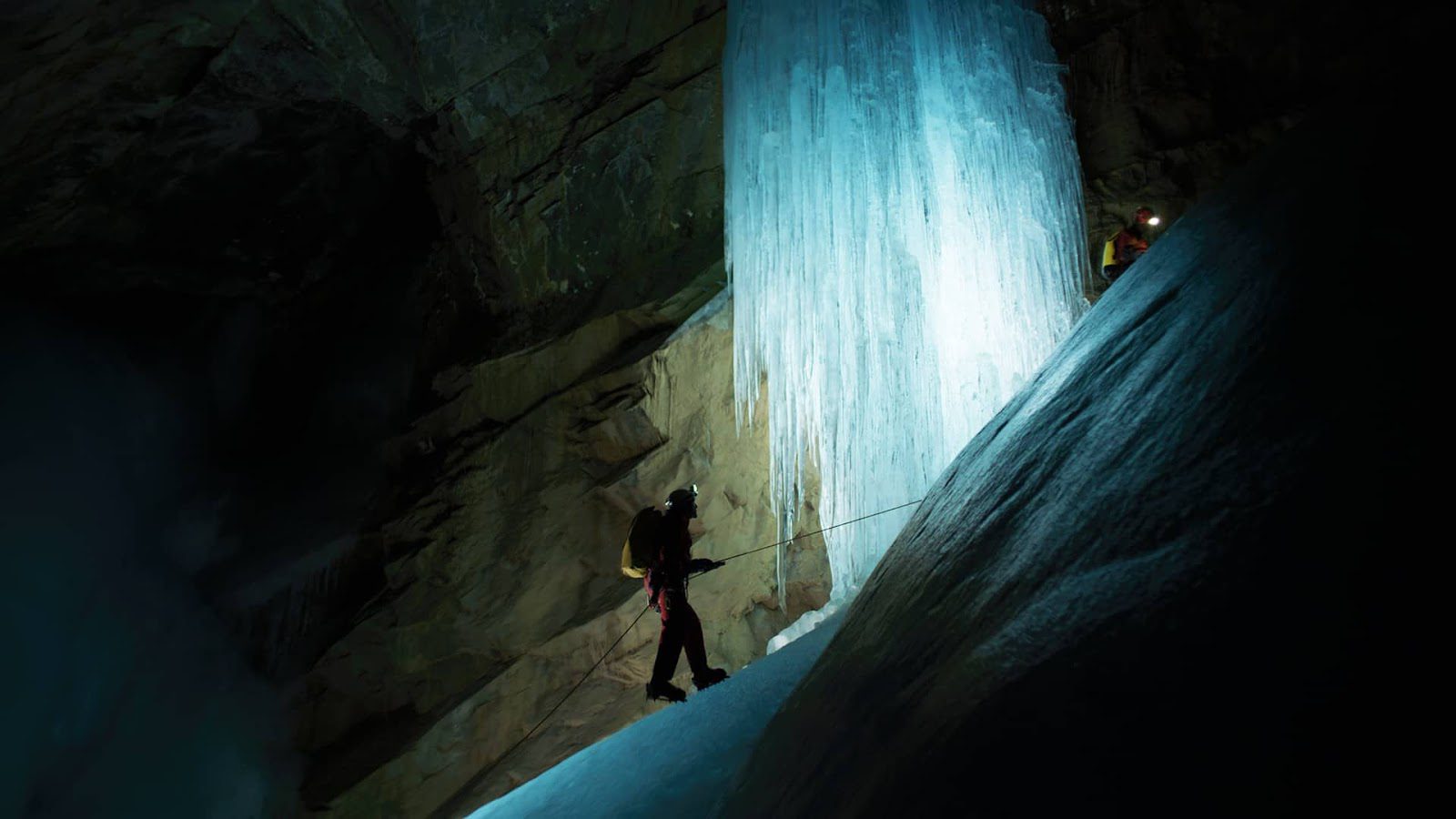
The perennial ice wall, frozen waterfall, and lake within the cave are sustained because the cave functions as a cold trap. Cold air gets trapped inside, unable to circulate or exit. Heavy cold air enters the upper part of the cave, descending through a narrow neck to the lower chamber. This displaces warmer, lighter air, which rises and exits through the cave’s mouth. As warm air escapes, new cold air replaces it, keeping the cave insulated from external warmth and maintaining subzero temperatures year-round.
Additionally, the ice slowly expands due to a combination of precipitation and melting snow filtering into the cave. This water freezes on existing ice surfaces, forming new thin ice layers on the walls and the frozen lakebed.
The cave’s frozen waterfall is a 22-meter ascent leading to unexplored chambers and narrow passages that may loop back to the cave’s entrance.
Biological Significance
According to microbiologist and Thompson Rivers University professor Naowarat Chitthaim, the cave has the potential to harbor sources of super-antibiotics. It is hypothesized—but as of 2022, unconfirmed—that specialized microorganisms have adapted to and thrive in the cave. These microorganisms may hold significant pharmacological potential, offering powerful treatments against infections resistant to conventional antibiotics.
The cave’s stable microclimate and isolated physical and atmospheric systems contribute to the potential adaptation of such microorganisms. Key elements such as carbon, hydrogen, and nitrogen support microbial existence, while the absence of plants (which typically form the base of food chains and microbial activity) limits nutrients, creating an environment for these microorganisms to function.
To investigate this possibility, Professor Chitthaim ordered special vessels to be placed in the cave for a month. In 2019, sediment samples were sent to NASA’s Lyndon B. Johnson Space Center and the University of Alberta to study microbial colonization mechanisms, survival strategies, and bacterial genomes.
Tourism
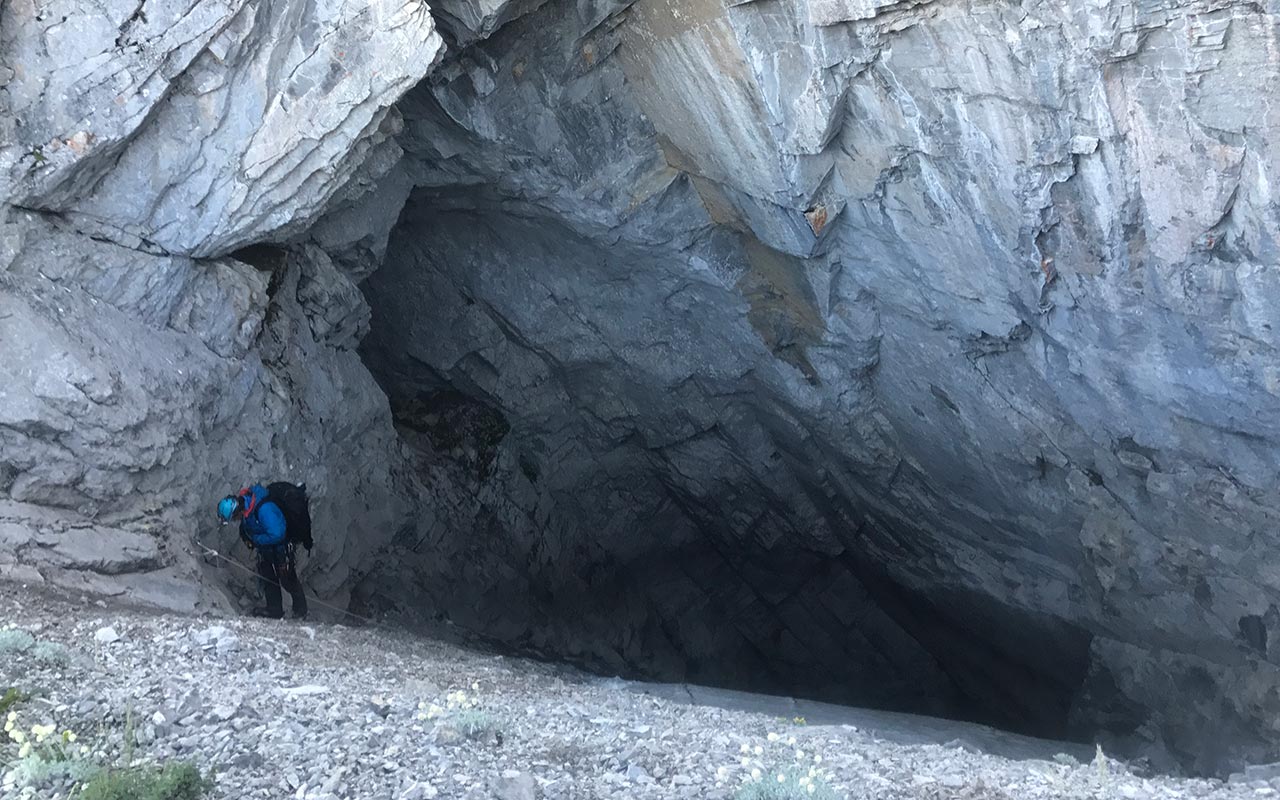
This icy marvel does not attract many tourists due to its remote location and hazardous access. The cave is situated in a secluded part of Alberta, with the nearest community being Coleman. There are no marked trails or routes leading to the cave’s exact location, and no supporting infrastructure exists. The cave is a few hundred meters east of another ice cave called Ice Chasm.
Accessing Booming Ice Chasm requires scaling a 700-meter vertical ascent on Mount Sentry. This climb is extremely challenging, suitable only for experienced climbers, due to loose scree on the mountain’s surface. The cave’s entrance is concealed behind a rocky ledge, making it hard to locate.
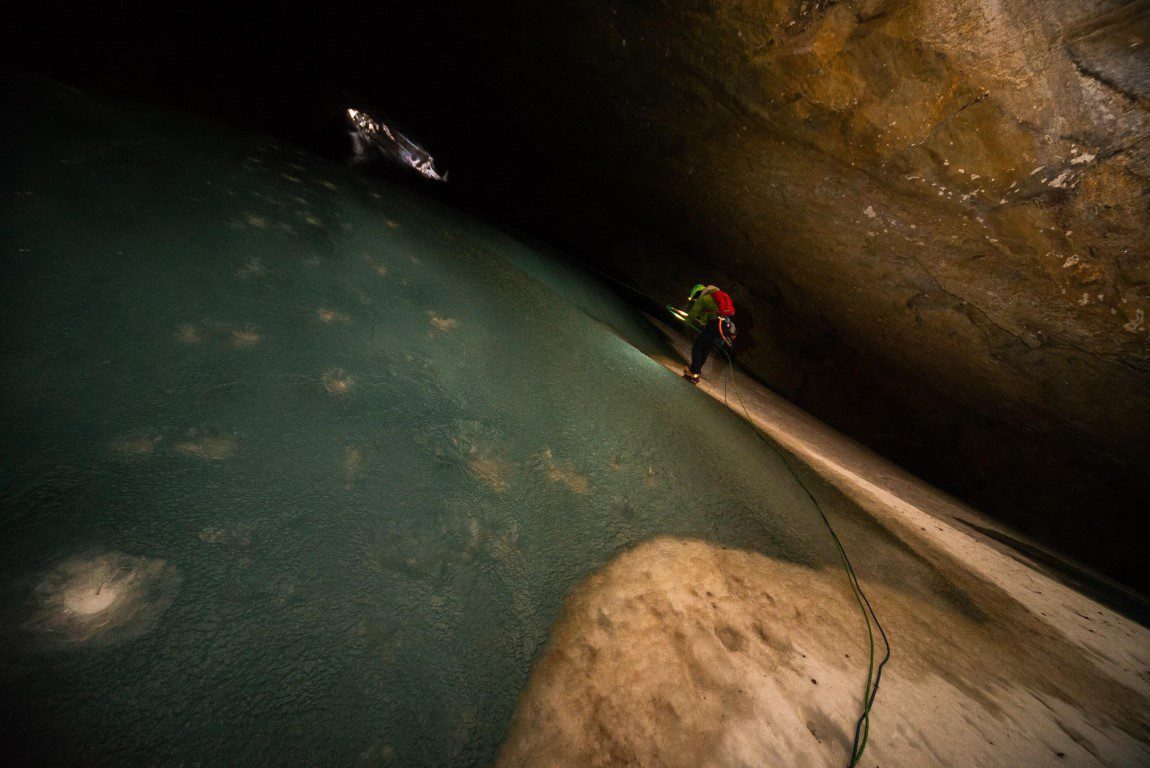
Entry into the cave begins with a steep 140-meter ice-covered slope. The ice is smooth and slippery, with no barriers to prevent falls, posing significant risks to climbers. Many animal remains are found at the cave’s bottom due to this same hazard.
Nicolas Vieira created a map of the cave in 2013, but it remains imprecise, adding to the danger. The cave’s climate is also a risk factor. High pressure, subzero temperatures, and strong winds limit prolonged exploration.
The cave’s hollow structure amplifies all sounds inside, creating an intense echo. The acoustics are so pronounced that climbers must either whisper or pause between words to be understood. Falling rocks generate loud crashes, adding to the cave’s dramatic atmosphere.
Media Coverage
Since its discovery, Booming Ice Chasm has been featured in numerous high-profile media outlets. The cave and the nearby White Rabbit Cave were the focus of the first episode of the second season of Terres d’Exploration, a documentary series about Canada’s remote locations.
Filming in Booming Ice Chasm took three days. Cameras were mounted using tennis balls, whose felt adhered well to the ice. LED lamps illuminated the cave for the shoot. François-Xavier de Rieds, the show’s director, also photographed speleological expeditions in the cave for Canadian Geographic, National Geographic, and other publications.
The cave was also featured in an episode of Cold from the Wild Canadian Weather series. The production team transported 900 kilograms of equipment via helicopter. The only suitable base for the team was on a windy ridge, a short but treacherous distance from the cave entrance.
Filming was challenging, but the real difficulties began when the team emerged from the cave. High winds destroyed their tents and displaced equipment from the mountain.