

In the late 19th century, as Calgary began to develop along the banks of the Bow River, large islands stood between Deerfoot Trail and Crowchild Trail. In 1890, the city council named the lower island St. George’s Island and the upper one St. Patrick’s Island. In 1908, the federal government gifted these two islands, along with St. Andrew’s Island, to the city on the condition that they be used for recreational purposes.
The islands were named after the patron saints of the United Kingdom: St. George of England, St. Patrick of Ireland, and St. Andrew of Scotland. At the time, these now-urban islands were small oases in the treeless prairies, filled with tall poplars and numerous bushes of raspberries, alder-leaved serviceberries, and strawberries. More on calgary-name.com.
Initial Development
St. George’s Island was the first to be developed. From 1892 to 1900, a ferry connected the island to the city, boosting its popularity as a weekend playground. In 1900, a pedestrian bridge was built, followed by a car bridge in 1908, which cost the city $25,000. The old bridge over the Elbow River was moved to the island’s northern side to provide easier access to the General Hospital and the Bridgeland community.
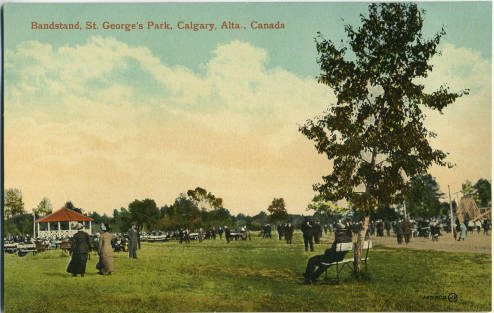
The island’s natural beauty drew attention from Calgarians and park managers. Trees were planted, pathways laid, and picnic areas created. In 1909, a performance stage and a dance platform were added. By 1911, the island hosted over 200 weekend picnics, and Sunday evening concerts attracted 1,500–2,000 people, despite Calgary’s population being just 43,704 at the time.
In 1912, a two-story German beer garden was opened. However, since selling beer within the city limits was illegal at the time, the building was converted into a tea house. This too failed because the noise from bands on the upper floor drove tea lovers away from the main floor.
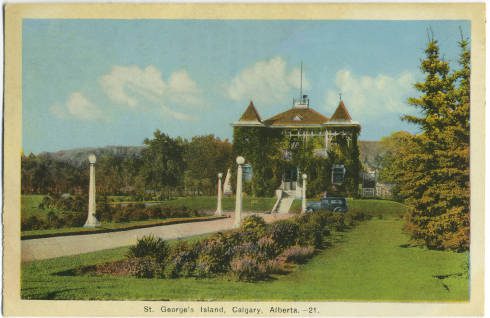
In 1917, Calgary alderman Fred Curry initiated the creation of a zoo on the island. It began with two unruly deer captured by a local dog catcher. The deer sparked significant interest, and under park inspector William Reader, the zoo rapidly expanded.
The next phase involved creating a lagoon, pool, and playground in the Firth of Forth Bay, located between St. George’s Island and St. Andrew’s Island. The bay became a favorite family destination for Calgarians. In 1920, the lagoon and pool were closed due to flooding, the channel was filled in, and St. Andrew’s Island was merged with St. George’s Island.
From Abandoned Land to a Beloved Park
In the late 1890s, St. Patrick’s Island began developing as a public space. In the 1960s, the island became a camping site and, by the 1980s, a home for the homeless. For several decades, it was connected to the East Village by a steel and wooden bridge. In the late 2000s, the city transformed the island into a full-fledged urban park, now known as Patrick Island Park.
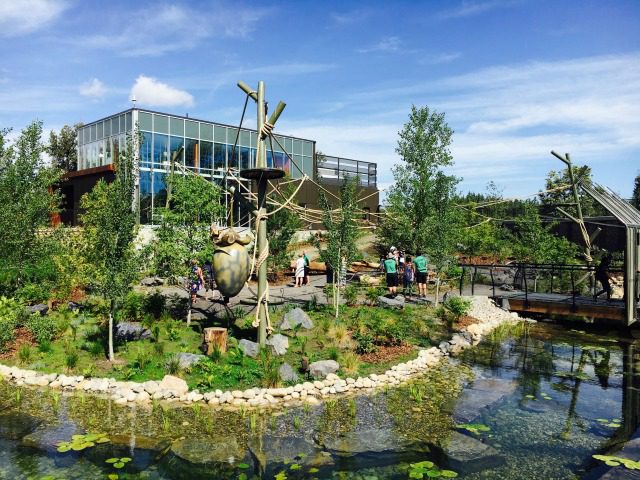
The park opened to the public in July 2015, alongside the George C. King Bridge, which connected the island to the East Village and Bridgeland neighborhoods. With the development of the East Village and the revitalization of Bridgeland, St. Patrick’s Island became an ideal urban playground. The park features numerous walking and cycling trails, an amphitheater, a public square, restored river channels, and more.
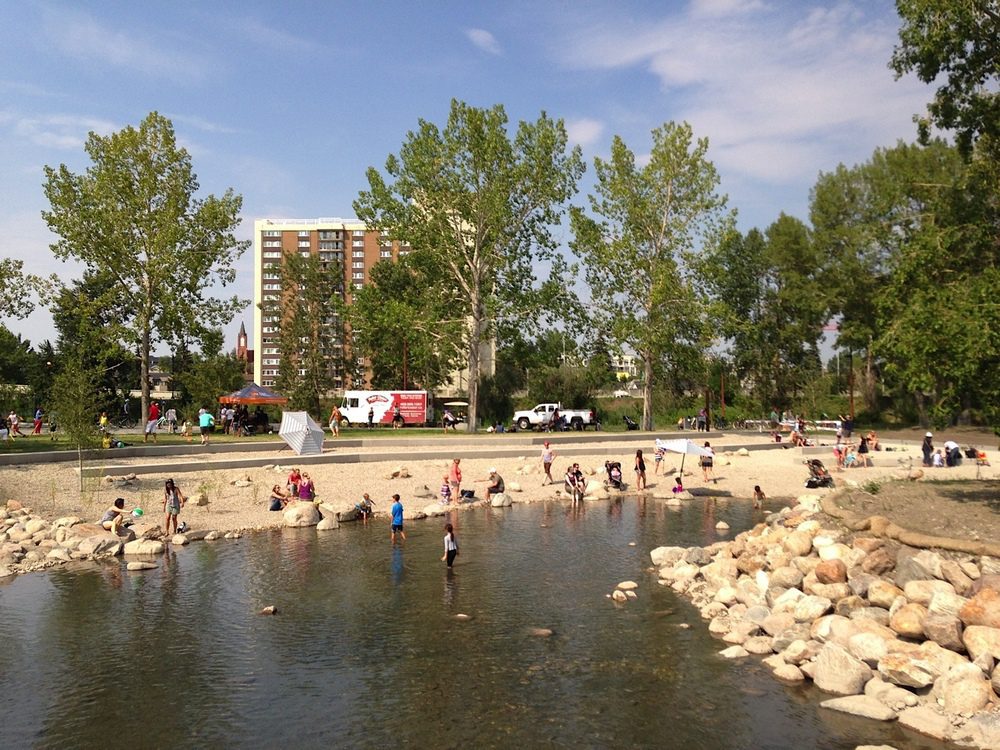
What was once an almost forgotten treasure in the city center has become a space with numerous amenities, perfect for family outings. On its opening weekend, the park welcomed 5,000 visitors.
The revitalized island mirrored the transformation of Prince’s Island in the Eau Claire, West End, Hillhurst, Sunnyside, and Chinatown communities during the 1990s. The park has received multiple design awards and has become a venue for city festivals and events.
A Man-Made Wonder
Prince’s Island is named after Peter Prince, who came to Calgary from Quebec in 1886 and established logging businesses along the Bow River. According to some reports, the island where Prince worked was initially just a gravel bar, while others suggest it was a peninsula until a canal was dug to transport logs from Kananaskis to the sawmill on the Bow’s banks, creating the island.
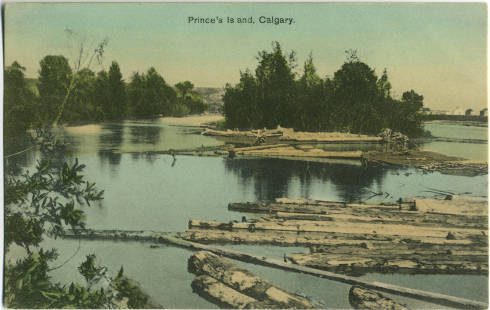
Trees were cut in winter, transported to Calgary in spring, and turned into lumber in summer and fall. The canal also created a lagoon, making Prince’s Island a man-made formation.
Prince, known as the “lumber baron,” had a keen business sense. One dark night in 1886, Peter slipped off the sidewalk and landed on a muddy street. This inspired him to ensure the city was lit by electric lights. In 1889, Prince founded the Calgary Water Power Co. to supply electricity for street lighting. In 1893, he built Calgary’s first hydroelectric power plant east of the lagoon for his company.
The electricity generated by this plant lit much of Calgary for a time. Peter also owned Calgary’s first gas-powered car, built a flour mill, and erected a grain elevator.
Prince died in 1925, but the sawmill operated until 1944. In 1947, the city purchased the land from the Prince family to create Prince’s Island Park. This park has become one of North America’s premier urban parks, hosting the Calgary International Folk Festival and housing the renowned River Café.
Visitors can also enjoy a small sculpture garden, a popular playground, and winter ice skating on the lagoon. Additionally, the park’s eastern end features the Chevron Learning Pathway, which educates visitors on how wetlands provide wildlife habitats and filter city water before it enters the river.
A Lost Island
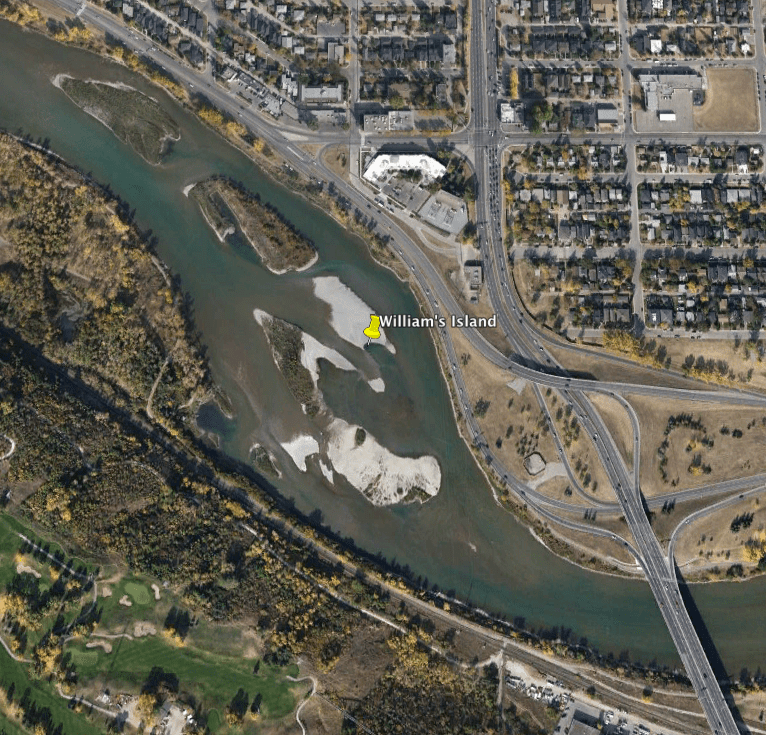
West of Crowchild Trail, there once stood a large island called William’s Island. In the early 20th century, it was home to the city’s waterworks. The 1929 flood damaged the facility, which was replaced by the Glenmore Reservoir in 1933.
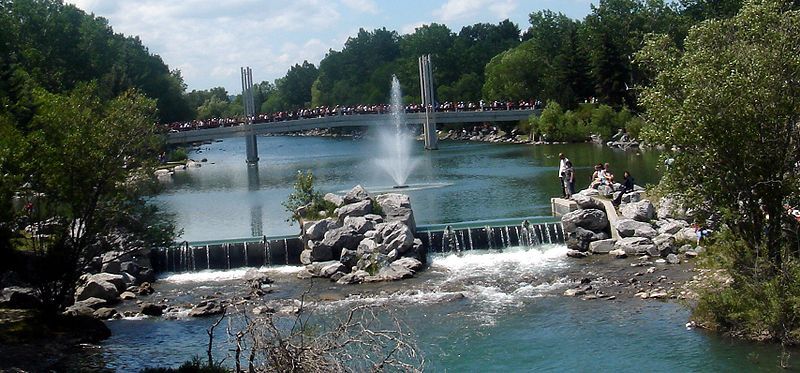
The island was later transferred to Calgary Parks, and the old reservoir became a local swimming hole. By the mid-20th century, the island was used by an archery club, while the surrounding Bow River supported gravel extraction for various construction projects. These activities damaged the swimming hole and parts of the island. The remnants of the island became a popular site for duck and goose nesting and fishing.
Overall, the islands on the Bow River quickly transformed into urban tourist attractions, thanks to their iconic pedestrian bridges, signature festivals and events, cozy dining spots, recreational spaces, and other amenities.