

Alternative energy sources have been used long before coal, natural gas, and oil became prominent in the late 19th and early 20th centuries. During the 1973 oil crisis, when global oil prices skyrocketed, it became evident that complete reliance on fossil fuels was risky. Public awareness of the environmental impact of burning fossil fuels also drove research and development in alternative energy. Below is a summary of how it evolved in Alberta. More on calgary-name.com.
Hydropower
Water has long been one of Alberta’s most significant energy sources, initially as a mechanical power source and later as a source of electricity. Hydropower has evolved from simple water wheels used in mills to massive hydroelectric plants powering entire cities. The principle involves converting water’s kinetic energy into mechanical energy, which is then used to generate electricity through turbines. Although hydroelectricity is environmentally friendly, damming rivers can sometimes negatively impact ecosystems.
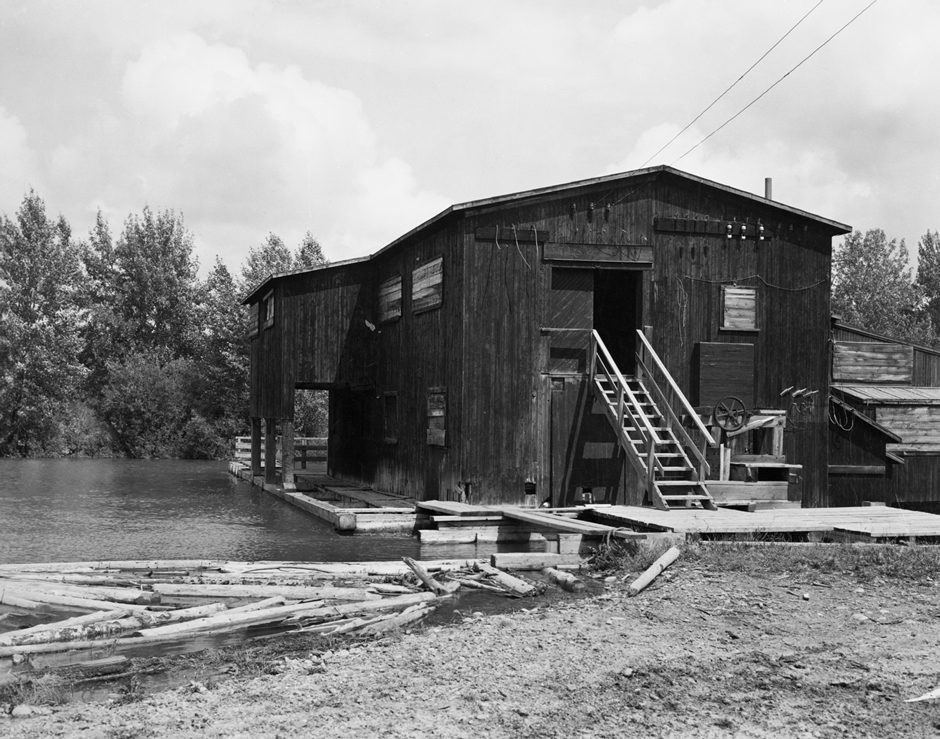
Between 1901 and 1911, Calgary’s population surged from 4,398 to 43,706. As a growing urban hub with abundant Rocky Mountain water resources, Calgary became a focal point for hydroelectric development in Alberta.
The city’s first hydroelectric station was a small facility built in 1893 by the Calgary Water Power Company. Located along a reservoir spanning the southern bank of the Bow River and Prince’s Island, the company was the sole electricity supplier in Calgary between 1894 and 1904.
In 1911, another company, Calgary Power (later renamed TransAlta), completed a large hydroelectric plant near Horseshoe Falls on the Bow River. To regulate water flow for this plant, a dam was constructed at Lake Minnewanka in 1912, forming a reservoir to control the river. Plans for additional dams were debated, as opponents feared these would harm the region’s landscape and reduce its tourism appeal.
After World War II, the need for new hydroelectric plants increased. In 1947, Calgary Power built a barrier generator station on the Kananaskis River, Alberta’s first remotely controlled hydroelectric facility. The company later constructed three more dams along the North Saskatchewan River near Edmonton and downstream. In 1954, the Bearspaw hydroelectric plant west of Calgary was completed, followed by additional dams on the Kananaskis River.
By the early 1950s, nearly half of Alberta’s installed capacity came from hydroelectric stations. In the 1960s, Calgary Power launched its largest hydroelectric project, constructing a dam and reservoir on the Brazeau River in 1963. The first generator at the Brazeau plant was operational by 1965. Subsequent hydro projects were smaller, contributing only marginally to Alberta’s overall energy capacity.
Wind Energy
Like hydropower, wind energy has been utilized for centuries. Early applications included sailing and windmills for grinding grain and pumping water. Despite limitations such as intermittency, wind energy has become a crucial chapter in Alberta’s energy history.
In North America, European settlers introduced windmill technology in the 17th century. These windmills were used for milling grain, sawing wood, and churning butter. Wind remained a dominant energy source for transportation until the late 19th century, when steam power gained popularity. In some Alberta towns with high concentrations of European settlers, windmills persisted into the 20th century, such as in Bruderheim.
Wind energy gained prominence on North America’s arid western plains during the early 19th century. Agriculture in Alberta required significant water resources, but natural water bodies were insufficient, and rainfall was much lower than in eastern regions. Wells were dug manually, but this was time-consuming and labor-intensive, leading to the adoption of wind-powered pumps.
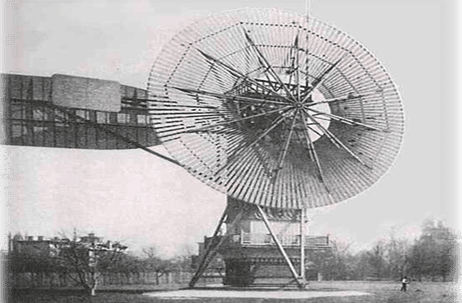
While wind energy became widespread for water pumping on farms and ranches, scientists and engineers were slow to develop it for electricity generation. One exception was American inventor Charles Brush, who built a massive wind-powered generator to supply electricity to his home in Cleveland, Ohio, for 20 years.
However, Brush’s design was bulky and relied on expensive battery systems to store energy. A breakthrough came in the 1890s when Danish inventor Poul la Cour developed experimental wind turbines with aerodynamic designs, significantly improving their potential for electricity generation. By the 1920s, wind turbines were producing considerable amounts of electricity.
Alberta, with its strong and consistent winds, became an ideal location for wind energy development. In 1993, the first commercial wind farm in Alberta and Canada, Cowley Ridge, was built near Pincher Creek. A second facility, Cowley North, followed in 2000.
In 2012, the massive Halkirk Wind Project near the village of Halkirk began operations. Its wind farm consists of 83 turbines, each generating 1.8 MW of electricity. By September 2013, Alberta ranked third in Canada for installed wind power capacity, with over 1,100 MW, trailing only Quebec and Ontario.
Solar Energy
Humans have harnessed solar energy for tens of thousands of years, mainly through passive solar heating to regulate building temperatures. Solar energy also powers photosynthesis, sustaining life on Earth.
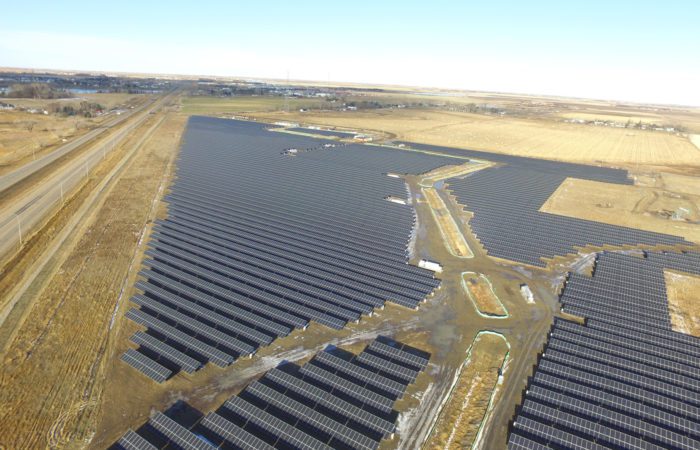
In the 18th century, scientists began studying solar energy to enhance its use. A key discovery was the photovoltaic effect—the ability to convert sunlight into electricity. This effect occurs when sunlight hits semiconductors, such as silicon, enabling them to conduct electricity under specific conditions like heat or light exposure. This breakthrough led to the development of solar panels in the 20th century.
In Alberta, solar energy has been used for heating homes long before modern solar technology. Ukrainian immigrants, for example, designed roofs and window patterns to maximize winter sunlight and provide shade in summer.
Despite its potential, solar energy developed much more slowly than water and wind energy. By 2012, Canada had an installed solar power capacity of 765 MW, meeting less than 1% of the country’s energy needs. Alberta’s solar energy production was minimal during this time.
Other Alternative Energy Sources
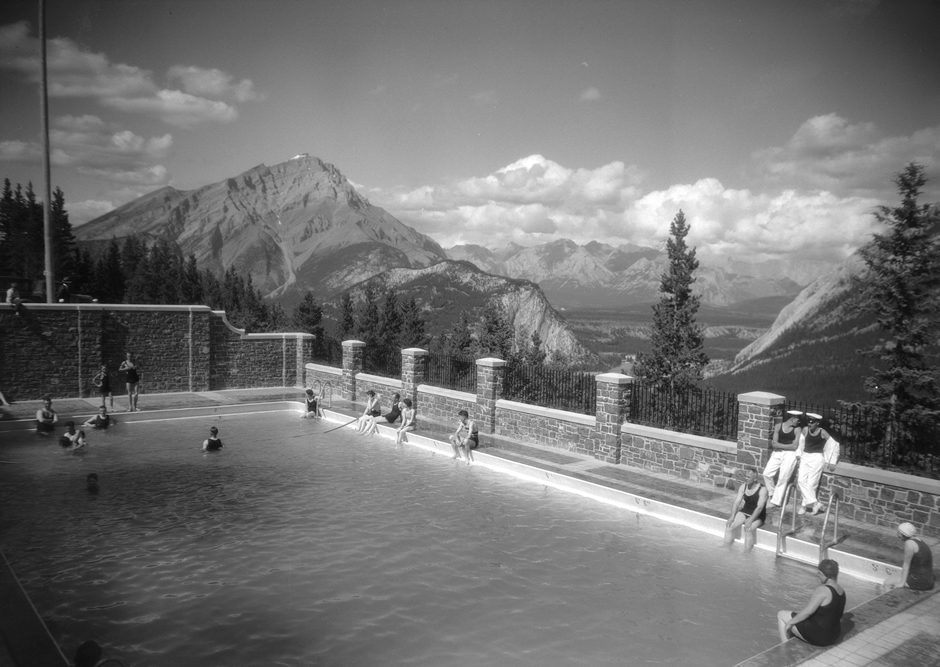
Alberta has long utilized geothermal energy from Earth’s natural heat. Indigenous peoples sought out hot springs, believing their warm waters could cure ailments. While Alberta does not have geothermal power plants, geothermal energy is used directly. The most notable example is the hot springs in Banff National Park.
Another alternative energy source in the province is biomass. Biomass was used during the Stone Age to fuel fires for heat, light, and cooking. In the Bronze and Iron Ages, it was essential for crafting tools and weapons. Later, wood remained a critical energy source for heating and cooking. Access to biomass often determined settlement locations in Alberta, as proximity to natural fuel sources was vital for survival.
Alberta’s first large power station ran on biomass. However, coal and hydropower gradually replaced it in the 20th century. After the 1973 oil crisis, biomass regained attention alongside other alternative energy sources. Alberta now produces bioenergy forms such as biogas (renewable natural gas), ethanol (fermented alcohol distilled from plants), biodiesel (fuel made from vegetable oils, recycled fats, or animal fats), and second-generation biofuels (derived from forestry, agricultural waste, and municipal solid waste).