

Natural gas is used in Canada almost as widely as crude oil, supplying a portion of the country’s needs for heating, industry, and electricity generation. Calgary is at the heart of many of Alberta’s gas fields, serving as the historical centre for natural gas production and processing in Canada. More details from calgary-name.
A Modern History
Initially, natural gas was viewed as a problem because it was dangerous to process and difficult to transport to market. That was before it became commercially attractive. You can learn more about the history of natural gas in Alberta there. Let’s focus on the modern history.
Alberta Energy Minister Brian Jean noted in 2025 that Alberta has nearly six times more natural gas than previously thought. This moves Canada into the top 10 countries worldwide, a significant jump from its previous 15th place ranking.
Let’s look at the research commissioned by the Alberta Energy Regulator (AER) and conducted by McDaniel & Associates Consultants Ltd. In 2025, it was reported that Alberta’s proven natural gas reserves (since their last assessment) increased nearly sixfold, reaching 130 trillion cubic feet. These figures allowed Canadian oil company leaders to capture attention and attract capital north at the Energy Summit in Texas (May 5-8, 2025). For many Calgarians, this is an opportunity to exchange ideas and build strategic relationships that may help pave the way for a brighter energy future.
Alberta’s Prospects
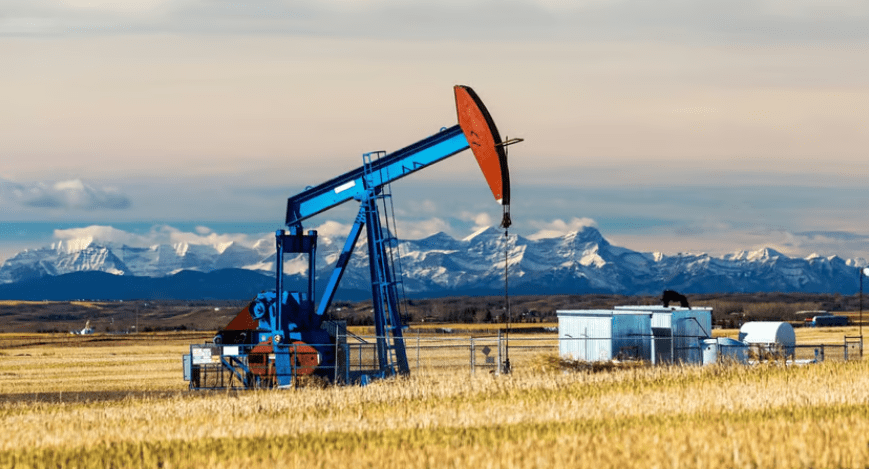
Mike Verney, Executive Vice President of the Calgary-based auditing firm McDaniel & Associates Consultants Ltd, is confident in the accessibility and economic potential of Alberta’s vast oil sands and the Montney Canadian shale gas field. He compared American capabilities with Canadian ones. For example, major natural gas fields in the U.S. are contracting, while the Montney field continues to grow.
The province plans to attract manufacturing, the petrochemical industry, and data centres thanks to its relatively inexpensive natural gas reserves. In the long term, Alberta is indeed a promising location. Mike Verney believes that Alberta is the best place in the world to invest, as other resources are being depleted.
Danielle Smith, the Premier of Alberta, referred to the province’s oil fields as a “secret weapon” in Canada’s trade war with the U.S.
Modern Developments
The term “reserves” refers to the commercially recoverable volumes of oil and natural gas expected to be extracted in the future. These are key indicators of the province’s future production potential. Companies use this data to present the future value of their operations. For instance, countries that historically exploited a significant portion of their resources now have low reserves. Canada, meanwhile, is in a favourable position.
Innovation and technological progress play a decisive role in increasing reserves. Let’s look closer at modern developments.
- Advanced drilling methods have changed the way natural gas is extracted. These technologies have opened access to previously unreachable reservoirs. This includes horizontal drilling, hydraulic fracturing (fracking), and more. Horizontal extraction involves drilling a well vertically to a certain depth, after which it branches out horizontally along the gas-bearing formation. This increases the contact area between the well and the productive layer, which is especially important for developing vast but thin gas formations. Hydraulic fracturing, or “fracking,” involves extracting gas from low-permeability rocks, such as shale. This is done by pumping specialized liquids into the wellbore under high pressure to create fractures in the formation. This method of natural gas extraction has made it economically viable.
- Improved seismic imaging to obtain a detailed picture of underground geological structures where natural gas reserves might be located. This uses three-dimensional (3D) and even four-dimensional (4D, where the fourth dimension is time) methods to create volumetric images of subsurface layers. High-resolution seismic technology is also included here.
- Enhanced extraction methods that allow companies to identify and access natural gas reserves that were previously unavailable. Examples include Enhanced Oil Recovery (EOR, which is also adapted for gas) technologies, and “smart” wells equipped with modern sensors and control systems.
Why Are Alberta’s Natural Gas Reserves Growing?
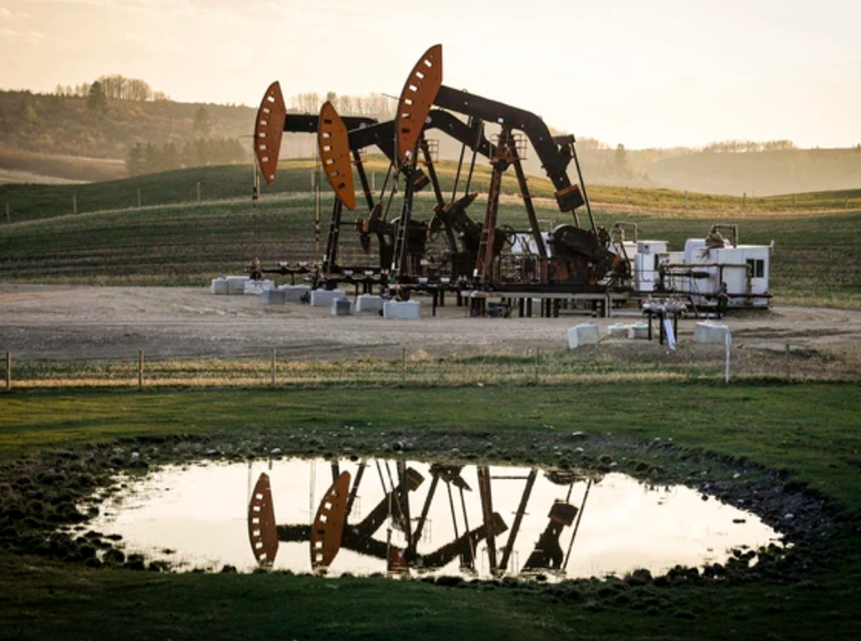
In 2025, it was reported that over 2 billion barrels of oil reserves were discovered. This is linked to the development of multilateral wells, which is a new advancement. This involves the ability to drill one vertical well to reach a zone and then drill several branches from that single vertical point. This development has been a game-changer.
It was noted that Alberta has 22 thermal oil sands recovery projects. Expectations are higher now than ten years ago because production has increased by 70% over the last decade (from 2 to 3.4 million barrels per day). The increase in projects has raised confidence in the commercial viability of future developments. Therefore, the modern history of natural gas in Alberta is both promising and important.