

Natural gas is one of the cleanest, cheapest, and most efficient energy sources. Pure natural gas is odourless and colourless. Processors add a scent resembling rotten eggs to the gas supplied to consumers, allowing for the detection of hazardous leaks. Here’s how this fossil marvel was discovered and began to be utilized in Alberta, as detailed on calgary-name.
A Chance Discovery
The formation of natural gas began millions of years ago, leaving it buried beneath the Earth’s surface. The earliest recorded use of natural gas in Alberta was the result of an accidental discovery.
While the Canadian Pacific Railway (CPR) was laying tracks across Western Canada, a constant supply of water and coal was needed for locomotive operations. In 1883, railway workers drilling 55 kilometres northwest of Medicine Hat in search of water instead encountered natural gas.
This newfound gas was later used for cooking and heating in a nearby house. In January 1884, the Calgary Herald reported an explosion caused by a gas leak, which destroyed a building and injured several residents.
In 1890, CPR workers struck gas again while mining coal along the South Saskatchewan River near Medicine Hat. The residents of Medicine Hat quickly recognized the potential of this cheap source of heat and light, borrowing CPR drilling equipment for further gas exploration.
The Beginnings of the Gas Industry
Although natural gas reserves had been discovered outside Alberta — in New Brunswick in 1859 and Ontario in 1866 — this energy source was not used commercially in Canada until 1889. Alberta’s first gas company, Calgary Gas Company, initially utilized industrial gas derived from coal rather than natural gas.
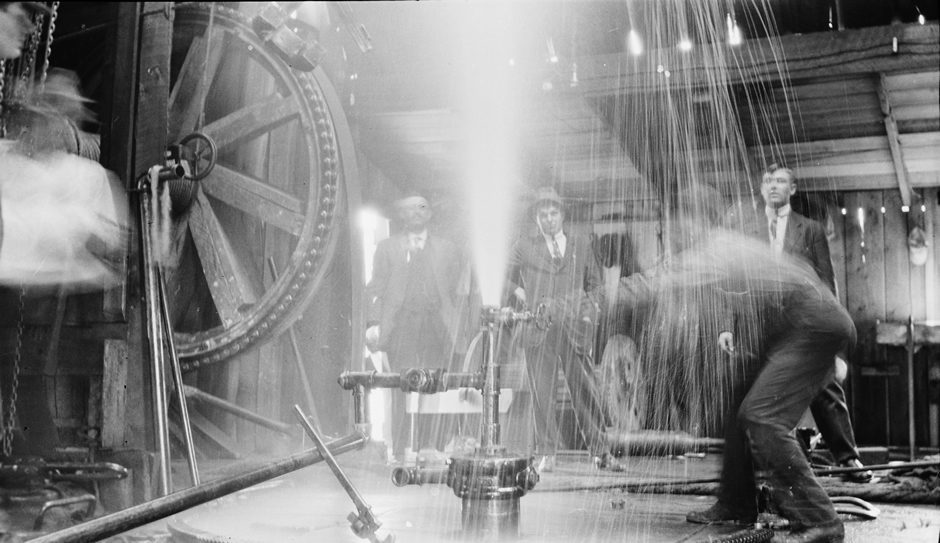
Two entrepreneurial competitors from Ontario, Archibald Dingman and Eugene Coste, sought to supply Calgary with natural gas. The first productive reservoir and drilling operation were established by Archibald Dingman, whose Calgary Natural Gas Co. provided small amounts of gas for street and residential lighting by 1909. However, Eugene Coste’s discovery overshadowed Dingman’s contribution as Coste embarked on supplying natural gas to all of southern Alberta.
In 1912, Coste’s company, Canadian Western Natural Gas Co., constructed a 270-kilometre transmission pipeline from Bow Island to Calgary, marking the rapid development of Alberta’s gas industry.
A new era began in 1914 with the discovery of vast oil and gas reserves in Turner Valley, southern Alberta. However, during World War I, Alberta lacked the infrastructure to effectively produce and transport natural gas. While oil was transported to local markets by horse-drawn wagons, natural gas was simply flared off. This flaring resulted in the loss of nearly 85% of the field’s oil and significantly shortened its lifespan.
Interwar Developments
Periodic discoveries of natural gas continued in Alberta and nearby regions during the interwar years. By-products of natural gas processing were used to produce aviation fuel and nitrogen for military explosives.
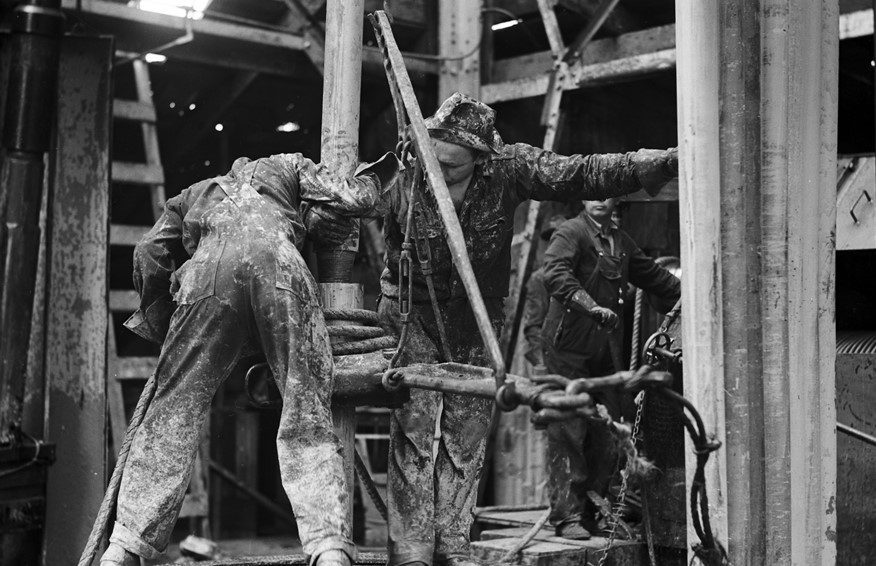
While the initial drilling methods and equipment were borrowed from the United States, Alberta’s unique gas properties and climate necessitated technological innovations. The Turner Valley Gas Plant became a hub for technological advancements in gas, oil, and sulphur processing.
The “wet” gas at Turner Valley contained condensate, a liquid petroleum product separable for use in automobiles and tractors. Calgary Petroleum Products utilized three technologies to separate condensate from gas: basic gravity separation, compressor stations, and absorption units. Turner Valley Gas Plant, operated initially by Calgary Petroleum Products and later by other companies, was a site of numerous technological breakthroughs.
Workplace Hazards
Working in the gas industry during this period was fraught with danger. On-the-job injuries, including crushed toes, severed fingers, lacerations, and burns, were common.
Methane, the primary component of natural gas, is highly explosive, making drilling inherently risky. The pressure released when puncturing a gas pocket could lead to catastrophic consequences.
Workplace conditions exacerbated these risks. Drilling crews often worked seven days a week, 12 hours a day, leading to fatigue and loss of concentration. Sulphur dioxide, a component of natural gas, posed additional health risks. Early Turner Valley drillers mistakenly believed holding their breath would protect them from gas exposure. Workers often experienced “gassed eyes,” described as a stinging sensation akin to thousands of needles in the eyes.
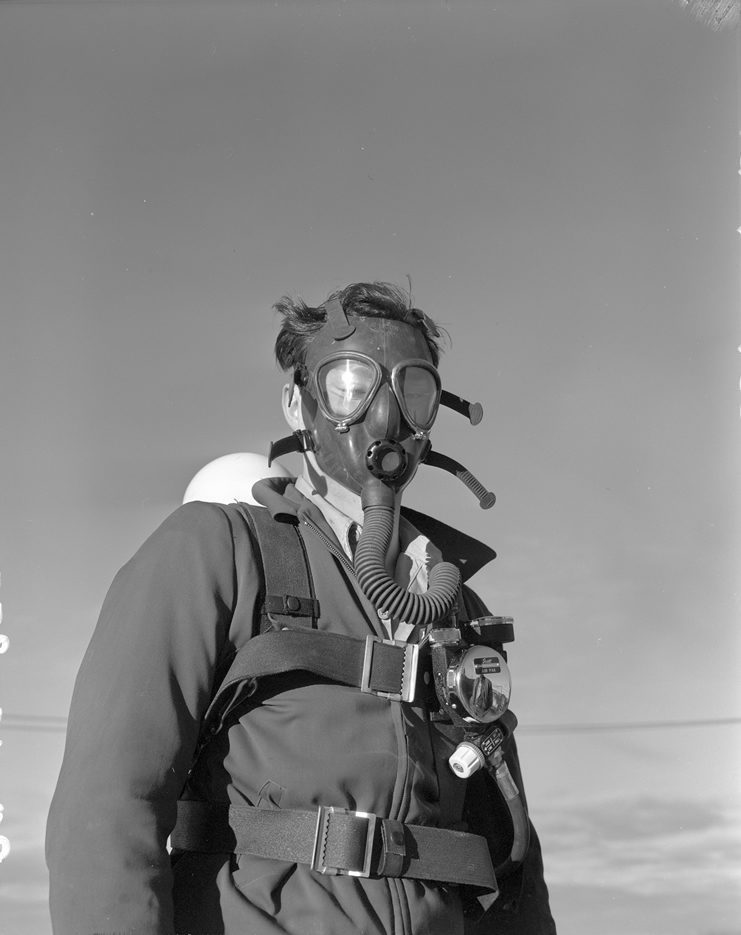
Technological advancements gradually improved safety. In the 1920s, steel derricks replaced the flammable wooden ones. In the 1930s, safer rotary rigs became common. Automation and remote-controlled equipment reduced risks associated with heavy machinery and toxic environments. By the 1950s, gas masks became mandatory on every drilling site.
Decline and Revival
The Great Depression, beginning in 1929, significantly impacted Canada’s oil and gas industries. Many companies shut down, export prices plummeted, and unemployment soared. Recovery was facilitated by World War II. In September 1939, Canada declared war on Germany, with gas used for aviation fuel, tanks, guns, and ammunition.
This industrial boom alleviated unemployment, but there was a shortage of male workers as many enlisted in the armed forces. By wartime, approximately 250,000 women worked in Canadian factories, up from fewer than 6,000 before the war. Women took on roles as welders, machine operators, and general labourers. Post-war, natural gas production quadrupled between 1946 and 1956.
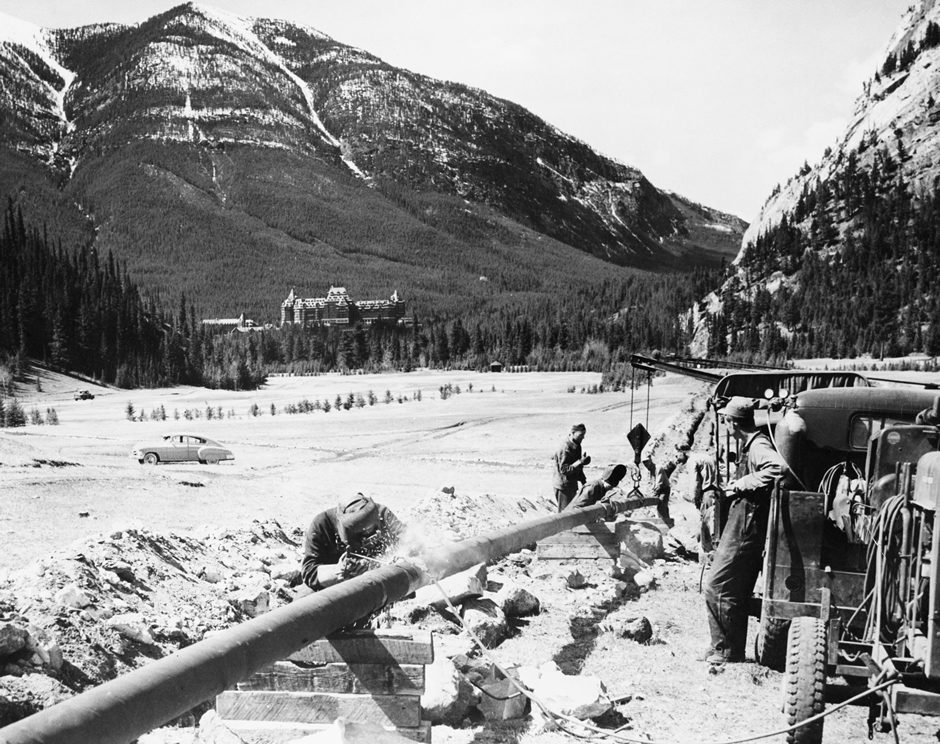
The rising cost of coal — double that of natural gas in 1947 — further boosted interest in gas reserves. Continuous technological progress enabled geologists to locate new reservoirs.
Natural gas’s popularity also grew because it is the cleanest of the three fossil fuels, producing the least carbon dioxide when burned.
Despite its advantages, Alberta focused primarily on oil exploration for much of the early 20th century, with natural gas remaining underutilized. This changed in the 1970s. Between 2000 and 2006, Alberta drilled twice as many gas wells as oil wells. Natural gas exports also surpassed oil exports. By the early 21st century, Canada had become the world’s third-largest producer of natural gas, after the United States and Russia. Alberta accounted for approximately 80% of the country’s total production.