

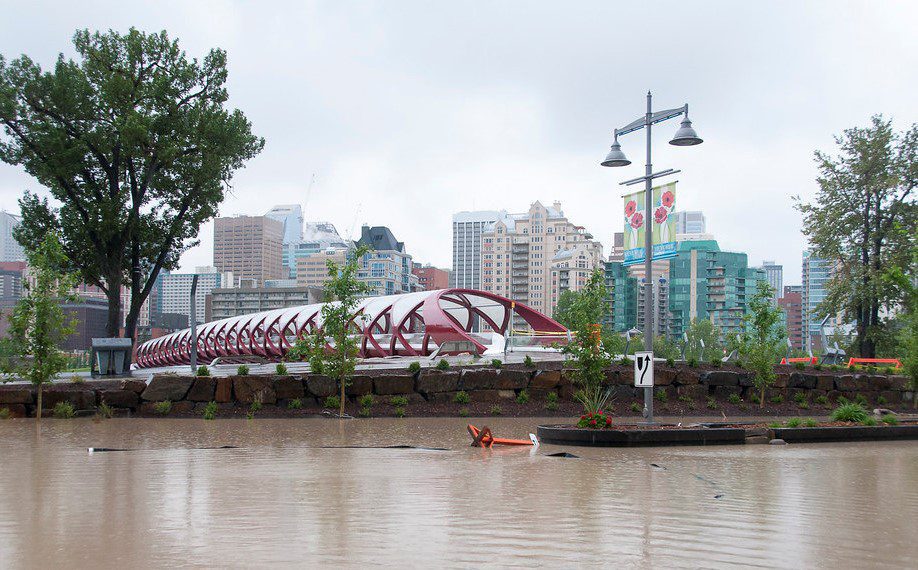
In the days leading up to June 19, 2013, heavy rainfall across parts of southern and central Alberta triggered catastrophic flooding, including in Calgary. In terms of insured damages, estimated at $1.7 billion, it was the costliest disaster in Canadian history until the Fort McMurray wildfire in 2016.
The Bow River’s flow peaked at 2,400 cubic meters per second, eight times its normal flow rate. Meanwhile, the Elbow River surged to 1,240 cubic meters per second, twelve times its usual flow. Learn more on calgary-name.
The Impact of the Flood on Calgary
The flood affected areas along the Bow, Elbow, Highwood, Red Deer, Sheep, Little Bow, and South Saskatchewan Rivers. Over 100 kilometers of riverside pathways were covered in water, mud, and debris.
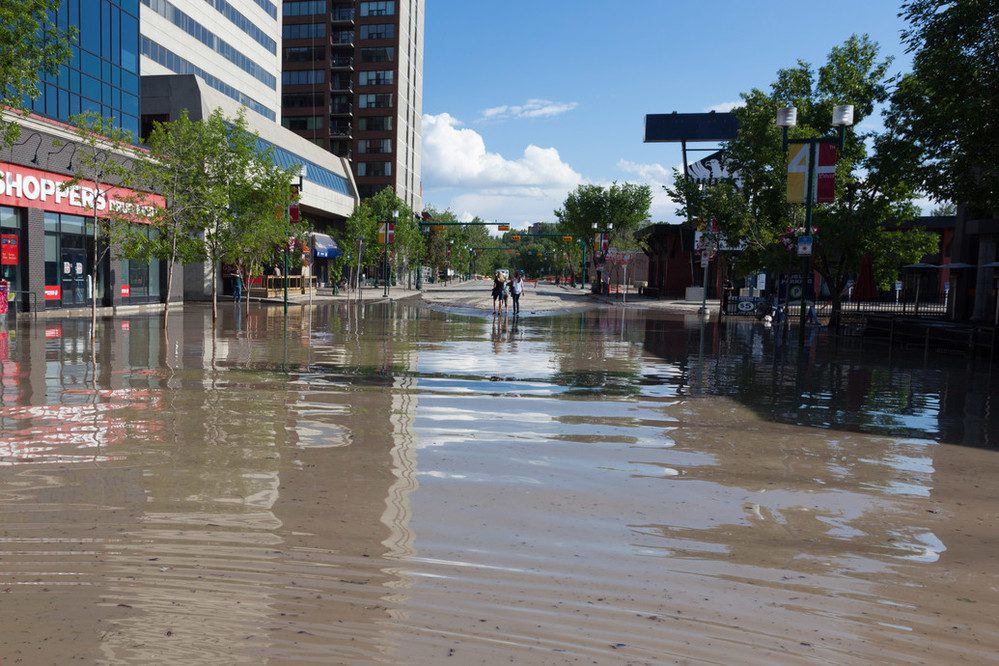
Businesses faced significant disruptions, and critical infrastructure was damaged. Sixteen rail stations were closed, and more than 50 bus routes were canceled. Power was cut off in all evacuated areas, including downtown Calgary, and was not fully restored until June 28. In the city center alone, 4,000 businesses were affected, and 3,000 buildings were flooded. The downtown core, which houses many headquarters of Canada’s oil companies, remained inaccessible until June 26. Companies like Shorcan Energy Brokers operated on June 21 from Toronto rather than their Calgary base. Another crude oil brokerage, Net Energy Inc., temporarily ceased operations that same day.
While none of Calgary’s main bridges were severely damaged (except for the Bonnybrook Rail Bridge), 20 bridges were closed. On June 27, the Bonnybrook Bridge collapsed under the weight of a Canadian Pacific Railway (CPR) freight train. One of the bridge’s 101-year-old piers failed due to floodwaters. The twisted bridge caused the train to derail. Since the train was carrying hazardous petrochemical materials, residents downstream were ordered to evacuate, and the train was carefully emptied.
In total, over 80,000 Calgarians were evacuated, marking the largest evacuation in Canada in 60 years.
City parks, including Prince’s Island Park and Bowness Park, suffered $55 million in damages. The Calgary Zoo saw 45 structures damaged. Tragically, one resident, 83-year-old Lorraine Gerlitz, lost her life in the flood.
All schools in the city were closed. Diploma exams and graduation ceremonies were canceled. George McDougall High School had to relocate its June 27 graduation ceremony to a church on Centre Street.
The City’s Response
The disaster led to 32 local states of emergency being declared and 28 emergency operations centers being activated. Over 100,000 calls were received on the city’s helpline during the flood. The state of emergency was not lifted until July 4, when waters receded.
Social media became a vital tool for communication as much of downtown was without power, and evacuees often lacked other means to access information. Calgary Mayor Naheed Nenshi posted important updates on Twitter and worked tirelessly for 48 hours after floodwaters displaced tens of thousands and submerged downtown Calgary. Calgarians even created the hashtag #Nap4Nenshi to encourage their tireless leader to rest.
The Calgary Police Service’s Twitter account was temporarily suspended due to an unprecedented number of tweets. The city’s emergency operations center held daily press conferences to keep residents informed, while a dedicated recovery website provided vital updates.
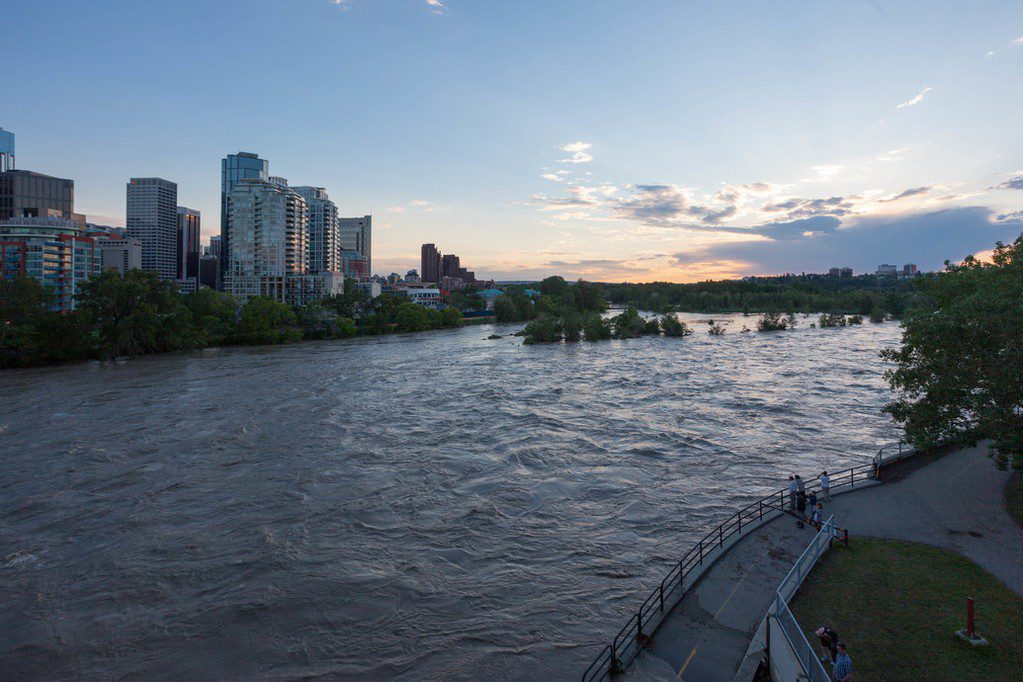
Immediately after the heavy rainfall, water levels in the Glenmore Reservoir were lowered to increase capacity. Temporary flood barriers were also constructed across Calgary. Despite these measures, the Bow and Elbow Rivers overflowed, causing significant damage to private and public properties due to overland flooding, rising groundwater, and stormwater and sewer backups. Staff at the Bonnybrook water treatment plant managed to keep the water supply safe to drink despite flooding at the facility.
The Canadian Armed Forces deployed 2,300 troops to Calgary and other southern Alberta communities. The army helped protect Enmax’s power substation, while 160 firefighters from Edmonton traveled south to assist with recovery efforts, along with five Alberta search-and-rescue teams.
Eight reception centers were established in schools and public buildings to provide assistance to evacuees. Many families who sought shelter in these centers or hotels could not bring their pets, so the Calgary Humane Society provided temporary housing for animals. By June 30, 26 dogs, 39 cats, and two pigs were reunited with their owners.
The city also established four customer service centers to assist affected residents with permits, property taxes, and other issues. Calgary authorities published guidelines for those living or working in flood-prone areas. Since then, new structures have been prohibited in high-risk flood zones, except for replacing existing buildings. New developments in fringe flood zones or overland flow areas must now be built to withstand floodwaters.
Rebuilding Calgary
Within the first two days of the flood, 0.3 kilometers of the Macleod Trail pathway had been rebuilt. Within the first week, 100 meters of LRT track on the south line were repaired to restore CTrain service. The city’s street and road network repairs were completed in about a week.
The community came together, with over 2,300 volunteers cleaning neighborhoods and public spaces. Behind those clearing debris in the mud were countless others supporting the workers by providing food, water, wet towels, and anything else to help. Restaurants, food trucks, and families joined forces to aid those affected and the cleanup crews. The Airdrie Food Bank distributed over 8,000 pounds of food to those in need.
The response extended beyond Calgary, as the entire nation rallied in support. According to the Canadian Red Cross, Canadians donated $42 million to assist Alberta after the floods. The Red Cross directly helped nearly 70,000 people by providing essentials such as food, clothing, and shelter.
The Scotiabank Saddledome, filled with water up to the tenth row of seats, reopened on September 11 for an Eagles concert. Despite extensive damage to rodeo grounds and grandstands, the Calgary Stampede went ahead that year.
Projects to Prevent Future Floods
Following the flood, Calgary and Alberta’s governments invested $150 million in flood mitigation and resilience projects, including reservoirs and barriers. The 2013 flood prompted the city to take comprehensive measures to prepare for future flooding. Experts warn that floods may continue to occur in Calgary due to its watershed type, proximity to the mountains, and the two large rivers running through the city.