The city of Calgary is built at the confluence of the Bow and Elbow Rivers. Over the years, floods have repeatedly impacted the city, complicating life for residents and causing significant damage. Here is a chronological look at Calgary’s major floods, from the flood of 1883 to the massive one in 2013, as detailed on calgary-name.
Ice Jam, 1883
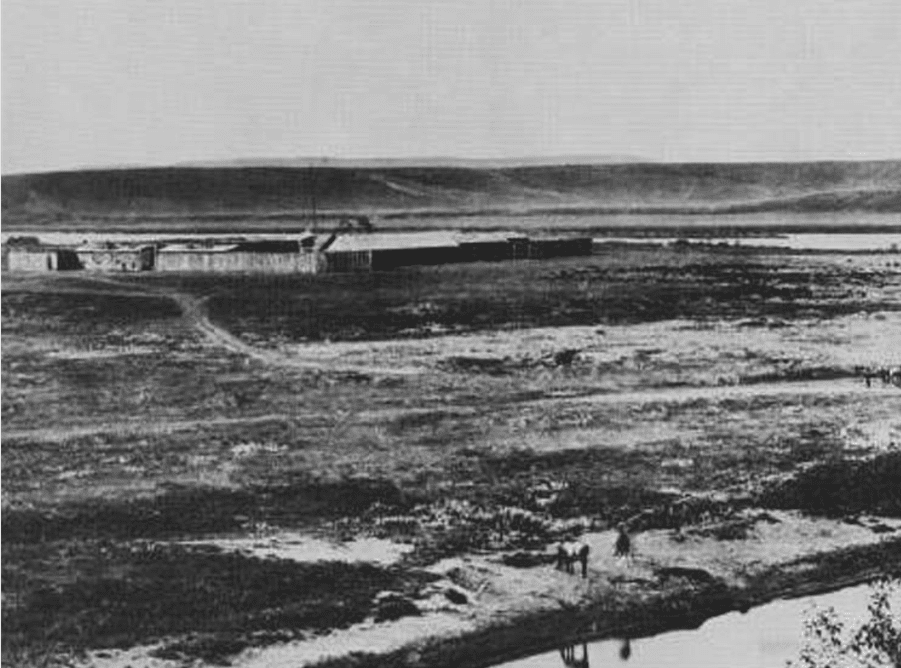
On October 31, 1883, the only pedestrian bridge across the Elbow River was swept away by a strong current. The debris became lodged near the Canadian Pacific Railway (CPR) trestle, forming an ice jam.
Although the trestle was saved, and no buildings, institutions, or businesses were damaged, losing the pedestrian bridge caused great inconvenience. It was the only route for residents to cross the river and access other parts of the city.
In November 1883, The Calgary Herald suggested convening a city meeting to form a committee to plan and tender a new bridge. This led to the opening of a new vehicle bridge on May 7, 1884.
Destruction of All Bridges, 1884
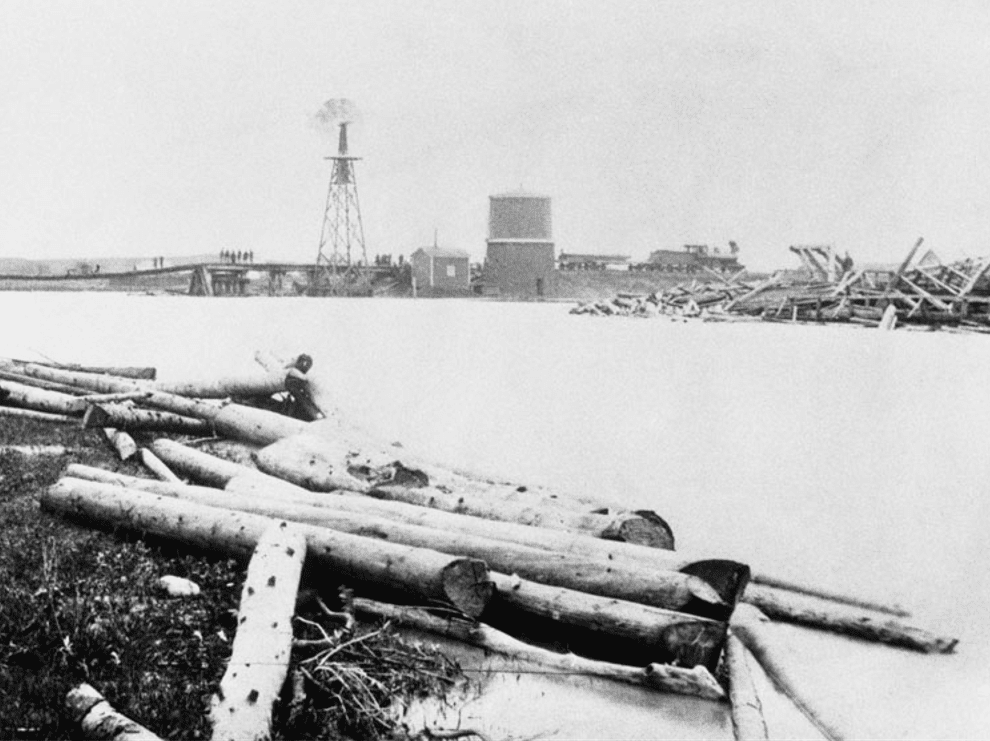
On July 15, 1884, another flood destroyed all of Calgary’s bridges, as well as 10–12 bridges and culverts along the CPR line west of the city.
Loose logs floating in the Elbow River were a major problem, crashing into and destroying bridges. Although the Bow River also flooded, it posed no immediate threat since there were no bridges over it at the time. A ferry was quickly set up for crossings over the Elbow, while residents resorted to walking across the river on ice during winter. A permanent bridge was only constructed three years later.
The CPR trestle over the Elbow River was also damaged and temporarily replaced with a rail bridge before a new trestle was built.
Homes, Parks, and the Racetrack Flooded, 1897
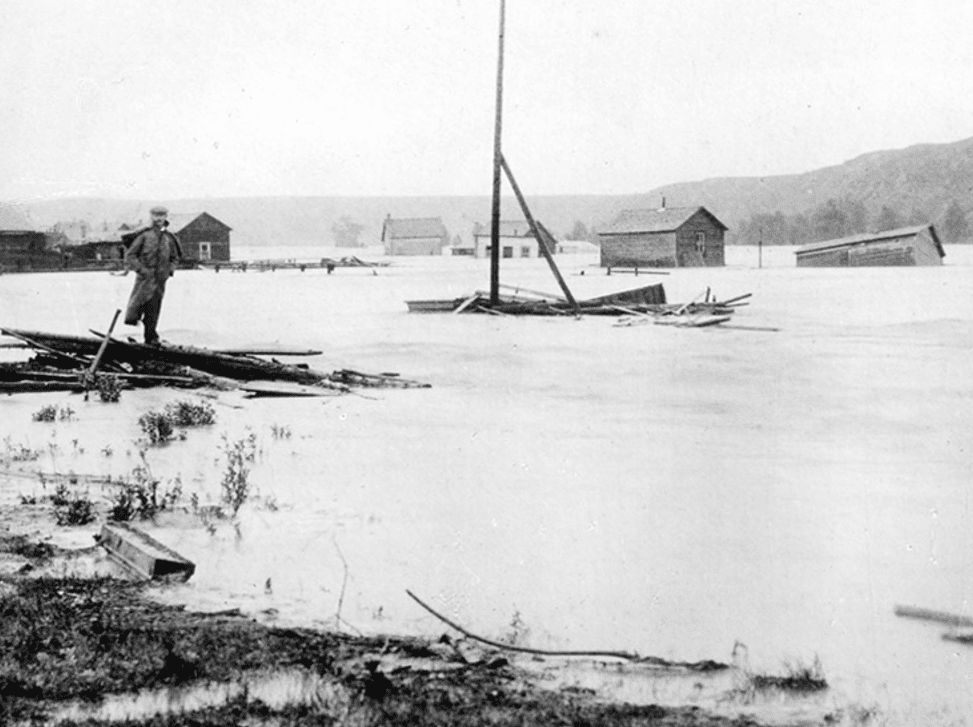
At midnight on June 17, 1897, the Bow River rapidly rose and overflowed its banks. The situation worsened when the Elbow River experienced a flood on the morning of June 19. Bridges over the rivers were either damaged or destroyed.
The Eau Claire Power Plant on Prince’s Island Park was inundated, and the dam was in danger of collapsing. Unlike the 1884 flood, floating logs did not threaten structures on the Elbow River.
Fish Creek Provincial Park experienced a water level rise of at least 10 feet above low water, damaging much of the irrigation infrastructure.
The Elbow Valley between the Mission Bridge and the racetrack gates was completely submerged. Horses and staff at the racetrack were saved thanks to the quick actions of Ed Mellon, owner of the Blue Rock Hotel. Noticing the rising river, he sent a messenger to the Briggs farm to wake residents and move the horses.
The Langevin Bridge was restricted to pedestrian use until repairs were completed. Several homes south and west of the Langevin Bridge were flooded, displacing over 60 families, who found shelter in churches, hotels, and even the city jail.
The flood caused $250,000 in damages to homes, businesses, and city infrastructure. Funding for bridge repairs was difficult to secure, but territorial authorities eventually financed bridge repairs, leaving private residents and businesses to fend for themselves. Mayor Orr proposed donating some of his land in the Inglewood area to those most affected.
Complete Isolation and Power Outage, 1902
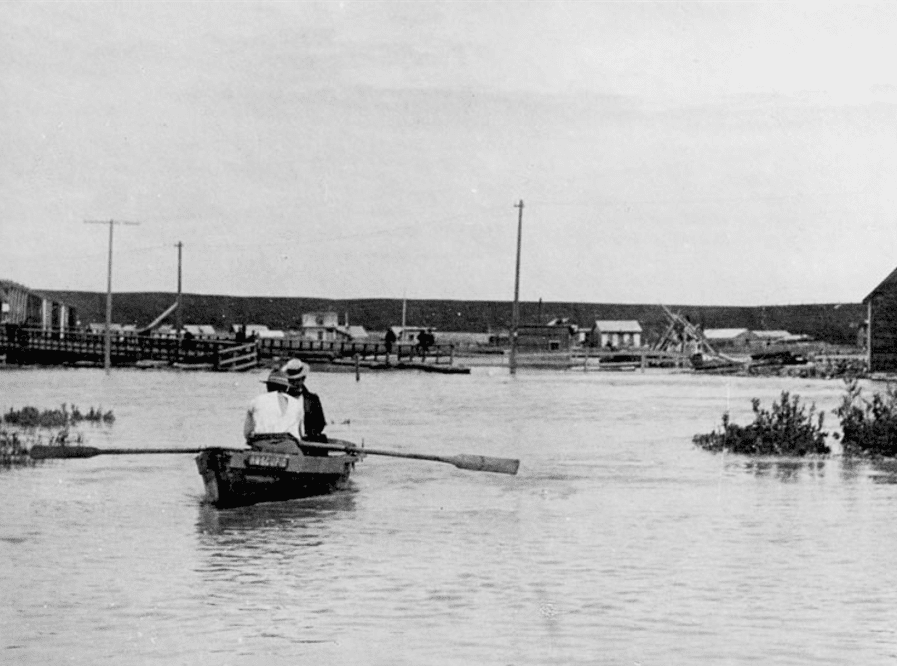
On July 2, 1902, the Bow River overflowed near the Langevin Bridge. By July 5, water levels rose again, flooding the city center.
The city’s fire department and the North-West Mounted Police were involved in rescue efforts. When the rivers initially rose on July 2 and then seemed to recede, many residents near the water decided not to evacuate, a decision they soon regretted.
During this flood, Calgarians displayed entrepreneurial spirit. Before the flood was officially declared, one enterprising individual launched a rowboat and charged 25 cents for rides between the southern bank of the Bow River and the Langevin Bridge.
The Eau Claire Power Plant was flooded, disrupting the city’s power supply. Logs belonging to the power plant broke free and were carried by the current to the supports of a temporary rail bridge at Twin Bridges. By July 8, rail connections to the city were completely severed, leaving Calgary isolated. This also disrupted the delivery of building materials for repairs and caused a milk shortage, as most dairies were located outside the city.
To mitigate future floods, the city council initiated the construction of a wall along the southern bank of the Bow River from Prince’s Island Park to the Langevin Bridge. The project was completed in 1905.
Widespread Damage and Lost Lives, 1915
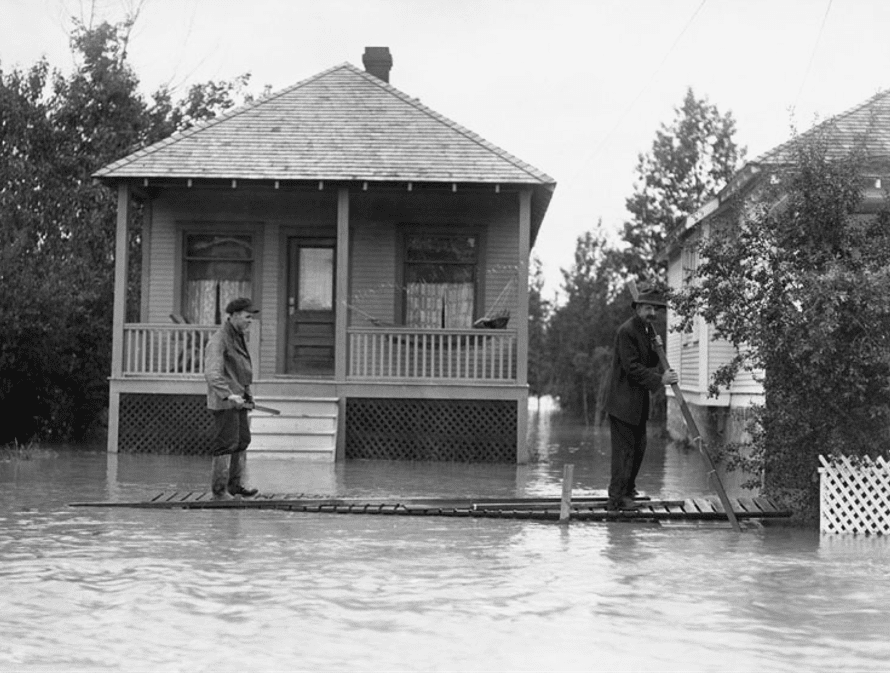
June 1915 brought record rainfall, accompanied by wind and even a tornado in Redcliff.
On June 28, three lives were lost, three bridges were swept away, and two others were severely damaged. Floodwaters submerged residential areas and city streets, and Calgary was once again temporarily isolated due to washed-out rail lines.
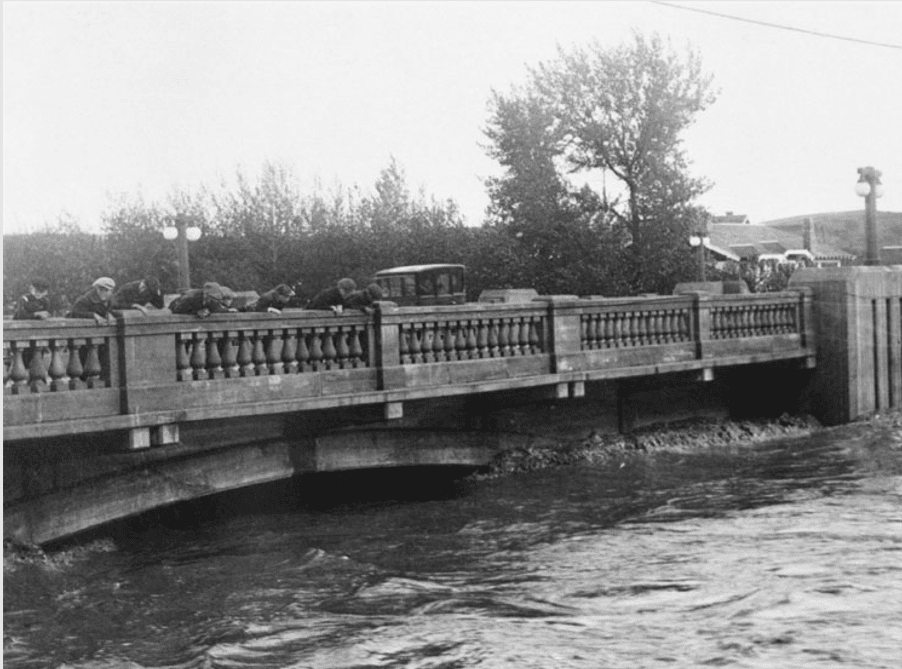
At Sarcee Camp, soldiers training on high, well-drained ground still suffered as the training fields turned to mud and access roads became nearly impassable.
City crews worked to clear debris from the Mission Bridge. Tragically, one worker, Quinton Dunn Campbell, fell into the Elbow River during the effort and was found the next day near the Victoria Park Power Plant.
The flood destroyed the original Central Street Bridge. A worker crossing the bridge was swept away along with the structure, while the city commissioner narrowly escaped. Debris from the bridge damaged supports on St. George’s Island Bridge and destroyed the smaller bridge connecting St. George’s and St. Patrick’s Islands.
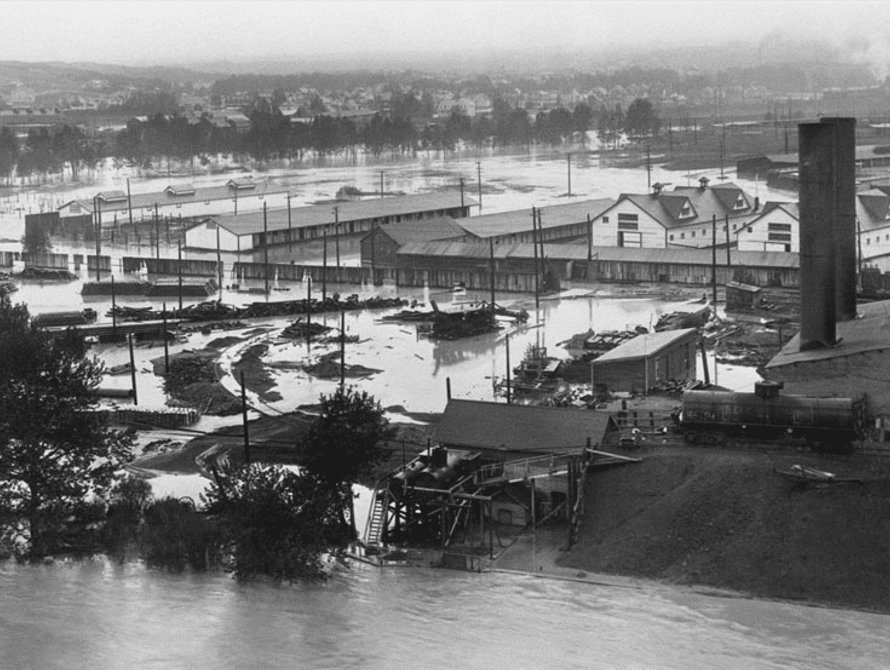
Damage extended to Calgary’s gas pipeline, cutting off gas supplies to the city, and partially flooded the Victoria Park Power Plant, disrupting electricity and halting streetcar operations.
After the flood, the city upgraded its water supply system by adding a second reservoir and filtration system. Construction of a new Central Street Bridge, considered one of the finest in the country, took two years to complete.