

Trout only live in crystal-clear, cold water. Catching trout in their natural habitat provides a unique pleasure for anglers, as it connects them to something that has evolved over hundreds of thousands of years, maintaining the genetic code that allowed survival within a range of parameters and resisting natural variations and changes.
However, any external, unnatural influence on such a system can disrupt the balance of variations, which may result in the complete destruction of entire populations. In the 19th and 20th centuries, Alberta’s fishing industry was so devastated that it became a mere shadow of what it once was. How trout and other fish developed and were decimated here is detailed below at calgary-name.
The Beginning of Fishing at Lake La Biche
As described by University of Calgary biology professor Lorn Fitch in his research Two Fish, One Fish, No Fish – Alberta’s Fish Crisis, fish were once a primary food source for Indigenous peoples. The daily diet at the Fort Chipewyan post consisted of four fish and one potato.
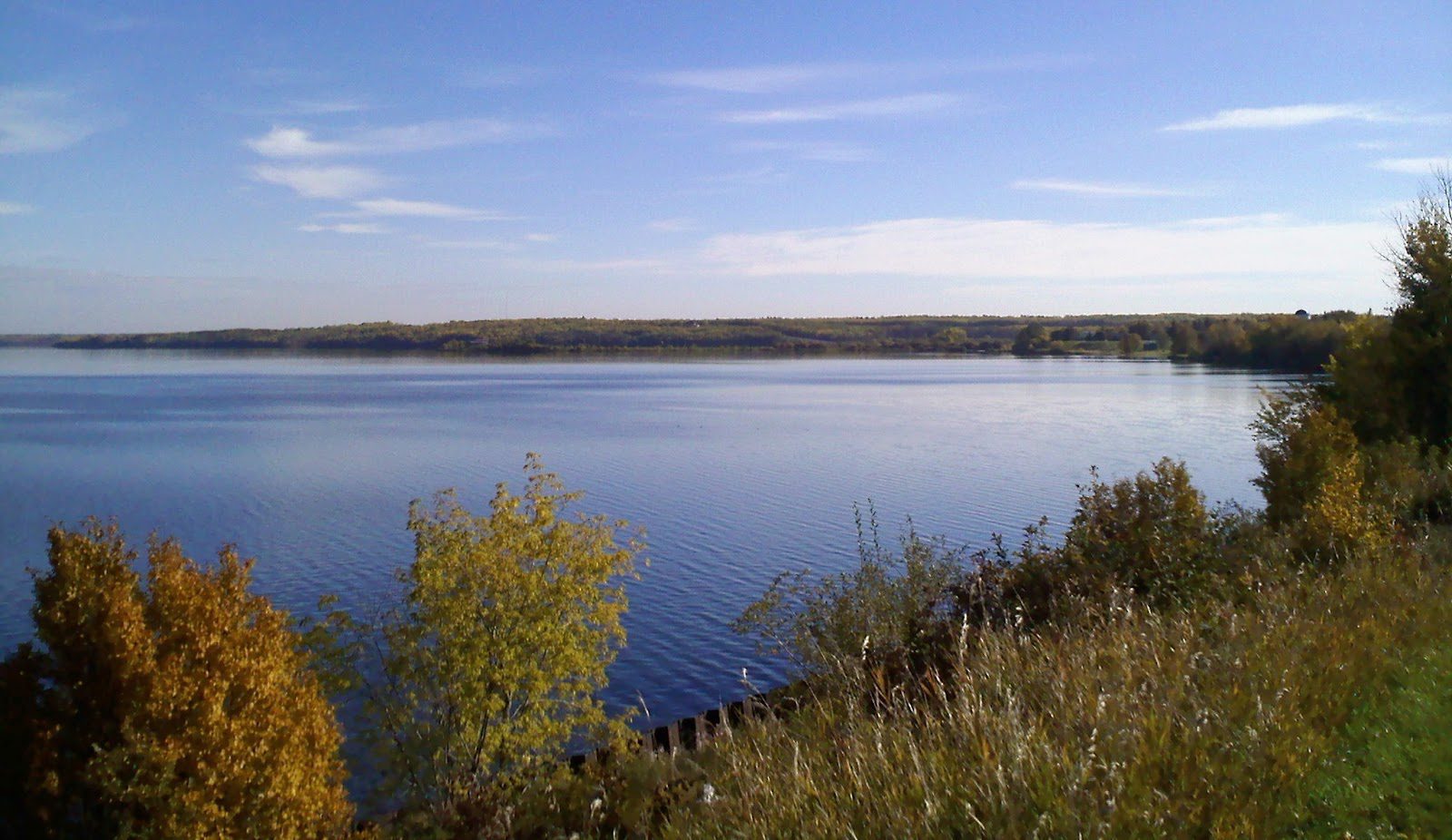
In 1798, the Hudson’s Bay Company opened a post at Lake La Biche, located northeast of Edmonton. The lake was home to 30 fish species, which encouraged the settlement of people near the lake and eventually led to the creation of fur trade posts. During the first year of the post’s operation, British-Canadian explorer and cartographer David Thompson recorded that the lake hosted pike, lake whitefish, walleye, and suckers. By 1819, the lake whitefish became the main menu item at the post.
Lake La Biche
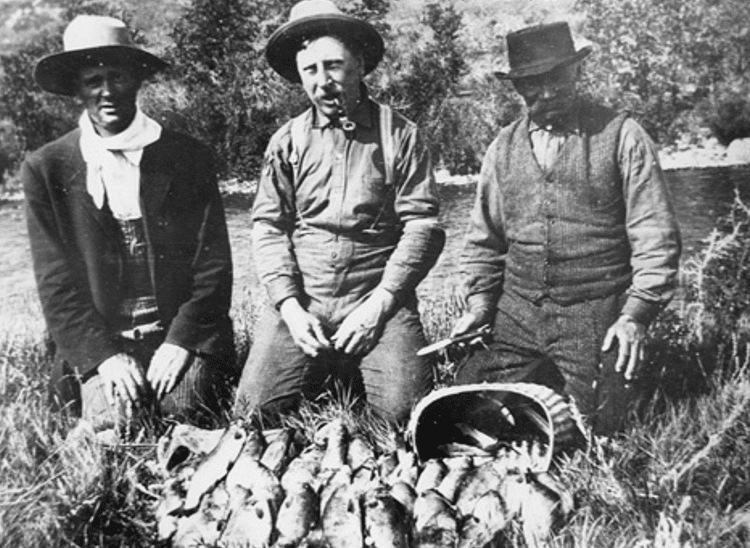
The annual catch of lake whitefish grew from 85 tons in 1800 to over 1,200 tons in 1875. However, after three years, fishing began to decline, and in 1915, the railroad extended to the lake, which allowed the fishing industry to recover.
By 1918, 200 commercial fishermen were catching and processing lake whitefish, cisco, walleye, and pike. During the Great Depression of the 1930s, the fur market in the province grew significantly, increasing the demand for fish to feed mink farms.
By the 1950s, the integrity of the watershed that supported the lake and fish populations had been disrupted. As a result, and due to overfishing, by 1970, walleye were nearly wiped out, and by the 1990s, populations of pike, perch, and lake whitefish had sharply declined.
Goldeye Fishing
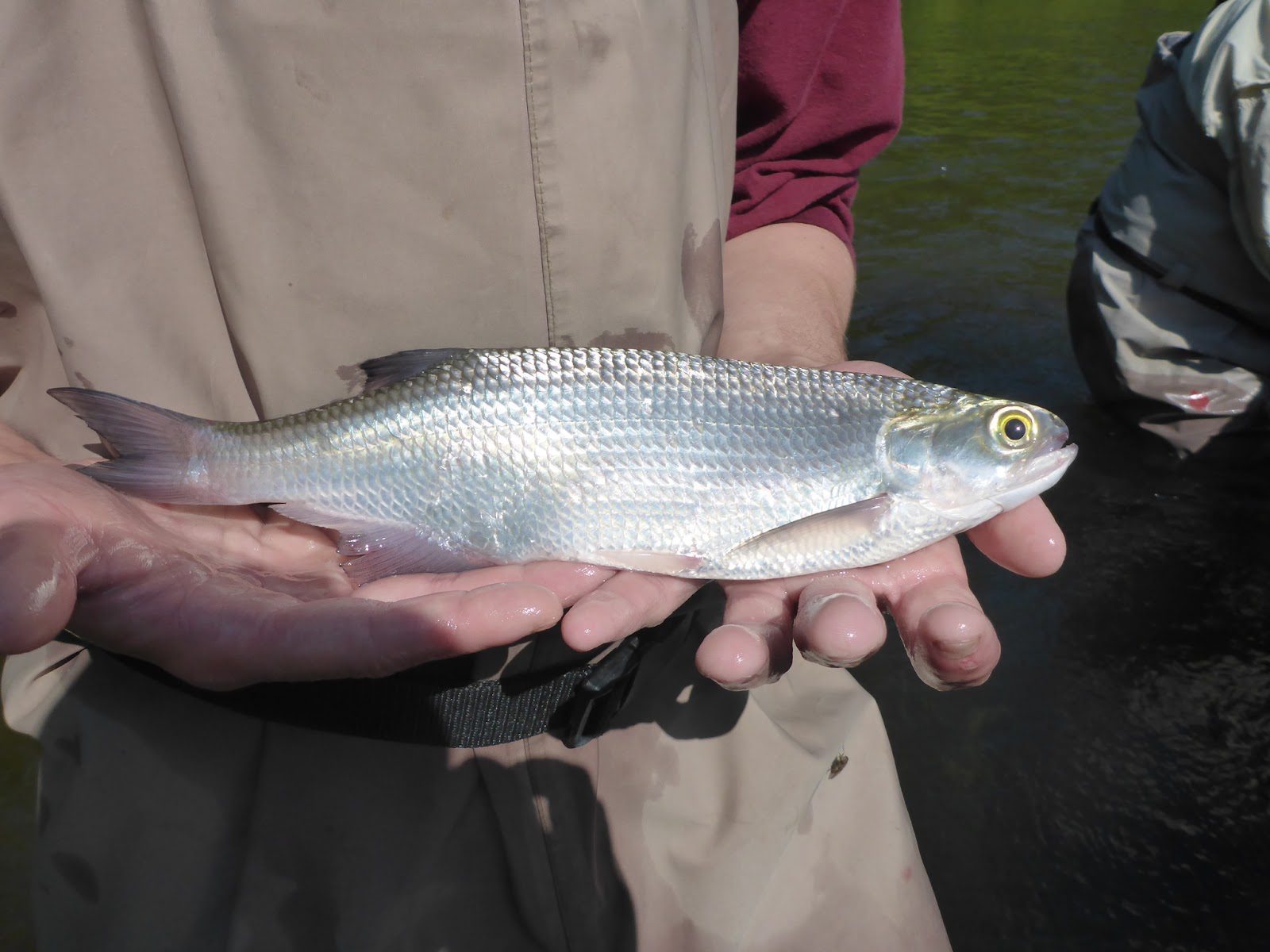
The goldeye (Hiodon alosoides) is a freshwater fish with silver-colored scales and large, flat sides. It is found in Canada and the northern United States. Its common name is derived from its large, yellow-gold eyes, which are adapted for dim light and murky water.
Smoked goldeye was a staple on the menu of Canadian Pacific Railway dining cars and was called “Winnipeg goldeye” due to its origin in Lake Winnipeg.
By 1977, when provincial fisheries biologist Dave Christiansen floated the river, he was told that large schools of goldeye had almost disappeared, and they could only be caught near the lower part of the Battle River, which flows through central Alberta and western Saskatchewan, originating from Battle Lake.
Similar to the decline in goldeye populations in Lake Winnipeg due to overfishing, the goldeye population in the Battle River also plummeted for various reasons. In 2005–7, a biodiversity study of fish in the northern part of Battle Lake found only 7 goldeyes, a few pikes, and walleyes, while 80% of the catch was made up of suckers and minnows.
The provincial river monitoring program discovered in 2009–10 that Battle River had the worst water quality of all river sections in the province. Provincial fishery expert Michael Sullivan explained this as a result of excess nutrients combined with a lack of filtration, creating significant problems for the fish. Large algae blooms deprive the water of dissolved oxygen, which is essential for fish respiration. Excess nutrients promote both their growth and death.
Resilient Trout
In 1890, the North-West Mounted Police requested officers stationed at various posts to report on the state of fish populations. The data received was grim: significant declines in trout populations were observed.
Elk River, a tributary of Clearwater River west of Rocky Mountain House, had a large trout population in the early 1900s. There were few roads and trails, and Alberta’s Forest Service kept these roads closed, preventing vehicles from accessing them.
However, by the early 1950s, much of the previously undeveloped watershed areas of the forest reserve became busy with recreational activity, logging, exploration, and oil and gas development. By the late 1970s, a combination of overfishing, overgrazing, and other land uses led to the trout population being reduced to just a few individuals. The trout long survived the combination of overfishing and illegal fishing with nets, spears, and dynamite. In 1987, only one trout was caught in Elk River.
Despite seeming hopeless, the trout endured: in the 2000s, Wayne Roberts, a former curator of the Zoological Museum at the University of Alberta, found trout in the North Raven River, where it had been considered nearly extinct for 80 years. This revival was made possible by streambank fencing and the introduction of fishing regulations.
Similarly, the trout population in the tributary of Red Deer River – Berberry – had nearly disappeared by the 1950s. In 1980, a reservoir was created to solve chronic flooding problems in the town of Sandre, and in 2004, a fishway was created around the reservoir, allowing the trout to regain access to Berberry.
Despite these positive developments, the trout was almost entirely wiped out in many watersheds.
The Harsh World of Cutthroat Trout
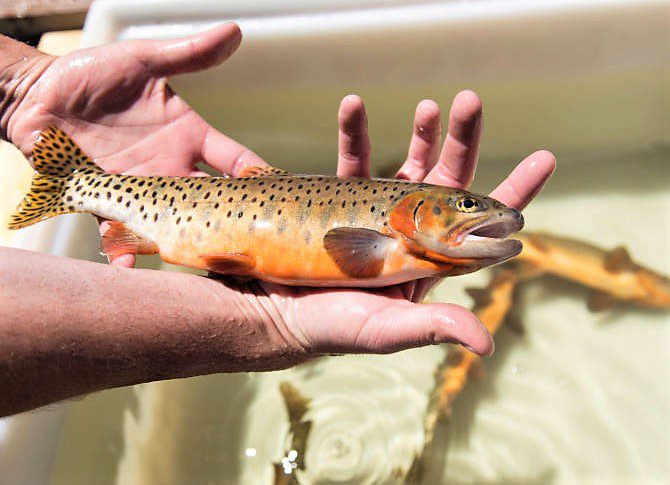
The Cutthroat Trout is named for its striking red-orange mark on the underside of its jaw. The presence of this fish was first described by veterinary surgeon Duncan McIkran, who arrived in Calgary in 1881 from Fort Benton, Montana. He was looking for a place to set up his ranch and was impressed by the potential of the foothill pastures and streams teeming with this fish.
Notably, the Cutthroat Trout was found in the watersheds of Willow and Trout Creeks. Despite logging, cattle grazing, oil and gas development, and unregulated off-road traffic in this area, the fish survived, though in limited numbers.
The local Cutthroat trout evolved in the streams of the eastern slopes for over 10,000 years. Its genetics contained the code that allowed it to thrive despite the variability of aquatic systems. In 1948, anglers caught 1,058 cutthroat trout on Spray River, many of which reached 23 inches in length, but this ended with the development of hydroelectric stations in the late 1940s. One large dam turned two lakes near this river into vast, barren reservoirs. The beautiful trout that once made the lakes famous disappeared, and the green forested slopes gave way to a desert of silt and debris.
On the Bow watershed, 10 hydroelectric stations and 4 irrigation dams on the Oldman watershed have also permanently reduced the population of this fish. By 2017, it was found that in all the streams of the Bow and Oldman watersheds, where this species was once abundant, only about 5,500 fish remained.
What Happened to All the Fish?
According to University of Calgary biology professor Lorn Fitch, the decimation of such a valuable resource for the province was influenced by overfishing by both recreational and commercial fishermen. At the same time, this was aided by urban developers, dam builders, heavy equipment operators, bureaucrats, loggers, and investment bankers. Farmers, miners, off-road vehicle users, homeowners, and politicians also contributed to this. A large portion of the fish was also destroyed due to habitat destruction, water extraction, and pollution.
The loss of fish in Alberta is something that all residents and future generations must consider, as the past has a way of infiltrating the present.