

In 2019, the first shrimp farm opened, marking the beginning of aquaculture near Strathmore, Alberta. Calgary Name tells us more about the province’s first large-scale, commercial shrimp farming operation.
Founding Story
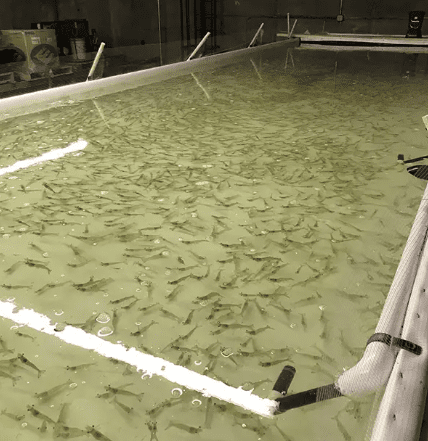
Keith Driver from Calgary and his friend and business partner T.M. Gunderson founded Waterford Farms in January 2019. They are environmental engineers concerned about the dwindling population of wild shrimp. The shrimp farm is located in Alberta in a 9,000-square-foot indoor facility. The partners raise Pacific white shrimp in vertical stacks connected to a water conditioning system.
In an interview, Keith Driver was asked why he specifically chose shrimp. Statistics showed that between 2014 and 2015, northern shrimp stocks declined by more than 40%. He also justified his choice by noting that shrimp is a popular protein source. Locals love seafood first, and shrimp ranks second. In his opinion, fresh shrimp represents a good market opportunity.
Waterford Farms imports enough young shrimp from Texas, allowing them to grow approximately 45,000 kilograms annually. The shrimp are 10 days old when they arrive at the farm and are placed in a tank at the top of the stack. The young shrimp pass through the system, growing as they go, and are harvested at the bottom. They need to grow to the length of an open hand before they can be sold to restaurants or supermarkets.
The farm imports not only young shrimp but also sea salt. This is because table salt is unsuitable for raising shrimp; it lacks the necessary elements that the ocean provides for shrimp to develop their shells and maintain the water’s chemical balance. Keith Driver explained that at Waterford Farms, the sea salt is mixed in zero-discharge systems, achieving the required salinity. The water is then circulated through the system and is constantly changed every 45 minutes.
Water quality is the foundation of this business. According to the owner, a large portion of Waterford Farms’ capital goes into quality water and the continuous filtration process using mechanical devices without adding chemicals. This technology required an investment of $3 million. As a result, every day is ideal for shrimp farming, as conditions are humid, with consistent feed, water quality, and oxygen levels.
Waterford Farms grows approximately 50,000 shrimp per month.
An Unexpected Venture
Thousands of miles from the nearest ocean lies Strathmore, Alberta. It is probably the last place regional residents would expect to find a source of sustainably farmed seafood. Waterford Farms came as a surprise to many locals, but the shrimp farm is thriving. The farm’s goal is to produce 2.5 million individual shrimp annually.
Oddly enough, these areas in the country are easily associated with cattle ranching, feedlots, and livestock auctions. That’s why the decision to farm shrimp in Alberta is a new model for a new type of agricultural business on the prairies.
The Project
Tom Grande, Senior Vice President of Teja Food Group, explained that this is the company’s first venture specializing in fresh produce. The company’s motto is “Global Sourcing, Local Values.” It’s always rewarding to be involved in something ecological and local. Tom Grande also shared that they worked on the project for two years.
The shrimp farm had its first harvest in January. Subsequently, the shrimp became available for collection and supply to restaurants and retailers. Waterford Farms is an example of remarkable ingenuity happening right here in Alberta.
Keith Driver from Calgary not only raises shrimp on his farm but also enjoys eating them himself. There are many ways to enjoy them: from fresh shrimp straight from the tank to those prepared using one of the local chefs’ recipes.

Challenges
Fish is not a primary commodity in Alberta, which is why shrimp production is not a priority. Jim Wagner, a fish culture specialist for the Ministry of Environment and Parks, agreed with the pessimistic assessments. The aquaculture industry has not seen significant changes in the last few years. The Ministry of Environment and Parks is focused on conservation but does little to promote the industry.
The experimental production lacks a high biosecurity aspect. This is explained by the cost of implementing these practices. Although aquaculture has never been a core part of Alberta’s economy, it would be a wonderful addition.
The farm temporarily ceased operations during the pandemic but gradually resumed. Initially, it produced 1,000 pounds of shrimp per week, and production capacity has since increased. The owners of the shrimp farm are focused on making this business profitable.
Waterford Farms has become a shining example of a successful enterprise that has adapted to changing market conditions and become a leader in aquaculture in Alberta. The shrimp farm has transformed into a modern, high-tech operation that grows high-quality products. Furthermore, Waterford Farms makes a significant contribution to the development of the region.