

The Glenmore Reservoir on the Elbow River is regulated and protected by the concrete Glenmore Dam. This reservoir serves as the main source of drinking water for Calgary, reports calgary-name.
Construction History
In the early 1900s, Calgary faced the need for a new source of drinking water. In April 1907, Alderman John Goodwin Watson proposed a gravity-fed water supply from the Elbow River, but the idea was not immediately pursued.
After the Calgary Herald reported in April 1926 on the murkiness of the Elbow and Bow Rivers, the urgency for a clean water source grew. By July 1929, the city engaged the Canadian architectural firm Gore, Naismith, and Storrie to assess water quality and propose solutions. The firm presented 12 options, one of which was the construction of a dam and reservoir.
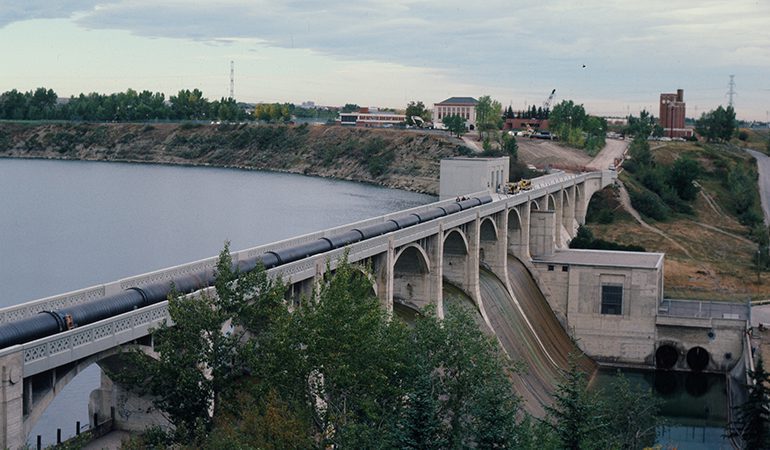
In the late 1920s, Calgary secured approval from the Canadian government to build the dam. A public referendum held during the 1929 municipal election saw residents approve borrowing $2.77 million for the project. The city then purchased land in a suitable area for the construction.
Concrete pouring for the dam began in October 1930, and by the fall of 1931, work commenced on a water treatment plant. Rising costs led to a judicial investigation in 1932, led by Alberta Supreme Court Justice Albert Ewing. The inquiry examined all aspects of project financing, including land acquisition, contracts, labor practices, and management. No evidence of wrongdoing was found, and construction proceeded.
The dam was completed and became operational on January 19, 1933, without a formal ceremony. A week later, thousands of Calgarians attended an open house event.
In 1957, Calgary expanded the filtration system at a cost of $1.5 million. By 1965, eight additional filter layers and a high-pressure pumping station were added. A research laboratory was completed in 1979.
Major Floods
The Glenmore Dam was designed to withstand water pressure and provide effective flood protection. However, during heavy rains on June 6–8, 18–19, and 26–28, 2005, record-high water levels led to a state of emergency.
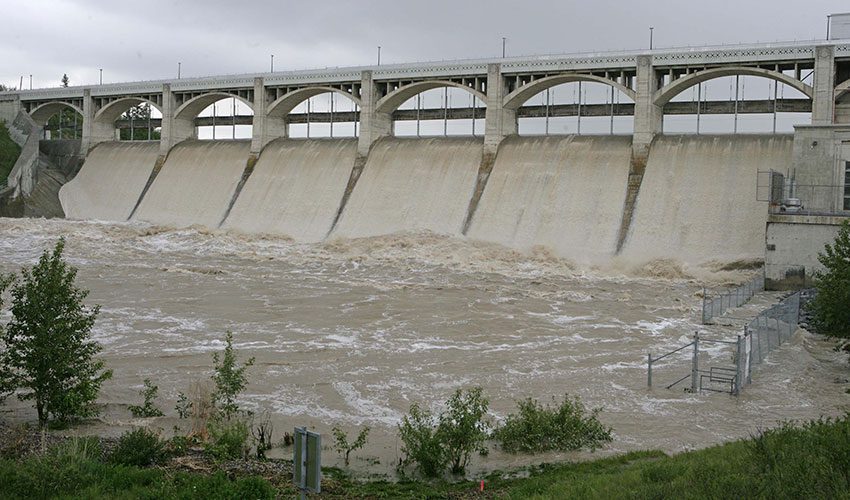
Water from the reservoir overflowed the dam and entered the river, increasing flow rates to 350 m³/s compared to the normal 20–30 m³/s. The 911 service handled over 6,500 calls that month. Water services staff worked to maintain potable water and wastewater systems, though the Glenmore Water Treatment Plant struggled to filter sediment-laden water, prompting municipal water restrictions.
The rains caused damage to approximately 40,000 homes, and over 1,500 Calgary residents were evacuated. The flood underscored the need for a new Emergency Operations Centre (EOC), which opened in 2012. The Alberta Disaster Recovery Program of 2005 facilitated city restoration efforts, with total flood costs estimated at $75 million.
In June 2013, heavy rainfall again overwhelmed the reservoir. As in 2005, excess water flowed over the dam into the Elbow River, with downstream flow rates reaching 544 m³/s. Thirty-two local states of emergency were declared, and 28 emergency operations centres were activated. Over 75,000 people from 26 neighborhoods near the Bow and Elbow Rivers were evacuated. City officials urged residents working downtown to stay home and postpone non-essential travel. Unlike the 2005 flood, water treatment facilities handled the situation without difficulty.
At $1.7 billion in insurance losses, the 2013 flood became the most expensive natural disaster in Canadian history until the 2016 Fort McMurray wildfire.
The reservoir has since been maintained at levels designed to minimize flood risks around the reservoir and downstream. When Elbow River flow rates increase, water can be released from the dam to prevent flooding. From 2017 to 2020, the Glenmore Dam underwent modernization at a cost of $81 million.
Recreation at the Reservoir
In 1967, a rowing club was established at the reservoir to offer Calgarians and tourists opportunities for recreation and rowing competitions. The club has trained many notable athletes who later competed on national teams.
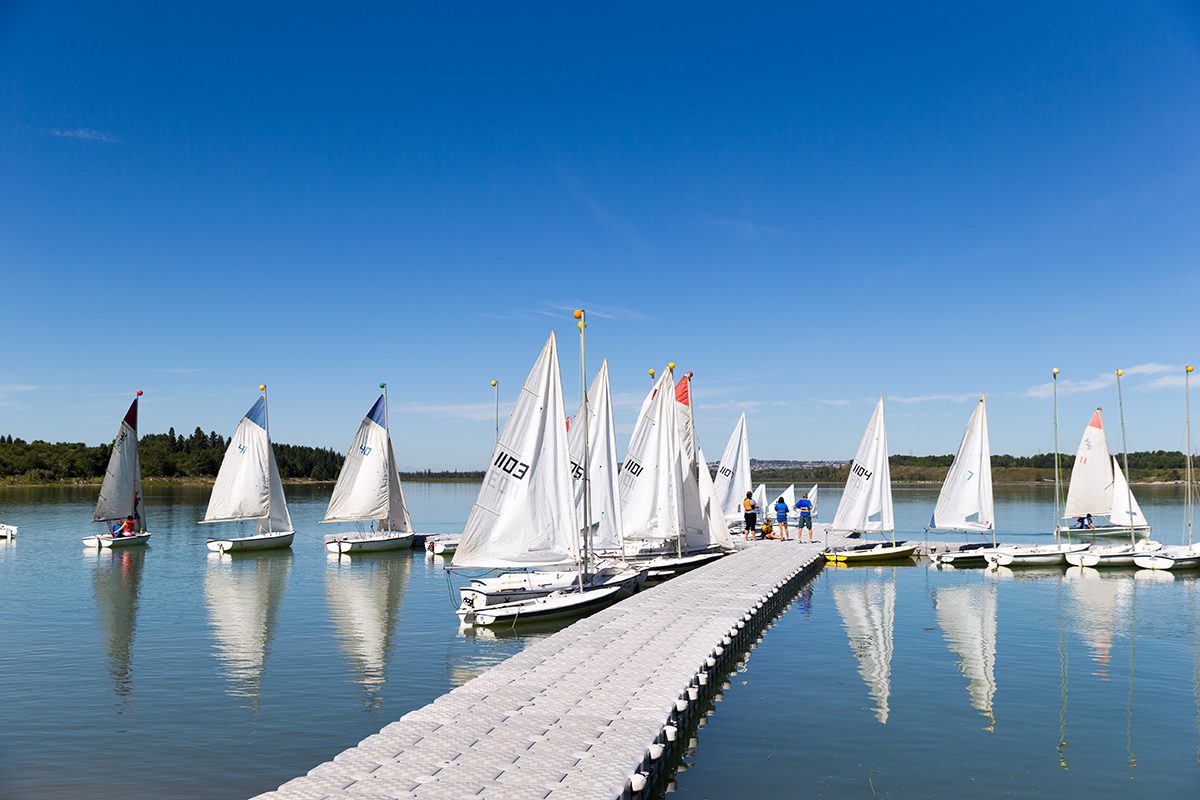
The Glenmore Sailing School was founded in 1966, and a modular trailer was added for the school in 1981. After water damage, the trailer was decommissioned in 2017 and replaced with a larger facility.
A canoe club also operates at the reservoir, offering private lessons in canoeing and kayaking, youth summer camps, and competitive outrigger canoe programs for adults.
From May through late October, the reservoir is open for fishing, rowing, and sailing. Surrounding the reservoir are pedestrian paths and bike trails, which are popular with locals.
Near the reservoir, in South Glenmore Park, is the Variety Children’s Park, Calgary’s first barrier-free park, designed to enhance accessibility and inclusivity for all children.
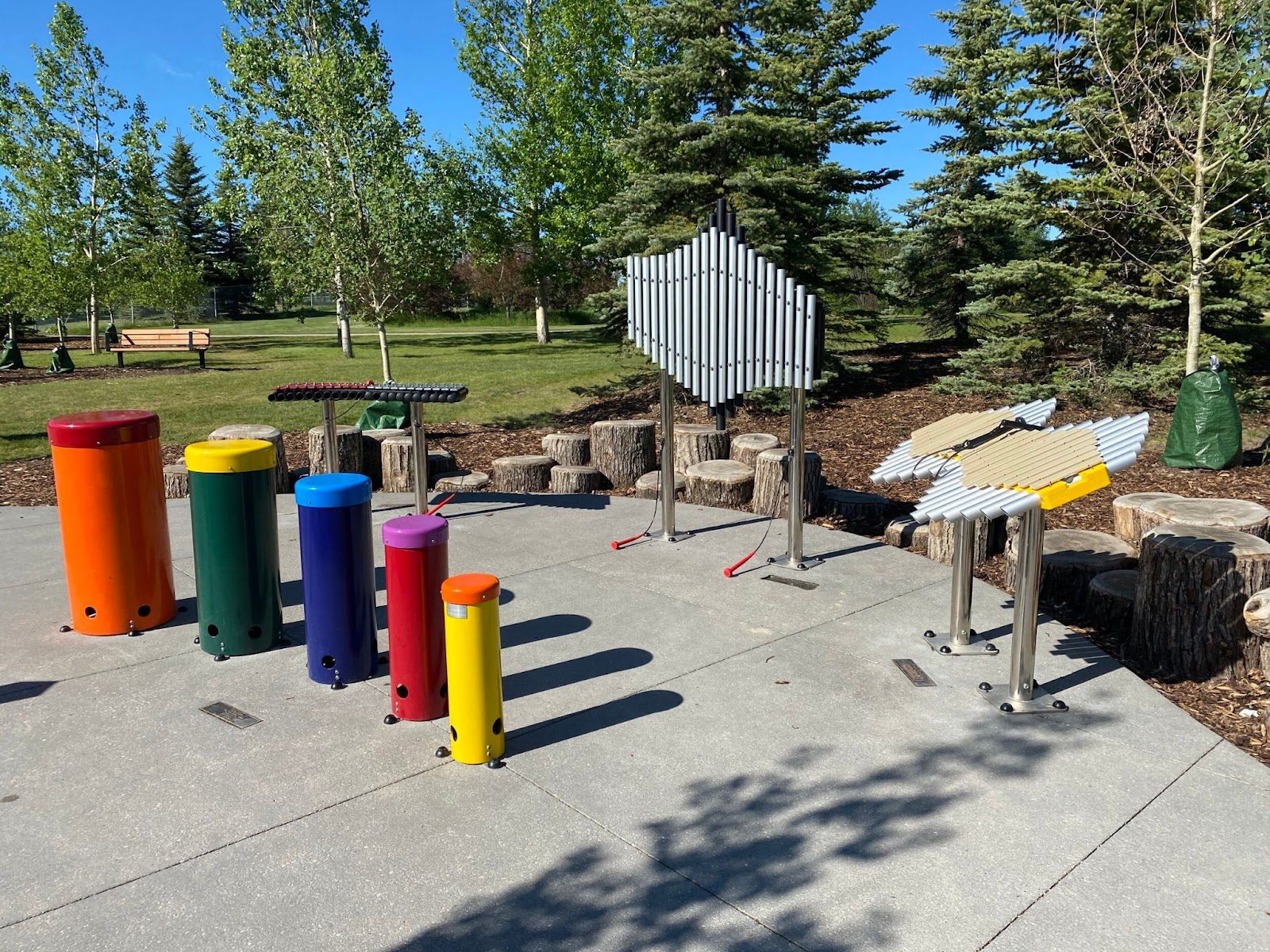
In 2020, the Quinterra Legacy Garden was established. This interactive musical garden features a green space with a small community multi-functional stage and outdoor instruments. Created by five families who lost children, the garden honors their memory and serves as a thank-you to Calgarians for their support, symbolizing hope and light beyond tragedy and loss.
The garden incorporates design elements representing the five lost lives, including five branches in the garden’s logo, a five-pointed star on the stage, five chairs, and five blossoming trees.
Drinking Water Supply
The reservoir and dam were constructed to ensure Calgary had a reliable drinking water supply. Nearly half of the city’s water comes from the reservoir. However, the Elbow River is susceptible to contaminants, requiring extensive filtration.
To maintain water quality, recreational use of the reservoir is limited by bylaws. Most of the reservoir is off-limits to activities such as entering the water or ice and placing objects on or near the reservoir or streams flowing into it.
Polluting the water is strictly prohibited. Pet owners must prevent their animals from entering the water or ice and must keep pets on leashes while near the reservoir or its shoreline.