

Most of Alberta’s Rocky Mountains formed around 50 million years BCE. However, a 2019 study by scientists at the University of Alberta revealed that some of these mountains date back as far as 100 million years BCE, when the North American continent collided with a microcontinent during the subduction of an oceanic basin off the western coast.
Since then, glaciers have shaped the region, depositing silt, sand, and stone, creating the terrain where the province’s inhabitants now live. The slopes formed by mountain ridges have influenced the development of prairie soils and agriculture. Additionally, the mountains have shaped the dynamics of local cultures, leaving a profound mark on Alberta’s history. Learn more below calgary-name.com.
Prehistory
100 million years BCE, Alberta was a vast sea surrounded by tropical forests. Life in Western Canada then was nothing like today’s wide prairies and expansive farmland.
The Canadian Badlands near Drumheller and their exposed rock layers offer a glimpse into what Canada was like during the Mesozoic Era. Alberta in the Cretaceous Period was dominated by dinosaurs. During this time, Canada’s prairies, like much of North America, were submerged underwater.
The Western Interior Seaway, connecting the Arctic Ocean to the Gulf of Mexico, split the continent in two. This seaway was a warm, relatively shallow body of water, reaching depths of up to 760 meters in some areas. The base of the young Rocky Mountains formed the coastline along the seaway’s western edge.
In these shallow waters, giant turtles, plesiosaurs, and long-necked marine reptiles swam alongside ordinary fish and sharks. Meanwhile, flowering plants thrived on small patches of land. Most scientists believe this era ended with the meteor impact that caused the extinction of dinosaurs.
The Canadian prairies hold clues to the continent’s past, not only through preserved dinosaur fossils but also through rich oil reserves. This oil formed as animal and plant remains, which thrived during this remarkable period in Earth’s history, underwent destructive transformation.
Trade and Hunting Exchange
The Rocky Mountains stand as a natural barrier, rising like a stony gateway. Yet for millennia, people crossed these gates to trade goods and hunt.
Tribes from southeastern British Columbia, such as the Ktunaxa, descended into Alberta’s valleys to hunt bison and other large game. They also traded sporting tools, like hoop-and-arrow game equipment. Similarly, eastern Alberta tribes like the Cree and Dene traveled west across the continental divide to fish for salmon and trade exotic materials.
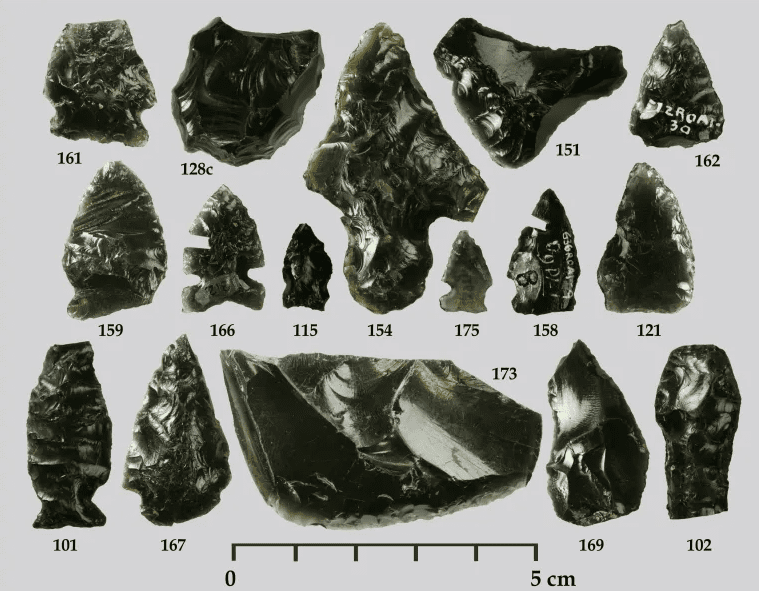
This active trade and hunting fostered intermountain and intercultural exchanges. Archaeologists have found artifacts that confirm this. Jade artifacts from southern Alberta were discovered in the north, while obsidian (volcanic glass) from northern volcanic sources was found near the eastern slopes, and Pacific shellfish shells were uncovered on Alberta’s plains.
Artifacts discovered in national parks like Banff, Jasper, Yoho, Waterton Lakes, and Kootenay were studied by researchers from the University of Georgia and the Royal Alberta Museum. Using X-ray fluorescence analysis, scientists determined that most of the obsidian found along Alberta’s eastern slopes originated from Idaho, Wyoming, or Mount Edziza in British Columbia. This indicates that mountain dwellers maintained trade not only within Canada but also with the United States.
Discovered Artifacts
The Vermilion Lakes, among the oldest sites in Banff National Park, provide evidence of human settlement in the mountains over millennia.
Residents likely utilized an established network of trails through valleys and passes. Early European explorers, such as David Thompson in the early 1800s, relied on guides from Indigenous nations to navigate ancient corridors and alpine passes while establishing the fur trade empire.
Since then, the tradition of transporting goods across the Rockies has continued with the construction of pipelines and highways. Developers and land planners face the challenging task of delivering materials to coastal markets and ports in ways that minimize environmental harm to sensitive landscapes.
Tourism Development
The remote, stunningly beautiful mountain regions inspired the creation of Canada’s first national parks: Banff in 1885, founded around the hot springs reserve, and Jasper in 1907. Some Indigenous groups in these parks did not survive due to diseases brought by Europeans, while those who did were forced to relocate, creating a divide between Indigenous peoples and European settlers.
The discovery of mineral-rich hot springs in 1883 spurred tourism development. Numerous hiking trails were built in the mountains for tourists. In 1886, the Grand View Villa was constructed near the therapeutic waters of Banff for visitors.
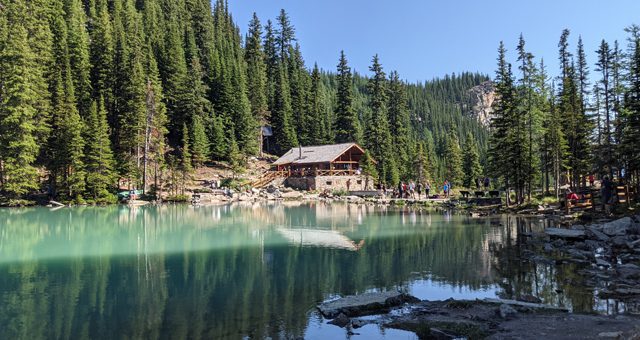
In 1901, the Canadian Pacific Railway built a tea house on Lake Agnes as a refuge for tourists, situated over 2 km above Lake Louise. Since 1905, it has served loose-leaf tea, freshly baked banana bread, and other treats. With no roads leading to the tea house, staff must hike the mountains, carrying supplies and garbage on their backs. The mountains thus became a cornerstone of Alberta’s burgeoning tourism industry.
Revival of Fauna
Alongside tourism, the bison population has been restored in the mountains. Parks Canada relocated bison from Elk Island National Park to Banff, reviving flora and fauna that once thrived in the region.
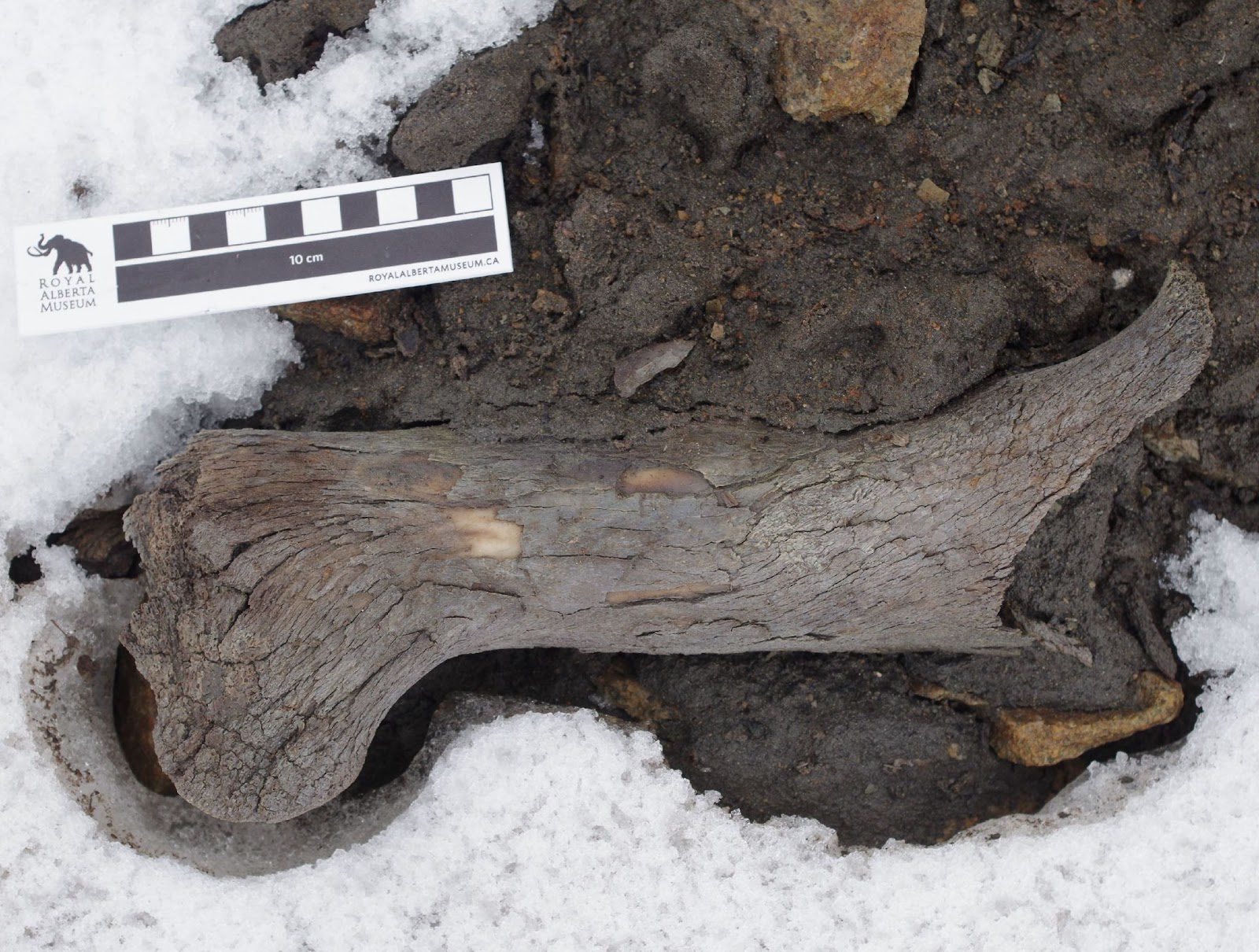
In addition to historic records of bison activity in mountainous areas, archaeologists have found bison bones in icy regions of Alberta’s high mountain parks, suggesting their adaptation to elevation changes.
For example, an ancient bison bone was discovered high above Maligne Lake in Jasper National Park. This shows how bison adapted to alpine environments.
Interestingly, in 1909, opabinia remains—a primitive arthropod with five eyes—were discovered in Yoho National Park. This peculiar creature lived during the Cambrian Period. Such discoveries highlight the significant role of Indigenous peoples in maintaining biodiversity.
To enable free movement for moose, bighorn sheep, and bears along the busy Trans-Canada Highway, wildlife overpasses and underpasses with natural vegetation were constructed. This underscores how the mountains facilitate the existence and revival of Alberta’s rich wildlife.
Conclusion
Mountains have always posed challenges to the movement of people and materials. However, they also promote innovation, communication, cultural development, and tourism. They protect inhabitants from invaders and adorn the landscape with their snow-capped ridges. Together with shimmering glaciers, vibrant lakes, limestone caves, alpine meadows, and dense forests, the Rocky Mountains form a stunning landscape—a true scenic treasure of Canada.