

The Western Canadian oil and gas basin, located within Canada and partially in the United States, contains vast mineral wealth and rocks. These minerals and rocks, extracted for practical use, are called “mineral resources.” The basin covers most of Alberta, and the province’s natural resource wealth gives it all the potential to become a global leader in mining. Learn more below on calgary-name.
What Minerals Are Extracted Here?
Alberta mainly extracts oil, bitumen, gas, coal, limestone, shale, ammonite, sandstone, sand, and gravel. Salt is also extracted, including by injecting water into salt layers. This creates brine, usually containing common table salt.
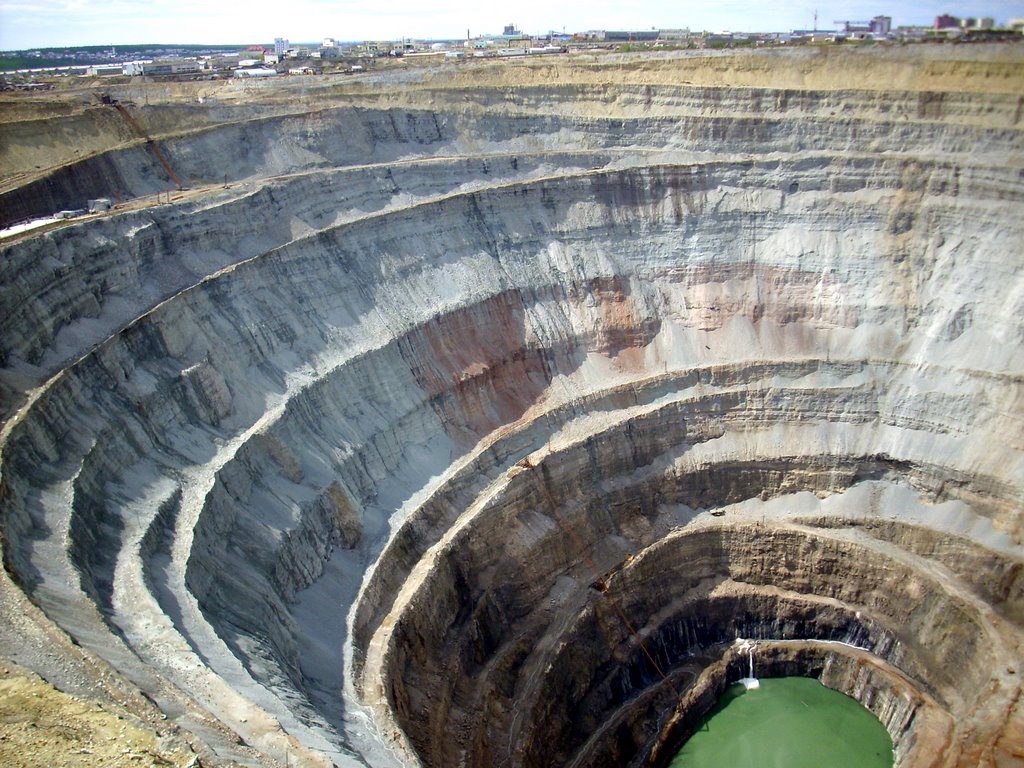
The province is home to many metallic and industrial minerals, such as lithium, vanadium, and nickel. A large amount of minerals mined here is used in batteries and energy storage devices. Metallic and industrial minerals are crucial for implementing environmentally friendly energy technologies and overall economic growth in the province.
Diamonds in Kimberlite Pipes
In November 2008, 51 kimberlite pipes were discovered in Alberta – a type of volcanic rock that contains diamond deposits. Kimberlite pipes form when gases break through the Earth’s surface. These are ancient volcanoes with a destroyed underground portion. Nearly 90% of diamonds are found in these pipes.
The highest concentration of diamonds in central Alberta is in the Buffalo Head Hills kimberlite district. For example, in the Ashton K14 complex, a 1.3-carat (260 mg) diamond was found. This industrial diamond is a monocrystal of silvery-grey color with many dark inclusions. The first diamond in the province was found in 1958 in river gravel near Evansburg.
Ammonite – Alberta’s Gemstone
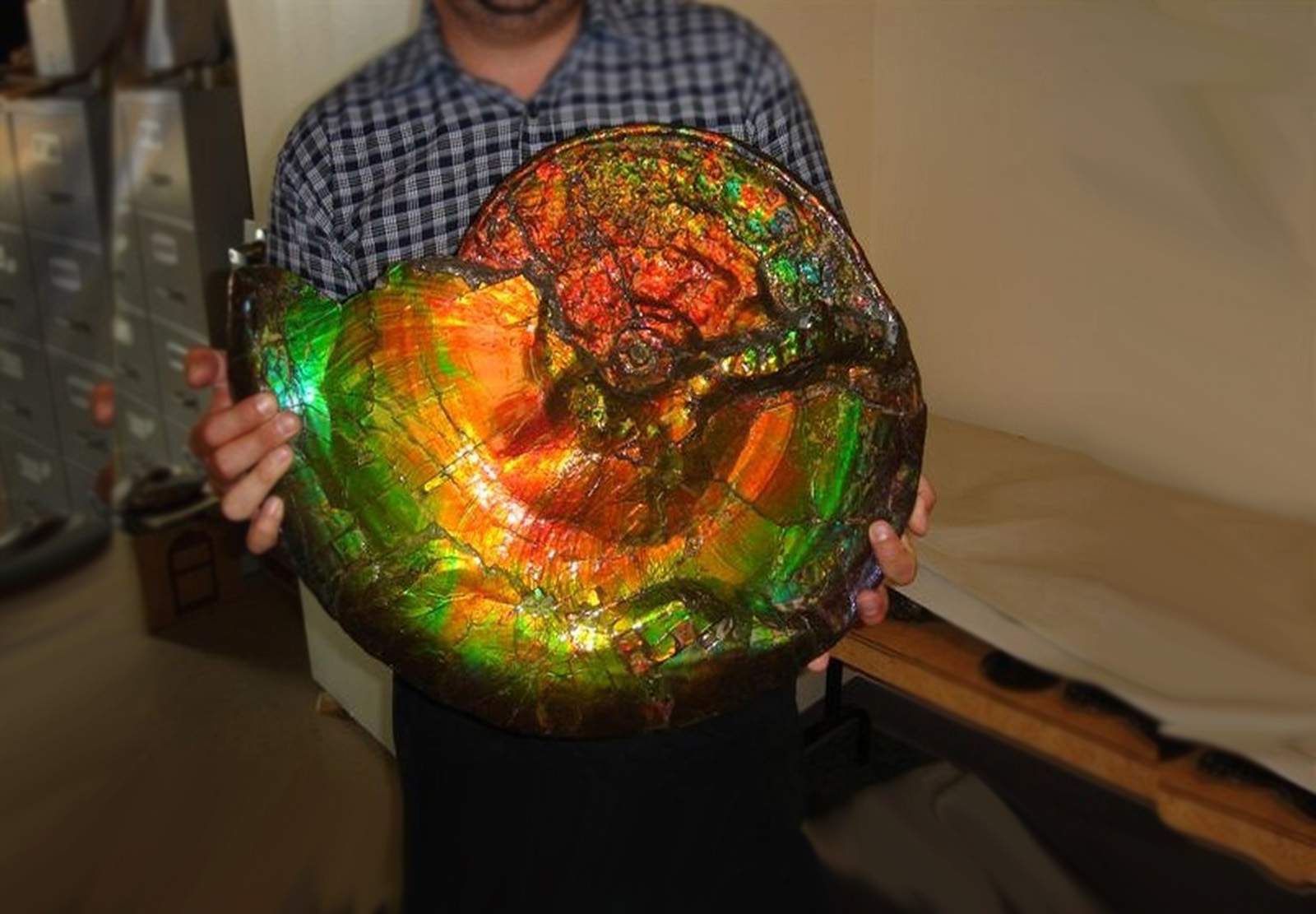
Ammonite shells first piqued the interest of mineral collectors in the 1970s when the rainbow-colored red and green stones became popular. These are fossilized and mineralized remains of marine mollusks that became extinct over 60 million years ago and consist of amber and pearls.
In 1981, the World Jewellery Confederation (CIBJO) recognized ammonite as a gemstone, marking the beginning of its commercial extraction. This stone is primarily found on the eastern slopes of the Rocky Mountains. In 2007, it was officially recognized as the gemstone of Lethbridge.
The shell of ammonite contains various elements, including aluminum, chromium, copper, barium, magnesium, iron, manganese, titanium, strontium, and vanadium. The vibrant rainbow colors are associated with the microstructure of aragonite (a mineral also found in mother-of-pearl). However, unlike most other gemstones, the rainbow color of ammonite results from the interference of light reflected from the layers that form the aragonite. The thicker these layers, the more red and green colors are visible, while thinner layers produce blue and purple hues.
However, freshly mined ammonites don’t display these colors strongly; the material requires polishing and further processing to reveal its potential.
Gold Deposits in the Provincial Capital
Between 1897-1898, the Klondike gold rush occurred in the Yukon region of northwestern Canada, following the discovery of vast gold deposits. Since then, the word “Klondike” has become synonymous with a “treasure-filled place.”
While many know that Edmonton lies on one of the routes to Klondike, few are aware that this city had its own “gold rush” even before Klondike’s gold deposits were discovered, particularly in the valley of the North Saskatchewan River.
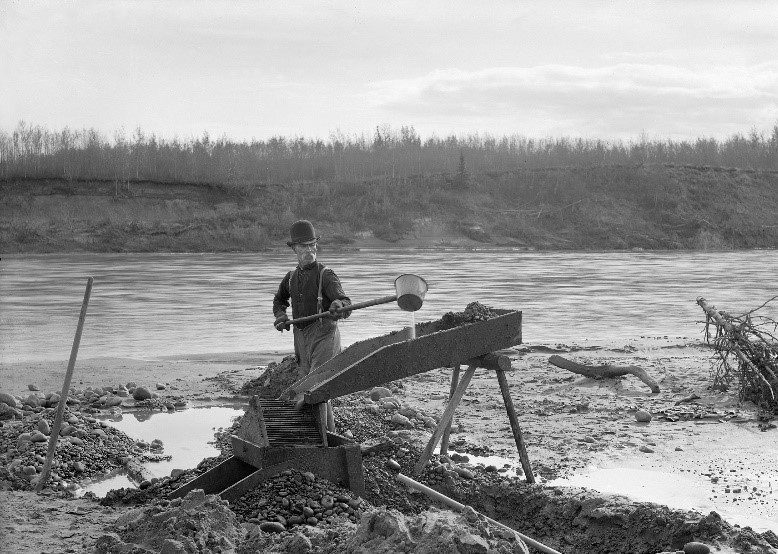
Gold is found here either as ore in solid rock or as placer gold, dispersed by water and deposited in sand and gravel. Edmonton is also home to what is called “flour gold,” in tiny flakes less than half a millimeter in size.
Gold in the North Saskatchewan River was first reported in 1859 by James Hector, a member of the Palliser expedition. News of the discovery quickly spread across the country, and soon many gold prospectors arrived at the river’s shores.
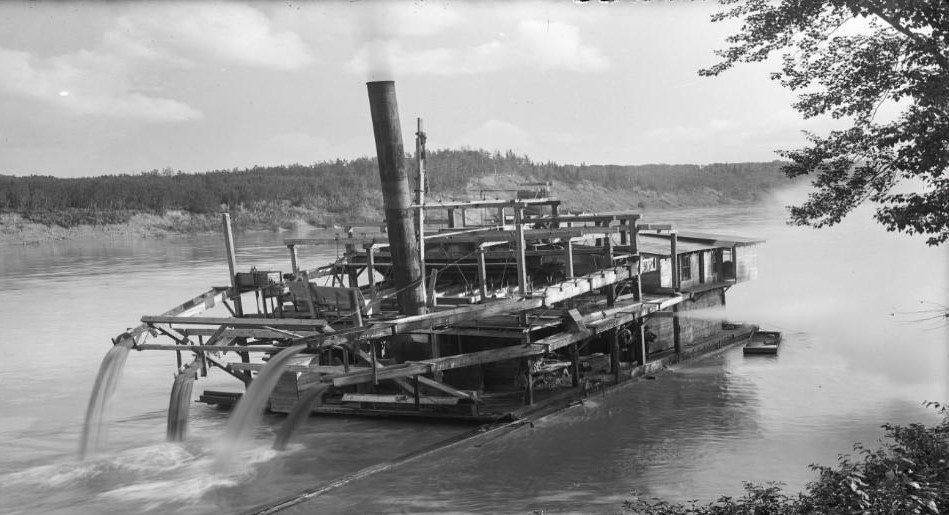
By the early 1890s, floating mechanical dredgers were used to process the huge volumes of river sediment. In 1895, American and British investors helped build larger steam dredgers in Edmonton, marking the beginning of the boom in placer gold mining.
By 1898, there were 12 dredgers working in the valley of the North Saskatchewan River, but after the Klondike discovery, miners quickly moved north. By 1907, only one dredger remained in the valley. Since then, gold has mainly been extracted in central Alberta as a byproduct of sand and gravel mining.
In general, placer gold accumulates where the water slows down—at river bends and areas where the banks widen. During these slowdowns, heavy minerals, such as gold or platinum, are released from the water. Apart from the North Saskatchewan River, gold can also be found in Alberta’s Red Deer, McLeod, Athabasca, and Peace Rivers.
Gold extraction and other placer minerals from Alberta’s sand and gravel deposits require a license. The extraction of placer minerals is regulated by the Metal and Industrial Minerals Act and the Royalty Regulations for Metal and Industrial Minerals. The Alberta Energy Regulator oversees this process.
Focus on Critical Minerals
In March 2021, the Canadian government released a list of industrial minerals that are critically important for the country’s sustainable economic success. The list includes 31 minerals.
The global demand for these minerals has increased due to their widespread use in renewable energy production, energy storage, transmission, and more, primarily for the telecommunications, automotive, aerospace, and military industries. By 2023, Canada was already extracting 21 of the 31 minerals on the list.
Alberta plays a significant role in extracting these minerals due to its vast potential, which has long been overshadowed by the prominence of oil, natural gas, and coal extraction. After 2021, the focus shifted to the extraction of critically important metals, such as lithium, uranium, and vanadium. These are used for manufacturing batteries, mobile phones, energy storage, and more, enabling the province to more responsibly and efficiently utilize its resources.
Alberta has all the necessary geological data and a developed infrastructure for mining the most important minerals. In September 2020, the province established the Alberta Mineral Advisory Council, tasked with providing strategic advice, guidance, and recommendations regarding the action plan for this industry.
In total, Alberta has reserves of over 40 metallic and industrial minerals. The province is continually developing specialized technologies to unlock hidden resources found within, including those needed for lithium extraction.
The development of critical mineral industries directly contributes to the prosperity of the province’s economy. Maximizing Alberta’s mineral potential helps diversify its economy and create new jobs.