

Bitumount, located on the eastern bank of the Athabasca River, approximately 90 kilometres north of Fort McMurray, is a historic industrial site where oil sands were mined, separated, and processed between 1925 and 1958. The site is named after the bitumen-rich deposits visible along the riverbanks. In 1974, Bitumount was designated as a historic resource of Alberta due to its pivotal role in oil sands extraction experiments. It represents a critical chapter in Alberta’s and Canada’s energy resource development. More details on calgary-name.
What Are Oil Sands?
The oil sands of northeastern Alberta are a significant energy resource, consisting of a natural mixture of sand, silt, clay, minerals, water, and a viscous form of crude oil called bitumen (often referred to as asphalt). Fur traders first noted the sands in the late 1700s, speculating on their potential utility and profitability.
Alberta hosts three main oil sand regions, all located in the northern part of the province. The largest is named after the Athabasca River, which runs through its centre. Although the sands were observed in the 18th century, a clear understanding of their value took nearly two centuries to emerge.
Only 20% of these sands lie close to the surface, with the rest buried deep underground, requiring the injection of hot water into wells to extract the oil. The crude oil extracted and upgraded from the sands can be used just like conventional petroleum.
Early Operations
In 1922, Robert Cosmas Fitzsimmons arrived in northeastern Alberta. Fascinated by the tar-like residue on the riverbanks, he believed it to be his ticket to fortune. By 1925, Fitzsimmons had established the International Bitumen Company Ltd. By 1930, he built a small extraction plant where raw sand was crushed and heated with hot water to separate the oily substance, which floated to the surface for removal.
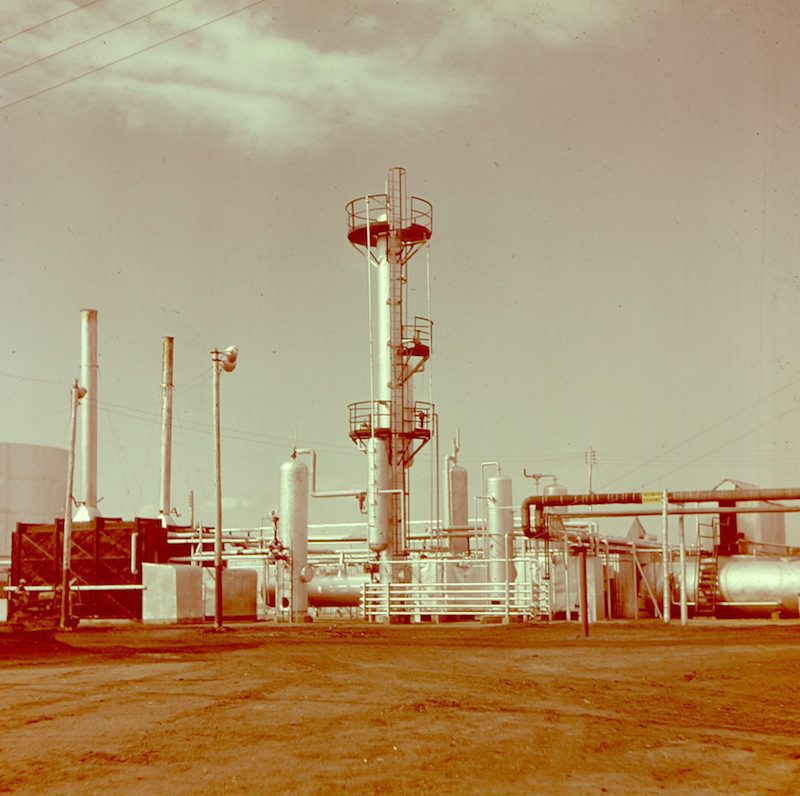
In 1930, Fitzsimmons made his first bitumen sale in Edmonton. Between 1937 and 1938, he constructed a small upgrading facility and several other structures. However, the Great Depression caused oil prices to plummet. Fitzsimmons tirelessly marketed 38 potential uses for bitumen, including road paving, roofing, and therapeutic baths.
To address financial challenges, Fitzsimmons brought in an investor, Lloyd R. Champion, in 1942. Two years later, Champion founded his own company, Oil Sands Ltd., and signed an agreement with Alberta’s government to construct a facility at Bitumount.
Construction began on a new plant in 1945 but faced financial hurdles as the project exceeded Champion’s budget. By 1948, the provincial government had taken control of the operation.
Challenges in Early Development
Though the oil sands were recognized as valuable, their remote location far from populated areas posed a significant challenge. There were no accessible roads or railways at the time. Without advanced refining methods, bitumen was mainly used for road paving, a limited application that offered little return on investment.
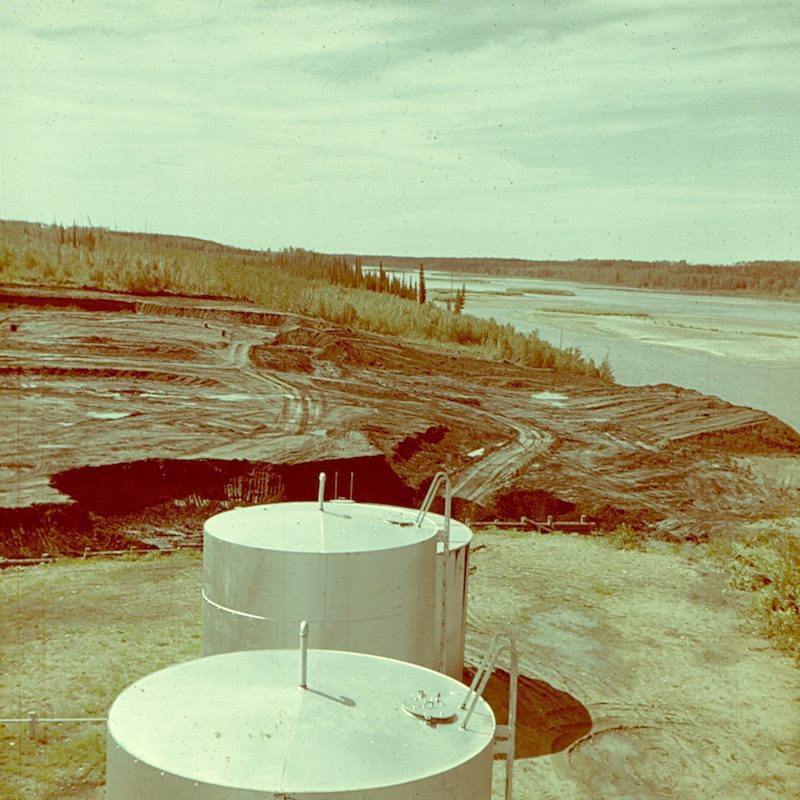
The government achieved its goal of demonstrating the feasibility of large-scale oil sands processing but subsequently shut down the plant. The facility operated briefly without selling a single barrel of oil. Later sold to a private company, the Bitumount site never resumed production and was permanently closed in 1958, leaving behind two plants as historical resources.
Life at the Bitumount Camp
During Bitumount’s operational years, life for workers was harsh and isolated. Employees under Fitzsimmons endured primitive conditions, sacrificing comfort for employment.
When the government took over in the 1940s, living conditions improved significantly. New housing facilities were constructed, and recruitment began. However, attracting workers proved difficult, as few wanted to leave the amenities of city life for an isolated camp.
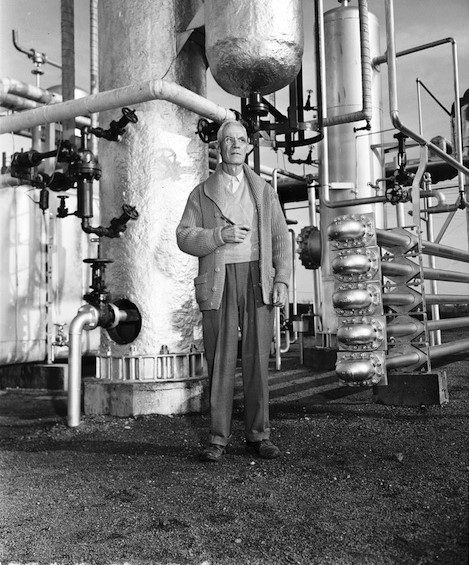
Efforts to enhance camp life paid off, turning Bitumount into a bustling community. Workers engaged in activities like construction, cooking, hunting, cleaning, gardening, repairs, and games. Stories and photographs from the time reveal that residents aimed to make Bitumount more than just a wilderness camp. While some stayed for months, others made it their home for years.
The Production Process
Separating oil sands into their components was no easy task. The seemingly straightforward process of mixing sand with hot water, skimming oil from the surface, and discarding the sand at the bottom was complicated by various factors. The contributions of scientists and engineers were critical.
The Alberta Research Council, led by Karl Clark, developed the hot water separation process, which was tested at Bitumount. The production involved three main steps:
- Extraction
In Bitumount, the oil sands deposits were close to the surface, allowing for easy access. After clearing vegetation and sediments, the sand was extracted and transported to the processing facility. In the early years, extraction was manual, involving workers and animals. Mechanized equipment like draglines appeared only in the 1930s. - Separation
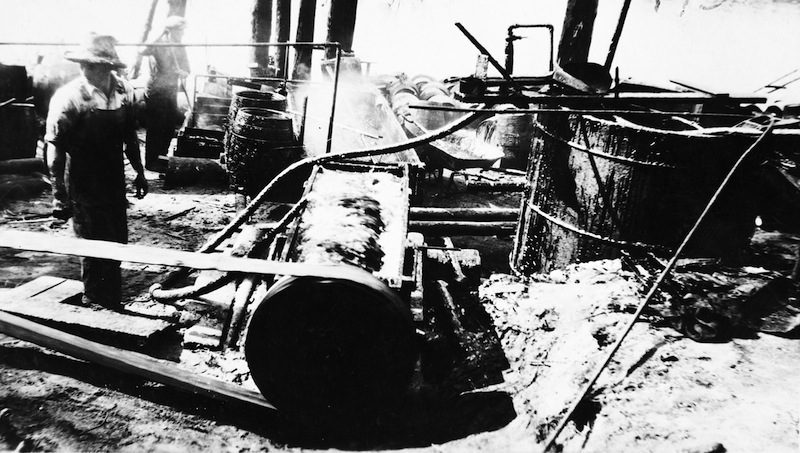
Raw oil sands were sent to the plant to separate bitumen from the sandy residue. The hot water separation method was the only technique used at Bitumount. Sand was mixed into a slurry, broken into smaller clumps, and diluted with hot water. Agitation separated the oil from the sand, with the slurry poured into a hot water tank where oil floated to the surface and sand sank. The oily froth was skimmed off, while residual sand was processed further to extract remaining oil. Excess water was removed from the oil through heating and solvent addition. - Upgrading
This step involved improving the quality of bitumen to make it usable. Extracted bitumen was thick and difficult to transport or use directly. As a complex hydrocarbon, it needed to be broken into simpler, more valuable hydrocarbons. Upgrading added value to the product, but building refining facilities required significant investment, which the Bitumount plants lacked. The facility’s primary achievement was proving that oil from oil sands could be adequately processed for further refinement.
Legacy of the Oil Sands
The oil sands symbolize Canadian innovation, resilience, and hard work. Despite numerous challenges, Bitumount demonstrated the potential of oil sands as a valuable energy resource. It stands as a testament to how Canadians transform challenges into opportunities, turning an “ugly duckling” into a “golden goose.”