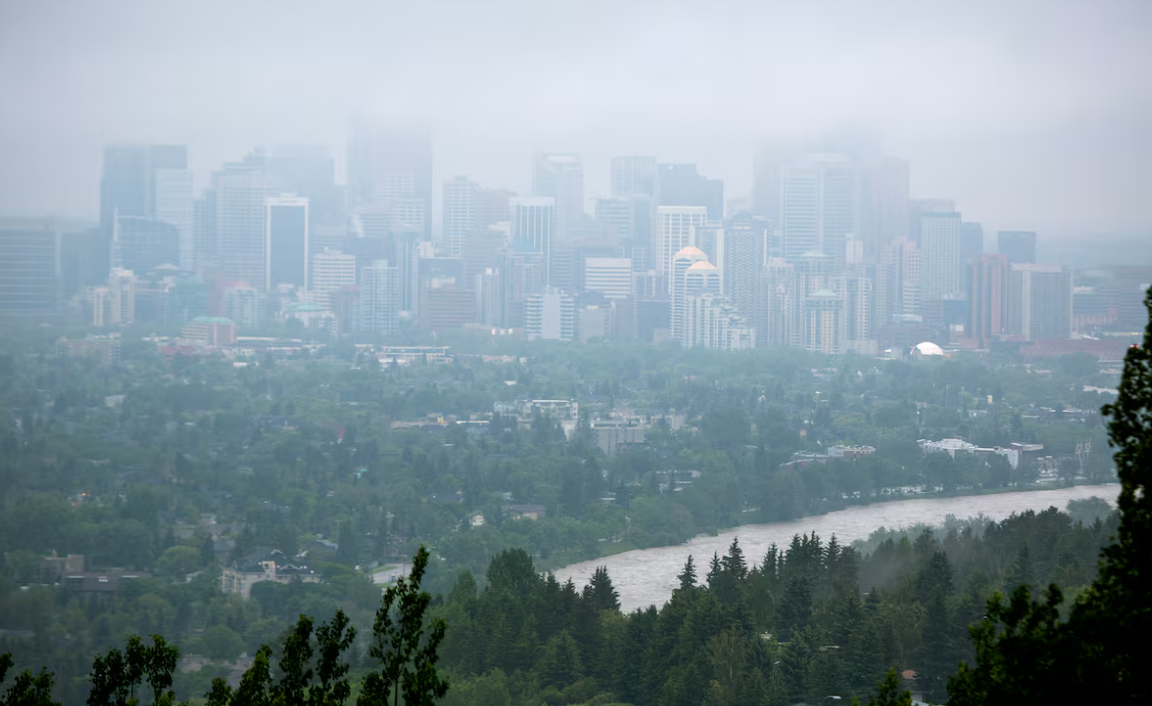
When we look at thriving modern metropolises, we rarely consider that beneath the perfect asphalt, towering skyscrapers, and cozy parks lies a fragile compromise between humanity and nature. Calgary is an incredible city, but its geography is a veritable engineering trap. It grew in a valley where two mountain rivers—the Bow and the Elbow—merge. Picturesque? Absolutely. Safe? Hardly.
History is full of examples where cities ignore nature’s warnings for years until disaster strikes. For Calgary, that moment of truth came in June 2013. A massive flood literally washed away everyday life. The disaster caused five billion dollars in damages and forced 100,000 people to flee their homes in a panic. The blow struck the very heart of Calgary. The iconic Scotiabank Saddledome went underwater, the cozy Prince’s Island Park was flooded, and upscale historic neighborhoods like Mission and Cliff Bungalow turned into endless lakes. People returned to their homes only to find their furniture floating in two meters of murky water. This devastation permanently changed the city’s approach to safety, triggering one of the most ambitious engineering overhauls in the world. calgary-name shares the details.
Why Water Leaves No Room for Error
To understand why a standard dam won’t cut it here, you only need to look at the Rocky Mountains towering to the west of the city. That’s where the local rivers originate. When heavy early-summer downpours coincide with the rapid melting of the mountain snowpack, millions of tons of water come crashing down like an avalanche.
The Elbow River is particularly treacherous. Hydrologists call it a “rapid response” system. While in other parts of the world, people get weeks of advance warning about an impending flood, here, it’s a matter of hours. In just 9 to 12 hours, a calm, crystal-clear river can turn into a raging torrent that sweeps away everything in its path.
Moreover, water has a memory. Hidden underground are paleochannels—ancient, long-abandoned riverbeds. During severe floods, the river seems to remember its past. The water bursts through the soil, flooding neighborhoods built under the illusion of total security. For centuries, city officials turned a blind eye, allowing development right on the floodplains. The price for this carelessness turned out to be brutally high.
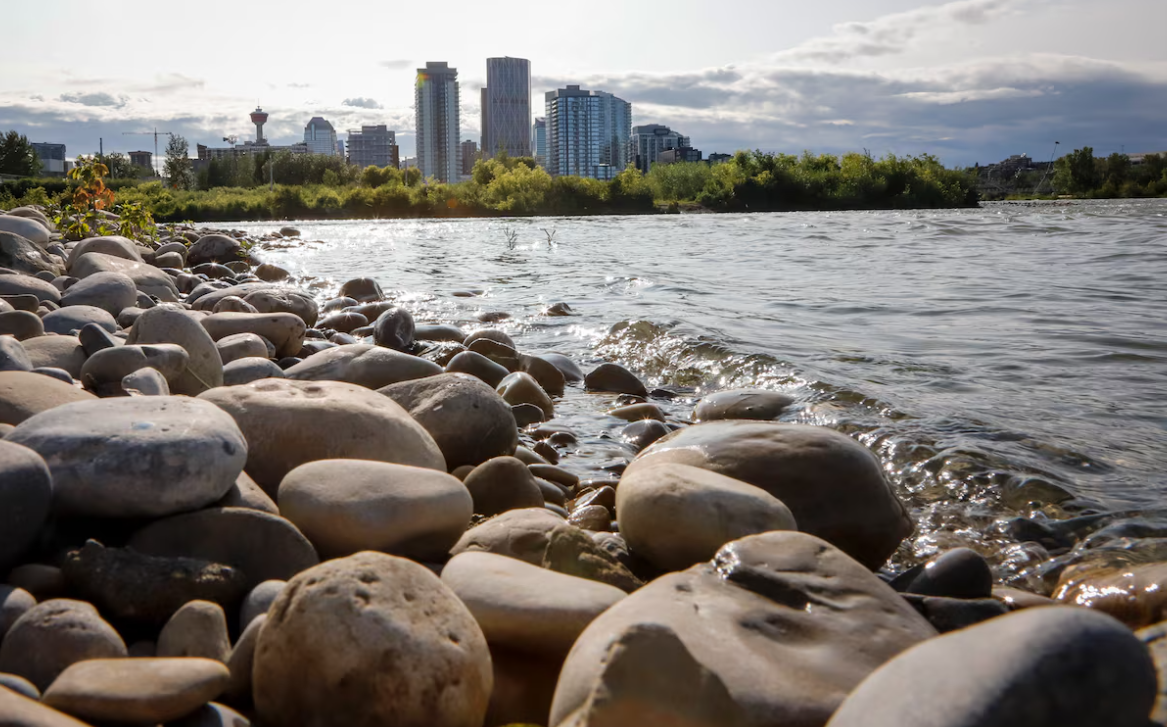
The Great Compromise: Tame the River or Let It Run Wild?
When it came to figuring out how to protect a city of over a million people for centuries to come, experts were divided.
The European approach, particularly popular in the Netherlands, argues: “Give the river room.” This means dismantling old artificial banks, banning any waterfront construction, and relocating people from hazard zones. Essentially, retreating and giving the land back to nature.
But for Calgary, where the downtown core and some of the most expensive residential neighborhoods were already built on this land, such a retreat would cost tens of billions of dollars. Buying out and demolishing thousands of homes was simply unrealistic. So, engineers challenged nature instead. They decided not to run from the river, but to outsmart it with technology.
The Springbank Reservoir
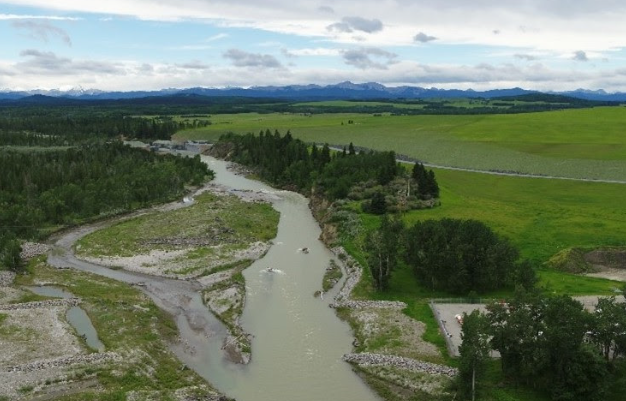
The city’s primary shield is a unique facility: the Springbank Off-Stream Reservoir (SR1). This isn’t your classic artificial dam that blocks a river, turning it into a stagnant swamp and killing off the fish. It is a much more elegant engineering solution.
Located 15 kilometers away from the city and set back from the Elbow River channel, an enormous 1,400-hectare artificial dry basin was created. On an ordinary day, it’s just a green valley where grass grows, wildlife roams, and cattle graze. But everything changes when the high water comes.
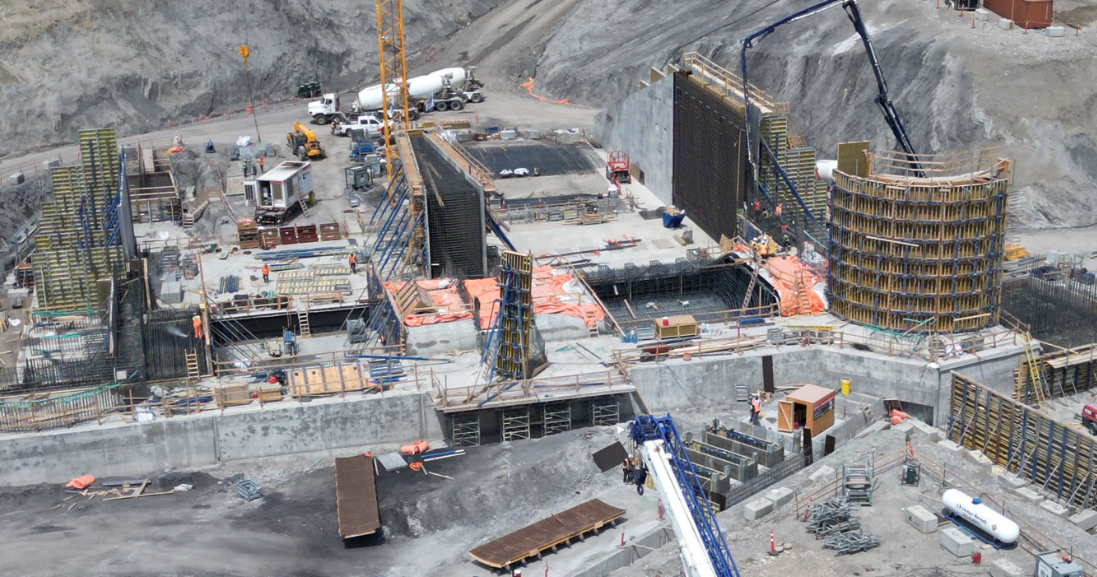
As soon as sensors detect a critical rise in water levels, massive steel gates on the riverbank open. Water rushes through a special diversion channel at speeds up to 600 cubic meters per second into this massive empty reservoir. Springbank can hold 78 million cubic meters of water—that’s more than 31,000 Olympic-sized swimming pools!
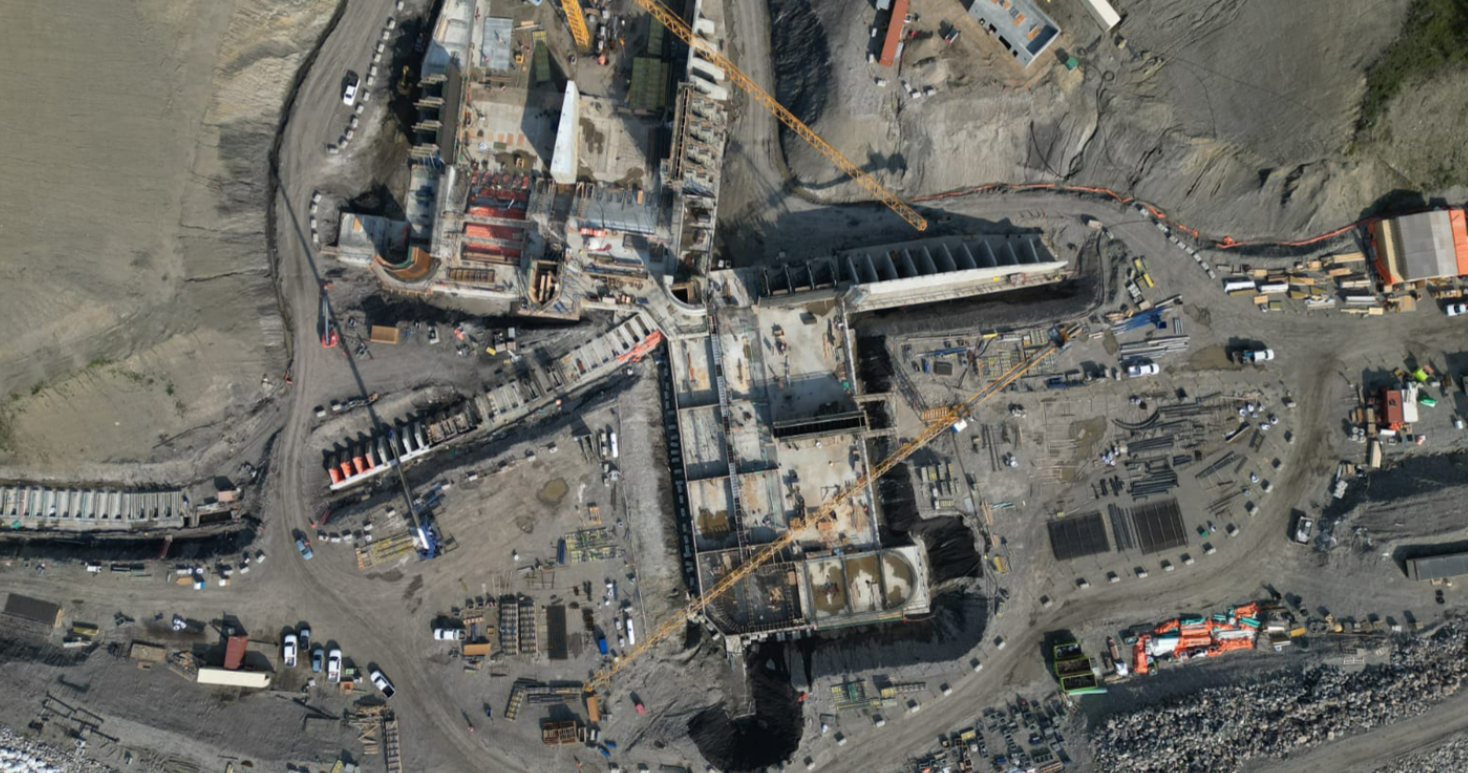
Thanks to this, the city gets protection against one-in-200-year floods. Once the peak of the disaster passes, the stored water is slowly and safely released back into the river over a month or two. The project is unique on a global scale, ranking alongside the massive flood defense systems of Japan and the US. This grand design has already become a reality. Springbank’s construction, which officially kicked off in 2022, passed all stages of testing and inspection, and the facility became operational in 2025–2026. Calgary finally has its main shield against the big water.
The Second Front: What to Do With the Bow River?
While the Springbank project is a true triumph of engineering, it only solves half the problem, as it holds back only the treacherous Elbow River. But what about the Bow—its older and more voluminous sister, which paralyzed all of downtown in 2013?
Defending the city on this front proved even more difficult. The action plan was split into two stages. Locally, the city has already reinforced flood barriers along the Downtown Barrier and West Eau Claire. These projects are fully completed and are already protecting the city center. On a larger scale, the massive Bow River Reservoir Options program is currently underway. It considers several scenarios, ranging from a major upgrade to the existing Ghost Dam hydroelectric station (allowing it to hold back spring floods) to building a brand-new reservoir upstream, north of the city. Only when this “second front” is fully secured will the engineering ring around Calgary be complete.
A Smart City
However, it’s impossible to protect a metropolis with just one large structure. True resilience is achieved through a network of invisible but smart solutions working together.
First, engineers completely rethought the city’s underground life. Besides major rivers, ordinary rainstorms also pose a threat. When a month’s worth of rain falls in just a few hours, the asphalt can’t absorb it. To solve this, projects like the Gladstone Connect—a modernization of the urban drainage system—are being implemented. This is a network of smart underground drains and storage tanks. They instantly catch excess rainwater in residential areas, protecting streets from flooding.
Second, modern defense is a battle for information. An intelligent digital monitoring system has been deployed along the riverbeds:
- smart sensors measure water levels and flow speeds every second;
- the system analyzes the soil moisture in the mountains to determine if the ground can absorb more rain;
- satellite data and meteorological models forecast the course of events well in advance.
Thanks to this, city services can spot the threat before the first wave even hits the embankments, giving them precious time to react.
The Price of Safety
Any intervention on this scale is always a story of compromises and painful decisions. The construction of Springbank was accompanied by fierce debates. Fifth-generation farmers didn’t want to give up their ancestral lands, which were slated to go underwater in the event of a flood. Indigenous communities worried about preserving their heritage. It took years of complex negotiations and millions in compensation to reach an agreement.
The environmental aspect also demanded surgical precision. When water starts filling the reservoir, fish will be swept in alongside it. To prevent them from dying, engineers developed an entire system of barriers and an evacuation program for aquatic life. Furthermore, to prevent the silt at the bottom of the reservoir from turning into dust storms once the water recedes, the land is seeded with special grasses whose roots quickly and securely bind the soil.
The Main Lesson for the Future
The experience of overhauling drainage systems and flood protection in Calgary serves as a manifesto for how modern metropolises should think about their future. Nature cannot be defeated in a head-on attack, and reinforced concrete walls will eventually crack if they are your only line of defense.
Future safety is about flexibility. It’s the ability to deflect a blow right on time, just as the Springbank Reservoir does. It’s the city’s ability to “breathe” and quickly pass water through its underground drainage arteries, and the skill to spot danger using digital technologies. These kinds of investments won’t pay off in a year or two. But they are exactly what guarantees that fifty or a hundred years from now, the city will thrive, and the people on its streets will feel absolutely safe.